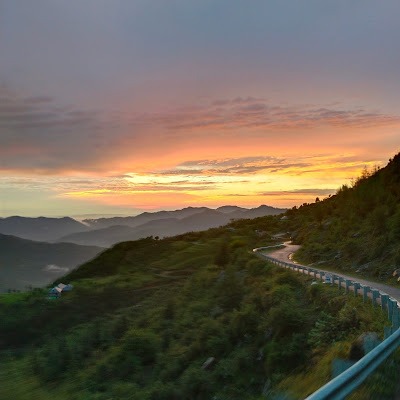
Image Source: TG GAMING OFFICIAL
About Chauhar Valley
Despite its striking natural beauty and cultural significance, Chauhar Valley remains relatively less explored compared to Himachal’s mainstream destinations like Kullu, Manali, or Shimla. A picturesque and culturally rich valley located in the Mandi district of Himachal Pradesh, India. The valley is an authentic Himalayan region for travelers who love hidden places.
Geography
Tucked between the higher Himalayan ranges and the mid-hill belt, the Chauhar Valley lies in the northwestern part of Mandi district. The valley is drained by tributaries of the Uhl River and Beas River system. The valley’s remote villages, terraced fields, alpine forests, and meadows take you into a different world.
The main entry point to the Chauhar Valley is Joginder Nagar , which is also famous for the Joginder Nagar Hydro-Electric Scheme — a hydroelectric project using water from the Uhl River. From Joginder Nagar, the valley stretches toward Barot, a scenic village and trout fishing hub, and further up to remote villages like Lohardi and Bada Gran.
History and Culture
The Chauhar Valley forms part of the historic region of Chuhar , which was once dotted with small local chiefdoms before being integrated into the Mandi princely state. The region is home to the Bada Dev (Dev Pashakot) and many other local deities, and village deities (deota) play a central role in people’s everyday life, festivals, and traditional governance.
Fairs and Festivals
Chauhar Mela is a significant for the valley’s communities, where local deities are carried in colorful processions accompanied by traditional Himachali music and dance. The people here are mostly engaged in agriculture, cattle rearing, and horticulture, with some practicing traditional crafts like weaving.
Why Chauhar Valley is Special for Travelers
Offbeat Mountain Escapes
Unlike crowded hill stations, Chauhar Valley remains relatively quiet. Villages like Barot , Lohardi, and Bada Gran are serene, surrounded by thick cedar and oak forests, with the Uhl River adding to the charm.
Barot: A Trout Fishing Paradise
Barot, the gateway to Chauhar Valley, is known for its trout-rich rivers and the historic Uhl River Project. The British introduced trout here in the early 20th century. Today, the Himachal Pradesh Fisheries Department operates trout farms that attract anglers from around the country.
Trekking and Trails
Chauhar Valley is a base for multiple short and long treks:
Barot to Bada Bhangal Trek: A challenging trail connecting Kangra and Kullu valleys.
Trekking to Kullu via Thamsar Pass: This route is popular with seasoned trekkers.
Short forest trails around Barot and Lohardi lead to hidden waterfalls, alpine pastures, and panoramic viewpoints.
Authentic Village Life
Homestays in villages like Barot and Lohardi give visitors a window into traditional Himachali mountain life—wooden houses, terraced farms, local cuisine, and warm Pahari hospitality.
Wildlife and Nature
The Chauhar Valley is home to rich Himalayan flora and fauna. Nearby, the Nargu Wildlife Sanctuary protects Himalayan black bears, monals, musk deer, and other species. The forests are great for birdwatching and nature walks.
When to Visit
Best Time: March to June and September to November.
Winter: Snowfall occurs at higher reaches like Lohardi and Bada Gran, making the landscape beautiful, but road access can be challenging.
How to Reach Chauhar Valley
Nearest Town: Joginder Nagar, well-connected by road and the narrow-gauge Kangra Valley Railway.
By Road: From Mandi or Palampur, local buses and taxis go to Barot, about 65 km from Mandi.
By Train: Joginder Nagar is the terminus of the Pathankot-Joginder Nagar narrow-gauge railway.