
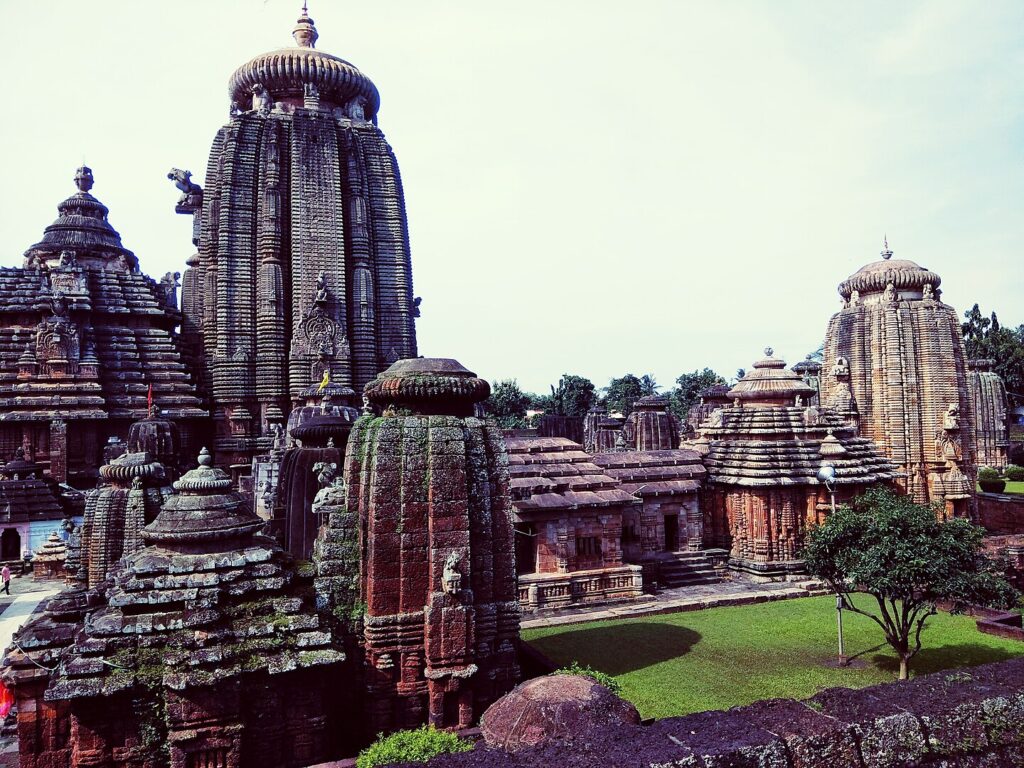
Image Source: Puja Rakshit
About Lingaraja Temple
The Lingaraja Temple in Bhubaneswar, Odisha, is one of the most revered and majestic monuments of Eastern India. Known as the cultural and spiritual heart of the city, it represents the Kalinga style of architecture and attracts thousands of devotees and heritage lovers every year.
Located in the old town of Bhubaneswar, often called the “City of Temples,” this shrine is dedicated to Lord Shiva in the form of Harihara, symbolizing the union of Shiva and Vishnu. Beyond being a religious destination, the temple also stands as a testimony to the glorious past of Odisha’s temple architecture.
History
The history of Lingaraja Temple dates back to the 7th century CE, with major contributions made during the 11th century under the Somavamsi dynasty. Later, the Ganga kings of Odisha expanded and enriched its grandeur.
The temple reflects the gradual transition of Bhubaneswar into a sacred Shaiva center while also absorbing Vaishnavite elements. This unique blend of traditions is why the main deity here is worshipped as Harihara Linga – a fusion of Shiva (Hara) and Vishnu (Hari).
Architecture
The temple complex is a brilliant example of Kalinga architecture. Built with sandstone, the temple rises to a majestic height of 180 feet (55 meters). It follows the Panchayatana style with four main components:
Vimana (Sanctum) – the towering spire housing the main deity.
Jagamohana (Assembly Hall) – where devotees gather for prayers.
Natamandira (Dancing Hall) – once used for temple dances and cultural rituals.
Bhoga Mandapa (Offering Hall) – where offerings are presented to the deity.
The temple complex comprises over 60 small shrines, each dedicated to various gods and goddesses of the Hindu pantheon. The beautifully carved sculptures, intricate motifs of flowers, animals, and divine figures showcase the unmatched artistry of Odishan craftsmen.
Religious Importance
The Lingam at the sanctum is a swayambhu (self-manifested), believed to have emerged from the earth itself. The deity, Lingaraja, is revered as the guardian of Bhubaneswar. Pilgrims believe that a visit to this temple completes the religious circuit of Odisha after worshipping at Puri Jagannath Temple and Konark Sun Temple.
Festivals and Rituals
The temple is vibrant with rituals throughout the year, but the most significant celebration is the Chandan Yatra, a 22-day festival where the deities are taken out for a ceremonial boat ride in the Bindu Sagar Lake adjacent to the temple.
Another important festival is Maha Shivaratri, when thousands of devotees from across Odisha and India flock to the temple, lighting lamps, offering bel leaves, and staying awake the whole night in devotion.
Bindu Sagar Lake Connection
Just north of the temple lies the sacred Bindu Sagar Lake, which is deeply associated with the temple’s rituals. Legend says that the waters of all holy rivers of India have converged here, making it spiritually powerful. During festivals, processions of deities are carried to the lake, where symbolic purification rituals are performed.
Local Culture and Tourism
Situated in the old town of Bhubaneswar, the Lingaraja Temple is not just a religious site but also a center of cultural activity. The temple precinct is surrounded by narrow lanes, traditional Odishan houses, local sweet shops selling chhena-based delicacies, and vibrant bazaars with handicrafts of Odisha. Visitors also explore nearby temples like Mukteswara Temple, Rajarani Temple, and Parasurameswara Temple, forming a rich cultural circuit of Odishan heritage tourism.
Travel Tips for Visitors
Location: Old Town, Bhubaneswar, Odisha.
Entry Restrictions: Only Hindus are allowed inside the main sanctum; however, non-Hindu visitors can view the temple from an elevated platform outside.
Best Time to Visit: October to March (pleasant weather and major festivals).
Nearby Attractions: Kedar Gouri Temple, Ekamra Kanan Botanical Garden, Odisha State Museum.
How to Reach
Reaching the Lingaraja Temple is convenient as Bhubaneswar is well connected by air, rail, and road. The temple is located in the Old Town area, about 4 km from Bhubaneswar Railway Station and 3 km from Biju Patnaik International Airport.
By Air: The nearest airport is Biju Patnaik International Airport (BBI), just 3 kilometers away. From the airport, visitors can hire taxis, auto-rickshaws, or app-based cabs to reach the temple in less than 15 minutes.
By Rail: The Bhubaneswar Railway Station, a major junction on the East Coast Railway, is well connected to cities like Kolkata, Delhi, Chennai, and Mumbai. From the station, local transport options such as auto-rickshaws, cycle-rickshaws, and cabs are easily available.
By Road: Bhubaneswar has a well-developed road network with National Highways (NH-16 and NH-316) passing through. The Baramunda Bus Stand connects Bhubaneswar with nearby cities like Puri, Cuttack, Konark, Sambalpur, and Rourkela. Local city buses also run frequently to the Old Town area.