
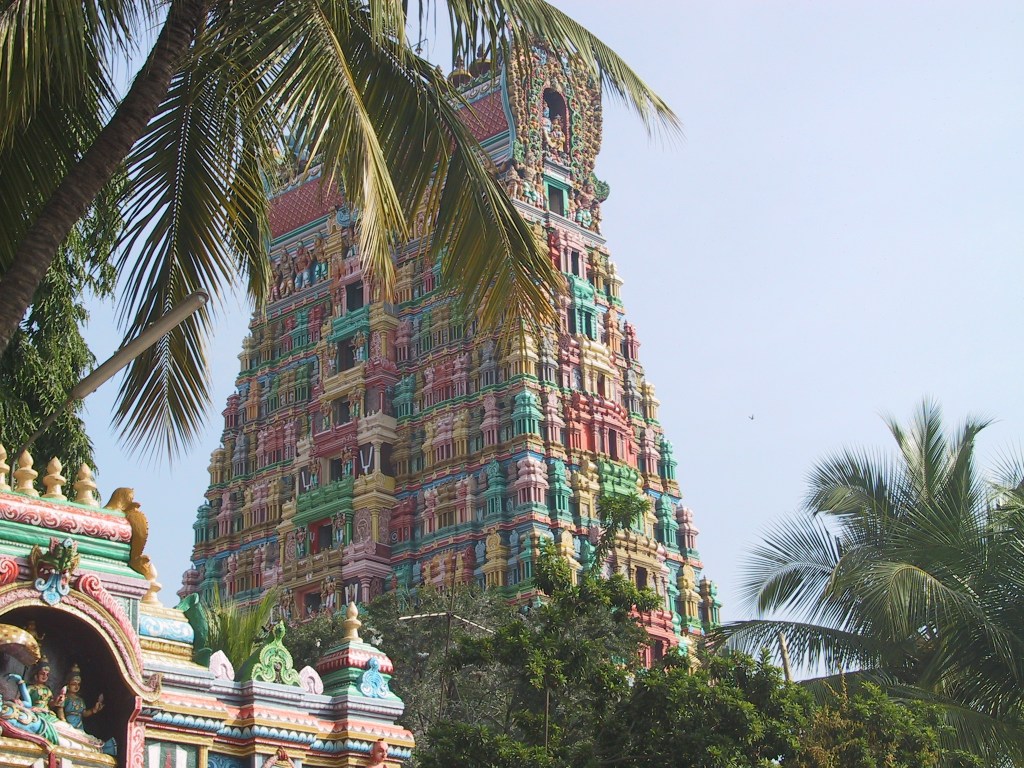
Image Source: Wikimedia
About Srivilliputhur Andal Temple
The Srivilliputhur Andal Temple is a renowned Hindu temple situated in Srivilliputhur, Virudhunagar district, Tamil Nadu, India, approximately 80 kilometers from Madurai. Dedicated to Goddess Andal, an incarnation of Lakshmi, and her consort Lord Vishnu, worshipped as Vatapatrasayi, the temple is celebrated both for its spiritual significance and architectural grandeur. It is one of the 108 Divya Desams, sacred abodes of Vishnu revered by the Alvar saints, and has been a center of devotion and culture for centuries.
Key Identities and Location
The temple is divided into two main sections: the Andal shrine on the southwest and the Vatapatrasayi shrine on the northeast. Andal is revered as the only female Alvar saint, credited with composing the Tamil devotional hymns Thirupavai and Nachiar Tirumoli, recited widely during the Margali festival in winter. Vatapatrasayi is worshipped in a reclining posture, symbolizing Vishnu resting on a banyan leaf (Vatapatram) during a cosmic deluge, with deities like Sridevi, Bhudevi, and sages such as Bhrigu and Markandeya depicted around him.
Religious Significance
Srivilliputhur Andal Temple holds immense religious importance in Vaishnavism. Andal is venerated not only as a saint but also as a divine incarnation of Bhudevi, with shrines dedicated to her in many Vishnu temples. She is believed to have married Lord Vishnu (Ranganatha) in a divine union, and the presiding deity is sometimes referred to as Rangamannar. The temple is also associated with the birthplace of Andal and Periyalvar, making it a vital pilgrimage site. Scriptural references in the Brahmakaivatsapuranam and Varaha Puranam underscore its antiquity and sanctity.
Legends and Origins
Legend traces the town’s origins to Villi, who founded Srivilliputhur following a divine revelation about his brother Kandan’s demise. Historically known as Varaha Kshetra, the area was believed to be a forest where Vishnu slew the demon Kalanerai to protect sages. Andal, found as a child named Kothai under a tulasi plant by Periyalvar, became central to the temple’s lore. She is famed for offering garlands to Vishnu before wearing them herself—a tradition continued even today, with Andal’s garlands sent to other prominent Vishnu temples.
Architecture and Layout
The temple exemplifies Tamil Dravidian architecture, with contributions from the Cholas, Pandyas, and Vijayanagara kings. The rajagopuram (gateway tower), built during the 15th century by Vijayanagara rulers, stands 192 ft (59 m) tall and is intricately adorned with sculptures and carvings depicting mythological scenes. The Andal shrine features images of Andal and Rangamannar along with Garuda, surrounded by murals depicting Andal’s life.
The Vatapatrasayi shrine showcases Vishnu in a reclining posture on the banyan leaf, accompanied by deities, sages, and celestial beings. The hall leading to the sanctum, Bhopala Villam, displays detailed teak wood carvings of Puranas and the Dashavatara (ten avatars of Vishnu). The temple also houses rare Vijayanagara sculptures, including composite columns of Virabhadra, similar to those found in other prominent South Indian temples. The compound encloses shrines, gardens, and sacred water bodies, preserving both religious and cultural heritage.
History and Development
The Vatapatrasayi shrine is believed to date from the 8th century, with inscriptions from the 10th century onwards. The Andal shrine and rajagopuram were later enhanced by Vijayanagara rulers, while Thirumalai Nayak (1623–1659) and Rani Mangammal (1689–1706) contributed significantly to temple renovations, installations of golden towers, temple tanks, and halls. Today, the temple is maintained by the Hindu Religious and Charitable Endowments Department of Tamil Nadu, and the Andal shrine was reconsecrated during the samprokshanam on January 20, 2016.
Festivals and Worship Practices
The temple follows the Thenkalai tradition of worship, with priests performing six daily rituals: Ushathkalam, Kalasanthi, Uchikalam, Sayarakshai, Irandamkalam, and Ardha Jamam. Each ritual includes decoration (alangaram), food offerings (neivethanam), and lamp waving (deepa aradanai).
The Aadi Pooram festival, celebrated during the Tamil month of Adi (July–August), marks the birthday and adoption of Andal and is the temple’s most prominent event. Thousands of devotees participate in the temple car festival, where deities are paraded in elaborately decorated chariots. Fridays and Saturdays are considered especially auspicious for visiting the temple.
Cultural Significance
Beyond its spiritual importance, the Srivilliputhur Andal Temple is a cultural and architectural landmark, inspiring devotional music, literature, and arts for centuries. Andal’s works, particularly the Thirupavai, continue to shape Tamil devotional traditions, while the temple’s architecture stands as a testament to Pandya, Chola, and Vijayanagara craftsmanship. It remains a vital center of community, culture, and devotion in Tamil Nadu.