Image Source: Bhaskaranaidu
About Chandragiri Fort
The Chandragiri Fort is a prominent historical monument situated in the Chandragiri suburb of Tirupati, in the Tirupati district of Andhra Pradesh.
Built atop a rocky hill, the fort is a striking reminder of medieval South Indian history and the grandeur of the Vijayanagara Empire. Today, although much of it lies in ruins, it continues to attract visitors as an important heritage landmark under the care of the Government of Andhra Pradesh.
Historical Background
Chandragiri Fort was originally constructed in the 11th century CE, during the reign of Immadi Narasimha Yadavaraya, who ruled from Narayanavanam. Initially associated with the Yadavaraya rulers, it later rose to prominence under the Vijayanagara Empire, which took control of the fort in 1367 CE. For nearly three centuries, it remained an important stronghold of the empire.
The fort became particularly significant in the 16th century, when it served as the fourth capital of the Vijayanagara Empire, after the Golconda sultans attacked Penukonda. Krishnadevaraya, one of the greatest Vijayanagara emperors, is believed to have resided here before his coronation and met his future queen, Chinna Devi, at the fort.
Over the centuries, it also witnessed multiple conquests—Kapilendra Deva of the Gajapati dynasty captured it in 1460, it was annexed to the Golconda Sultanate in 1646, and later came under the rule of the Kingdom of Mysore, eventually declining from the late 18th century.
Architecture
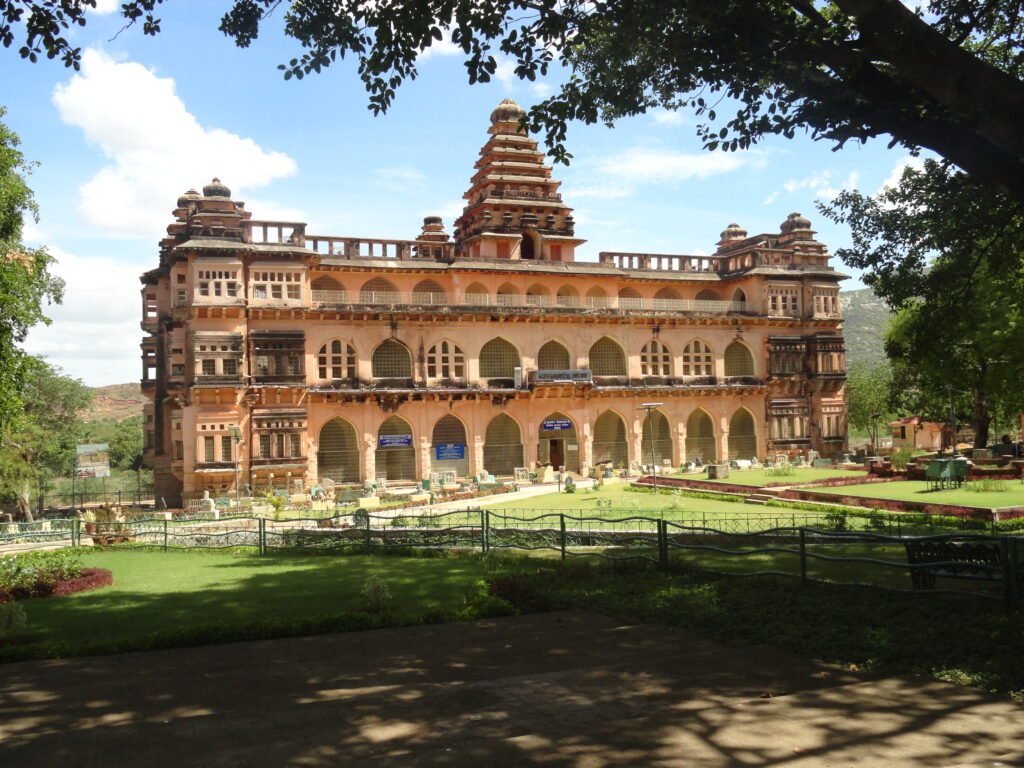
The architecture of Chandragiri Fort is a remarkable example of Vijayanagara design, blending military robustness with refined palace structures. Built primarily of granite, stone, brick, and lime mortar, the fort is notable for being devoid of timber, ensuring its durability. Its crowning towers incorporate elements of Dravidian temple architecture, showcasing the cultural aesthetics of the time.
The fortifications include rectangular bastions, strong ramparts, and a steep moat, reflecting its strategic defensive role. Within the complex, several key structures stand out:
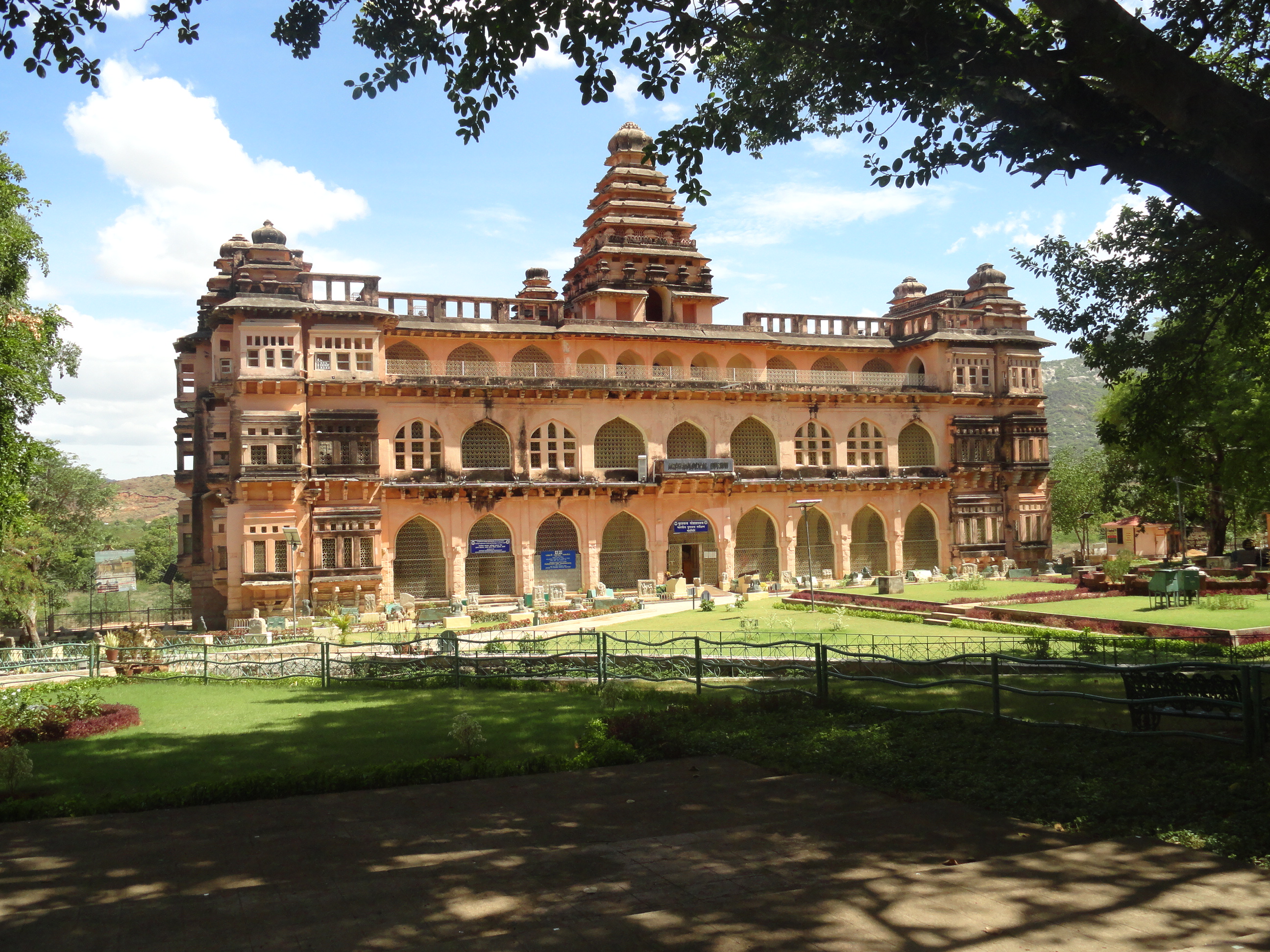
Raja Mahal (King’s Palace): A three-storied palace built without timber, now converted into an archaeological museum by the ASI. It features Indo-Saracenic arches, ornate windows, and intricate carvings.
Rani Mahal (Queen’s Palace): A smaller structure with a flat roof, believed to have been used as the quarters of commanders and members of the royal family.
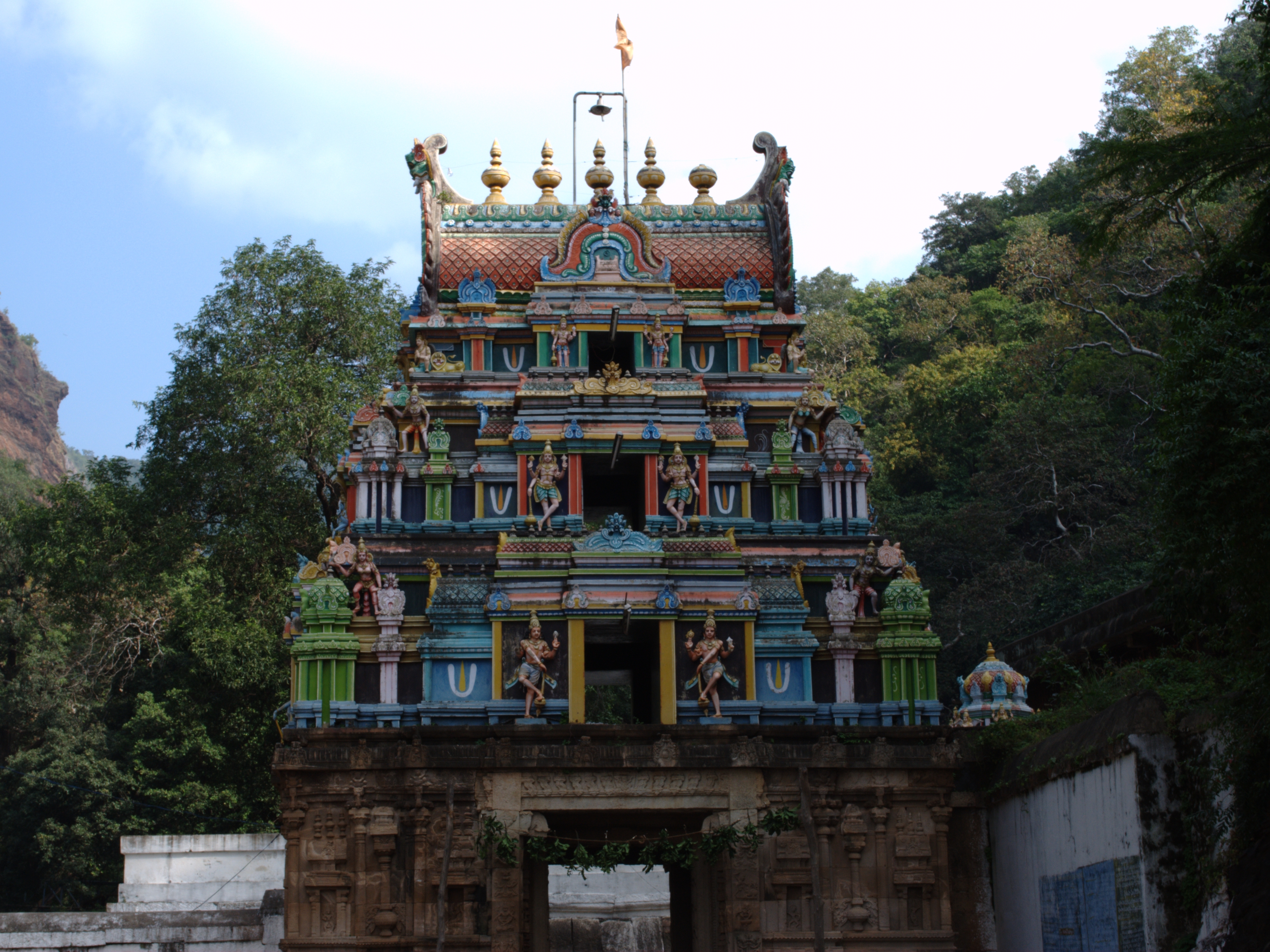
Temples and Other Structures: The fort also houses the remains of eight temples, along with several ruined pavilions and halls, which highlight its religious and cultural role during the Vijayanagara period.
Notable Associations and Events
Chandragiri Fort is also remembered for its role in key historical events. It was here, in August 1639, that the pact granting land for the construction of Fort St. George in Madras (now Chennai) was signed between the British East India Company and Sriranga Raya, a Vijayanagara ruler. This event marked a turning point in South Indian colonial history.
The fort also has a spiritual connection. Vyasatirtha, a revered saint and advisor to Vijayanagara rulers Saluva Narasimha Deva Raya and Narasimha Raya II, is believed to have resided here, further adding to its cultural and religious significance.
Present Status
Today, Chandragiri Fort is recognized as an important tourist attraction in Tirupati. The Raja Mahal Palace, converted into an archaeological museum, showcases a collection of artifacts, sculptures, inscriptions, and coins from the Vijayanagara era, providing a glimpse into the empire’s glorious past.
Though much of the fort is in ruins, its surviving palaces, temples, and fortifications continue to fascinate visitors with their historical charm and architectural brilliance.
How to Reach Chandragiri Fort
By Air
The nearest airport is Tirupati Airport, located about 30 km from the fort. Taxis and cabs are readily available from the airport to Chandragiri.
By Train
The nearest railway station is Chandragiri Railway Station, which lies about 2 km from the fort. Alternatively, travelers can arrive at Tirupati Railway Station and continue by taxi, auto-rickshaw, or local bus.
By Road
Chandragiri is well connected by road to Tirupati and nearby cities.
Approximate distances:
- Tirupati – 15 km
- Tirumala – 33 km
- Chennai – 147 km
- Bengaluru – 238 km
- Hyderabad – 574 km
Regular APSRTC buses, taxis, and auto-rickshaws operate between Tirupati and Chandragiri. The journey typically takes 20–30 minutes.
Best Route
- Tirupati → Chandragiri Road → Chandragiri Fort
- Tirupati Railway Station → Taxi/Auto → Chandragiri Fort
Nearby Attractions
1. Sri Venkateswara Swamy Temple
One of the most sacred Hindu pilgrimage sites in the world, located atop the Tirumala Hills.
2. Sri Padmavathi Ammavari Temple
A revered temple dedicated to Goddess Padmavathi, the consort of Lord Venkateswara.
3. Kapila Theertham
A scenic waterfall and sacred Shiva temple situated at the foothills of Tirumala.
4. Sri Govindaraja Swamy Temple
One of the oldest and most important temples in Tirupati, known for its magnificent Dravidian architecture.
5. Talakona Waterfalls
The highest waterfall in Andhra Pradesh, surrounded by dense forests and trekking trails.
6. Sri Kalahasteeswara Temple
A famous Shiva temple known for Rahu-Ketu poojas and exquisite architecture.
7. Sri Venkateswara Zoological Park
One of Asia’s largest zoological parks, home to diverse wildlife native to the Eastern Ghats.
8. Silathoranam
A rare natural rock arch and an important geological landmark.
9. Papavinasam
A sacred waterfall believed to cleanse devotees of their sins.
10. Akasa Ganga
A picturesque waterfall whose waters are used for rituals in the Tirumala temple.
Google Maps
FAQs
1. What is Chandragiri Fort famous for?
Chandragiri Fort is famous for being the last capital of the Vijayanagara Empire and for its Raja Mahal, Rani Mahal, museum, and historic architecture.
2. How far is Chandragiri Fort from Tirupati?
The fort is approximately 15 km from Tirupati and can be reached in about 20–30 minutes by road.
3. What is the best time to visit Chandragiri Fort?
October to March is considered the best time because of the pleasant weather and comfortable sightseeing conditions.
4. How much time is required to explore the fort?
Most visitors spend around 1.5 to 3 hours exploring the fort, museum, palaces, and viewpoints.
5. What are the main attractions inside the fort?
The major attractions include Raja Mahal, Rani Mahal, the Archaeological Museum, fort walls, watchtowers, and hilltop ruins.
6. Is there an entry fee?
Yes, a nominal entry fee is generally charged for visitors, and separate charges may apply for the sound-and-light show.
7. Is photography allowed inside Chandragiri Fort?
Yes, photography is generally permitted and the fort is a popular destination for heritage and landscape photography.
8. Is the fort suitable for families?
Yes. The fort is suitable for families, history enthusiasts, students, and photographers due to its easy accessibility and historical significance.
9. Is there a museum inside the fort?
Yes. Raja Mahal houses an archaeological museum displaying sculptures, coins, weapons, and artifacts from the Vijayanagara period.
10. Can Chandragiri Fort be visited along with Tirupati in one day?
Yes. Many travelers combine Chandragiri Fort with Tirupati, Tirumala, Kapila Theertham, and Sri Kalahasti during a single-day sightseeing trip.