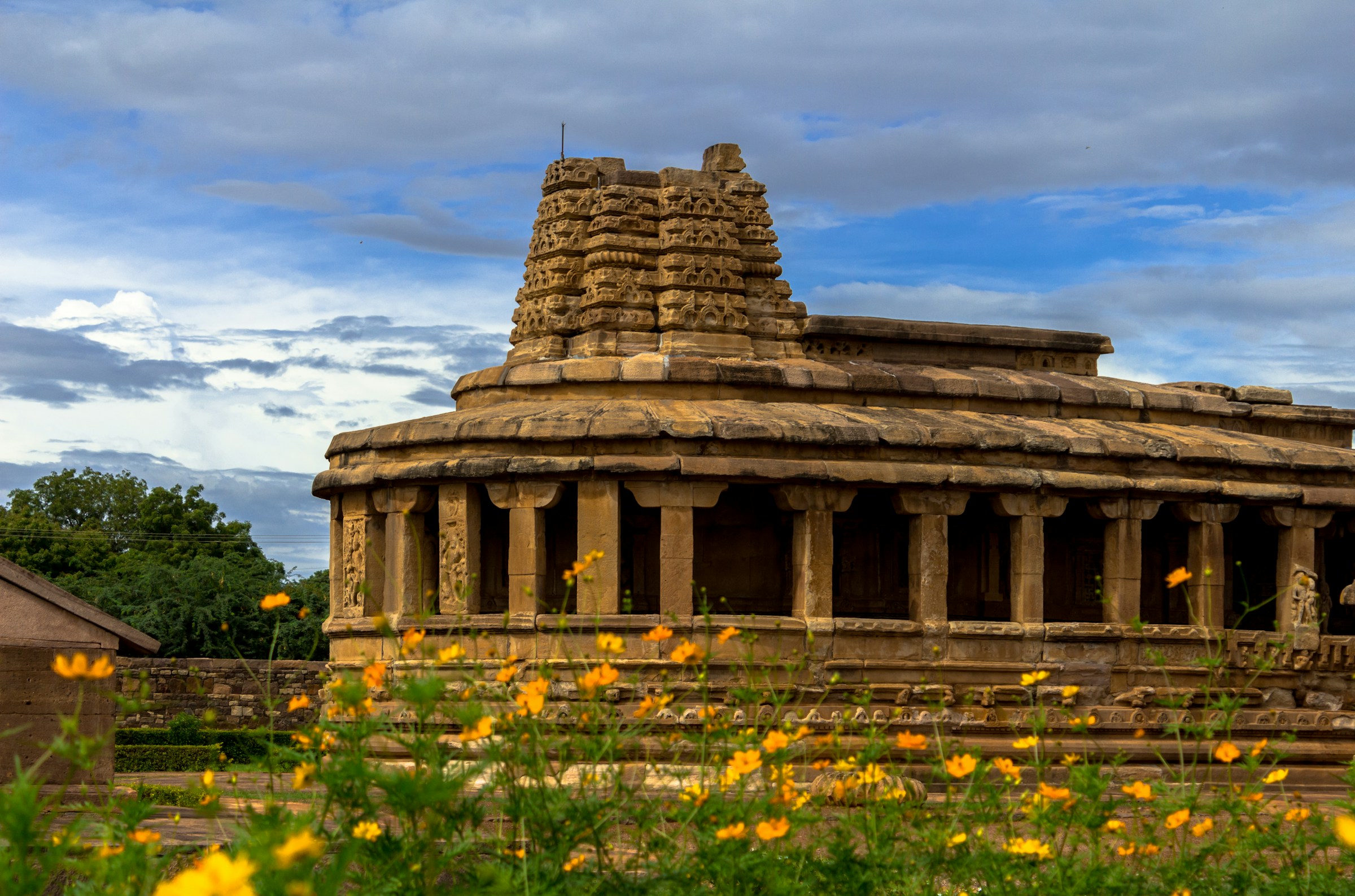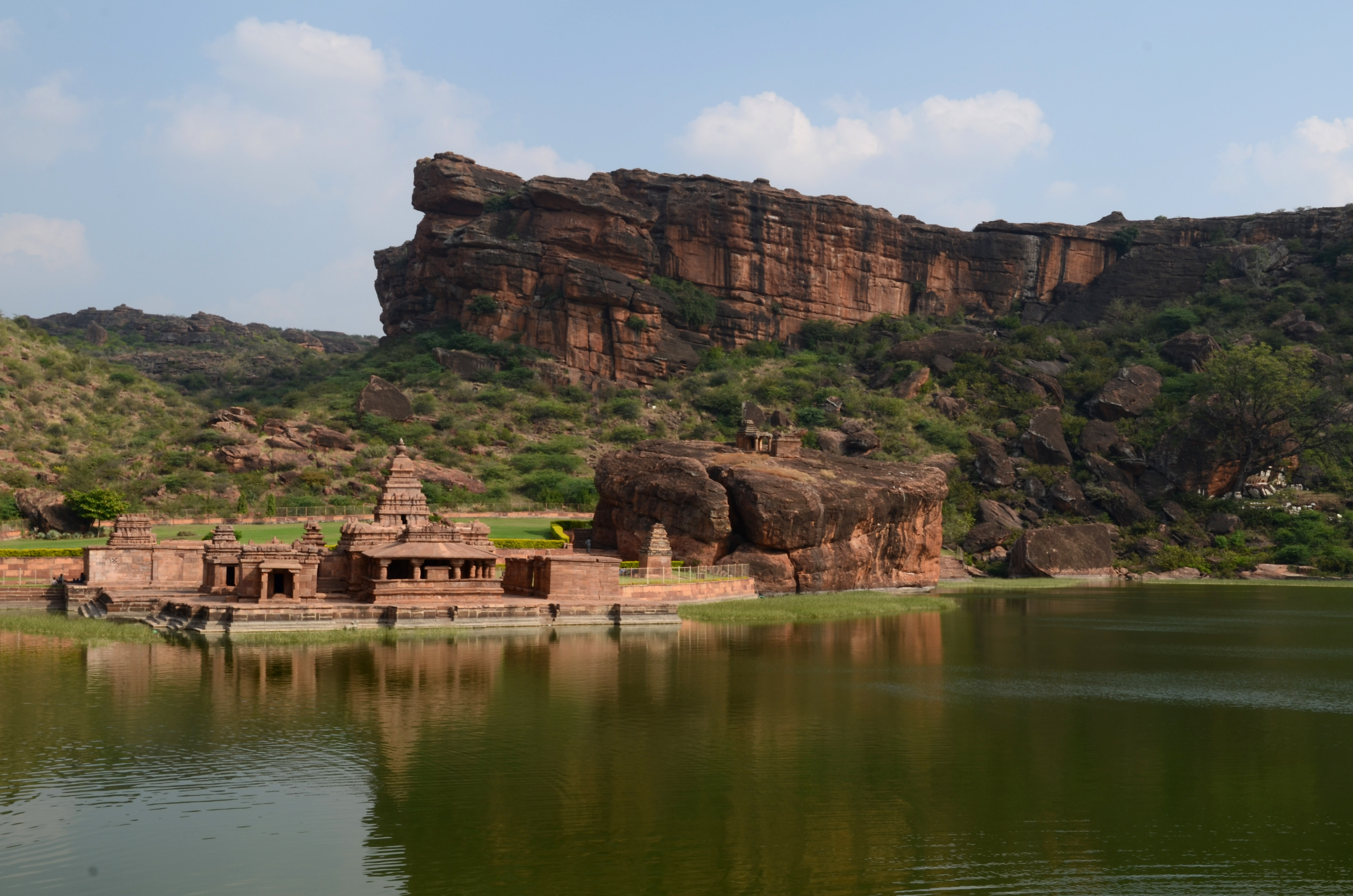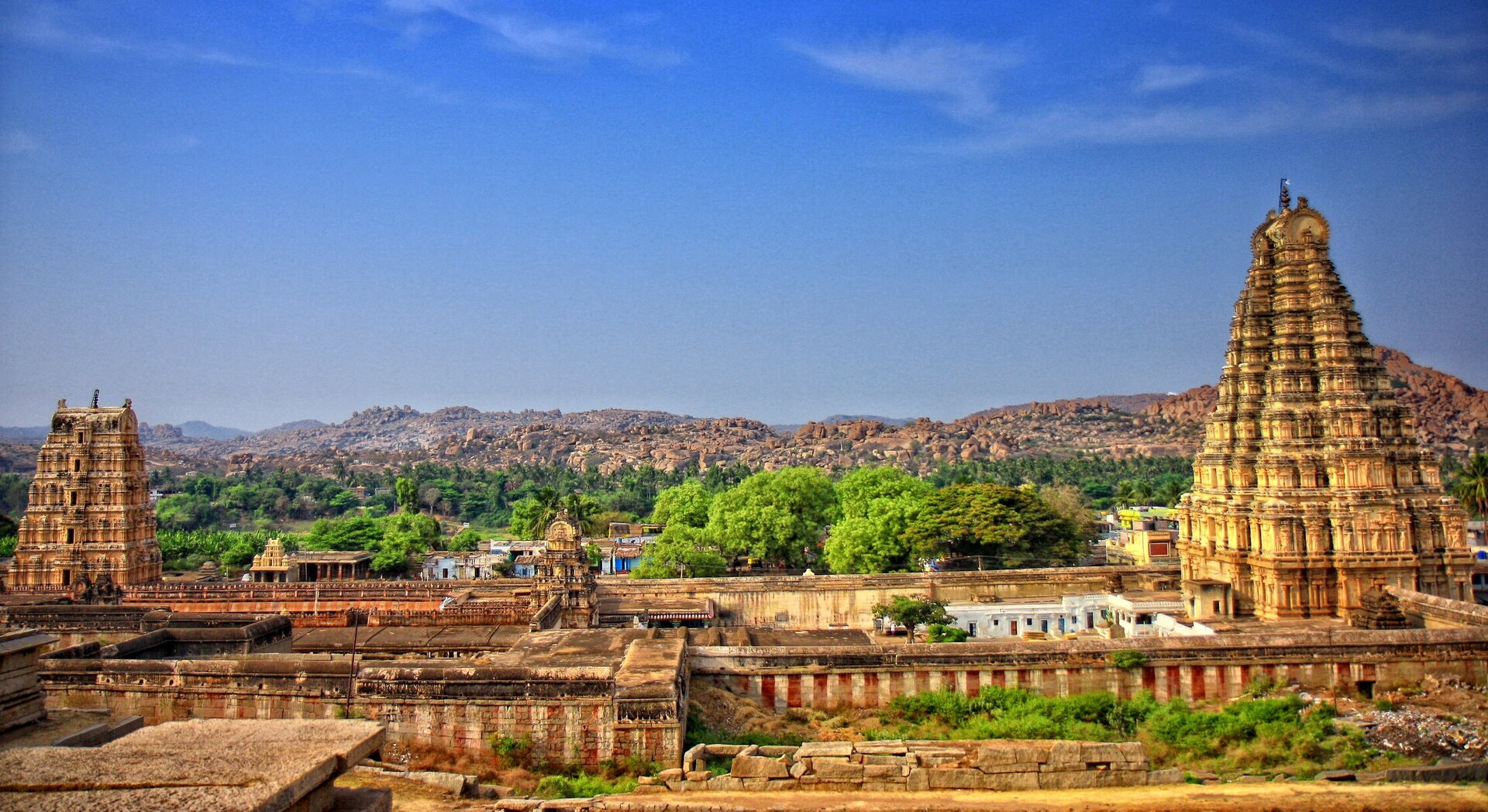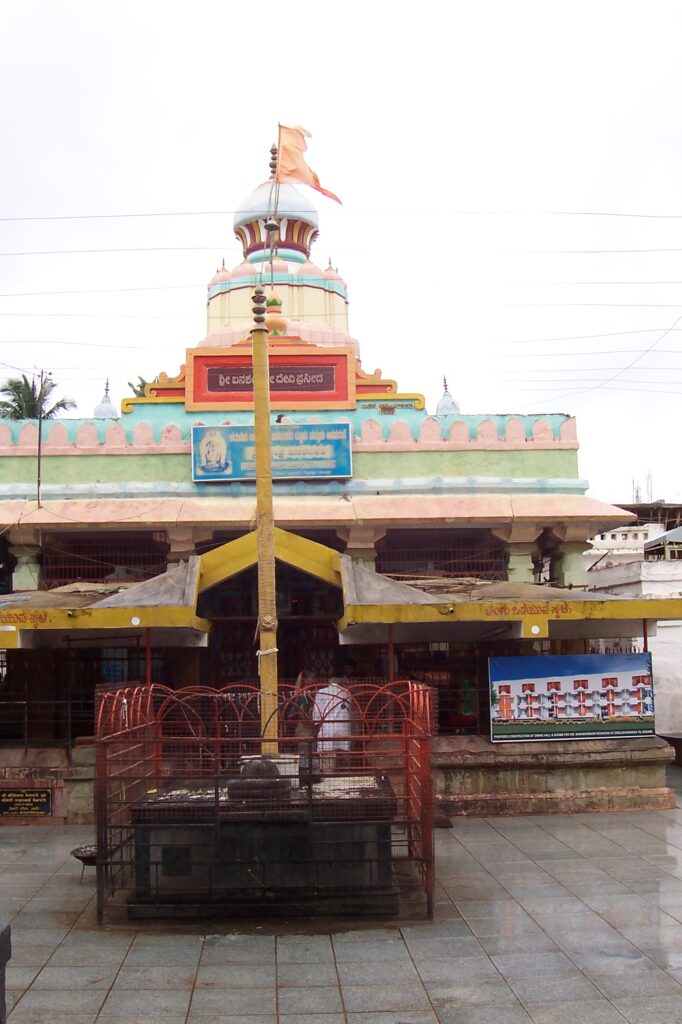
Image Source: Nvvchar
About Banashankari Temple
The Banashankari Temple, located about 5 kilometers from Badami in Karnataka’s Bagalkot district, is one of the most revered shrines in the region. Dedicated to Goddess Banashankari (also called Shakambari Devi), the temple holds immense mythological significance, historical importance, and cultural relevance. It is not only a spiritual center but also a hub for festivals, fairs, and traditions that continue to thrive even today.
Mythology and Legends
According to Skanda Purana, the goddess manifested in the Tilakaaranya forest to destroy the demon Durgamasura, who had been harassing sages and common people. To vanquish the demon, the goddess assumed the form of Shakambari Devi, meaning “the one who nourishes with vegetables and greens”. This aspect highlights her role as the provider of food and sustenance, reflecting the agrarian culture of the Deccan region. She is also associated with Banashankari, meaning “the goddess of the forest”, symbolizing protection and prosperity.
The temple’s central deity, Banashankari Amma, is portrayed seated on a lion with a demon crushed under her feet, a powerful image of divine justice and protection. Local devotees firmly believe that she safeguards them from famine, drought, and adversities.
History and Architecture
The Banashankari Temple was originally constructed by the Chalukyas of Kalyana in the 7th century CE, who were great patrons of temple architecture in Karnataka. Later, during the Vijayanagara period in the 16th century, the temple underwent renovations and expansions.
The temple architecture is in the Dravidian style, featuring a tall gopuram (gateway tower), a spacious courtyard, and intricately carved pillars. A notable feature is the large square water tank in front of the temple, known as Haridra Tirtha, surrounded by stone mandapas. This tank plays a central role during festivals, with pilgrims performing ritual dips and floating lamps on its waters.
Inside the sanctum, the black stone idol of Banashankari Amma radiates grace and power. The temple complex also includes several smaller shrines dedicated to other deities.
Festivals and Cultural Importance
The most famous celebration here is the Banashankari Jatre (fair), held annually in January–February during the Pushya Maasa (Magha month). Pilgrims from across Karnataka and Maharashtra gather in large numbers for processions, rituals, and cultural programs. The fair is also known for its unique cattle market, handloom exhibitions, and folk performances, making it a blend of devotion and rural culture.
Another special tradition is the Deepa Utsava, where devotees light lamps around the Haridra Tirtha, creating a breathtaking reflection on the water.
How to Reach
The Banashankari Temple is easily accessible from Badami, which is a major historical and tourist hub in Karnataka.
By Road: The temple is just 5 km from Badami bus stand, and local auto-rickshaws or taxis are available. KSRTC buses connect Badami with Hubli, Bagalkot, Bijapur, and Bengaluru.
By Train: The nearest railway station is Badami Railway Station (about 5 km away), connected to Hubli and other towns in North Karnataka.
By Air: The closest airport is Hubli Airport (105 km), offering flights to Bengaluru and other cities. Belgaum Airport (150 km) is another option.
Nearby Attractions
Located about 5 km from Badami town in the village of Cholachagudda, the Banashankari Temple is one of the most important pilgrimage sites in northern Karnataka. The temple is dedicated to Goddess Banashankari (Shakambari), a form of Goddess Parvati, and is renowned for its historic architecture, sacred Haridra Tirtha tank, and annual Banashankari Jatre festival.
1. Badami Cave Temples
One of Karnataka’s most famous heritage attractions, these 6th-century rock-cut cave temples are carved into red sandstone cliffs. The caves contain magnificent sculptures of Shiva, Vishnu, Jain Tirthankaras, and other deities. Visitors can enjoy panoramic views of Badami town and Agastya Lake from the hilltop.
2. Agastya Lake
This picturesque man-made lake lies at the heart of Badami and is surrounded by temples, sandstone hills, and historic monuments. The lake offers beautiful sunrise and sunset views and serves as a perfect spot for photography.
3. Bhutanatha Temple
Situated on the banks of Agastya Lake, this sandstone temple dedicated to Lord Shiva is known for its tranquil setting and exquisite Chalukyan architecture. The reflection of the temple in the lake creates a stunning visual spectacle.
4. Badami Fort
Perched atop the cliffs overlooking Badami, the fort offers breathtaking views of the surrounding valley. Visitors can explore ancient watchtowers, gateways, inscriptions, and remnants of the Chalukya and later dynasties.
5. Mahakuta Temples
Located about 14 km from Badami, this temple complex contains numerous ancient Shiva temples and a sacred natural spring-fed tank. The peaceful atmosphere makes it a popular spiritual retreat.
6. Pattadakal
A UNESCO World Heritage Site, Pattadakal showcases some of the finest examples of early Chalukyan temple architecture. The site features a remarkable blend of Dravidian and Nagara architectural styles.
7. Aihole
Often called the “Cradle of Indian Temple Architecture,” Aihole is home to more than 100 ancient temples and monuments. It is an essential destination for history and architecture enthusiasts.
Google Maps
FAQs
1. Where is Banashankari Temple located?
The temple is located in Cholachagudda village, approximately 5 km from Badami in Karnataka’s Bagalkot district.
2. Which deity is worshipped at Banashankari Temple?
The temple is dedicated to Goddess Banashankari, also known as Shakambari, a manifestation of Goddess Parvati.
3. What are the temple timings?
The temple is generally open from 6:00 AM to 1:00 PM and from 3:00 PM to 9:00 PM.
4. Is there an entry fee?
No, entry to the temple is free for all visitors.
5. What is the significance of the Haridra Tirtha tank?
The sacred tank located opposite the temple is an important part of the temple complex and is known for its stone corridors and lamp tower. It plays a key role during religious festivals and rituals.
6. When is the Banashankari Jatre celebrated?
The famous Banashankari Jatre is held annually during January or February and attracts thousands of devotees from Karnataka and neighboring states.
7. What is the architectural style of the temple?
The temple exhibits a blend of Dravidian and Nagara architectural styles, with later Vijayanagara and Maratha influences visible in the present structure.
8. How much time is needed to visit the temple?
Most visitors spend about 1–2 hours exploring the temple complex, sacred tank, and surrounding areas.
9. What is the best time to visit Banashankari Temple?
The cooler months from October to March are ideal for sightseeing. Visitors interested in cultural festivities may plan their trip during the Banashankari Jatre.
10. Can Banashankari Temple be visited along with Badami, Aihole, and Pattadakal?
Yes. Many travelers combine Banashankari Temple with Badami, Aihole, Pattadakal, and Mahakuta as part of a single heritage circuit in northern Karnataka.