
Image Source: Photo Dharma
About Barabar Caves
Nestled amidst the granite hills of Bihar’s Jehanabad district, the ancient Barabar Caves are regarded as the oldest surviving rock-cut caves in India. Dating back to the 3rd century BCE during the Mauryan era, these caves are a remarkable example of India’s early architectural brilliance and spiritual heritage. Long before the famous cave complexes of Ajanta and Ellora were created, the Barabar Caves stood as pioneering masterpieces of rock-cut engineering.
Carved entirely out of massive granite rocks, the caves are known for their polished interiors, echoing chambers, and extraordinary precision. Beyond their architectural significance, they also reflect the rich religious and philosophical diversity of ancient India. The caves were closely associated with the Ajivika sect, while later attracting Buddhist and Jain monks who used them as meditation retreats.
History of Barabar Caves
The Barabar Caves were commissioned during the reign of Emperor Ashoka, one of the greatest rulers of the Mauryan dynasty, between 272 and 232 BCE. Some caves were later completed under his grandson, Dasaratha Maurya. Inscriptions engraved inside the caves reveal that they were primarily dedicated to the Ajivikas, an ancient ascetic sect that flourished alongside Buddhism and Jainism in the Magadha region.
The Ajivikas believed strongly in fate and destiny and followed a life of strict discipline and renunciation. Emperor Ashoka’s patronage of these caves demonstrates the religious tolerance practiced during his reign. Although Ashoka is widely associated with Buddhism, he also supported other spiritual traditions, including the Ajivikas.
Over time, Buddhist monks and Jain ascetics also began using these caves for meditation and spiritual practices. Because of their peaceful surroundings and isolated hilltop setting, the caves became ideal centers for contemplation and retreat.
Architectural Brilliance
The Barabar cave complex is admired for its highly advanced craftsmanship, especially considering the era in which it was built. The interiors were carved with astonishing accuracy, and the granite walls were polished so smoothly that they still reflect light today. This famous “Mauryan polish” gives the caves a mirror-like appearance rarely seen in ancient structures.
Lomas Rishi Cave
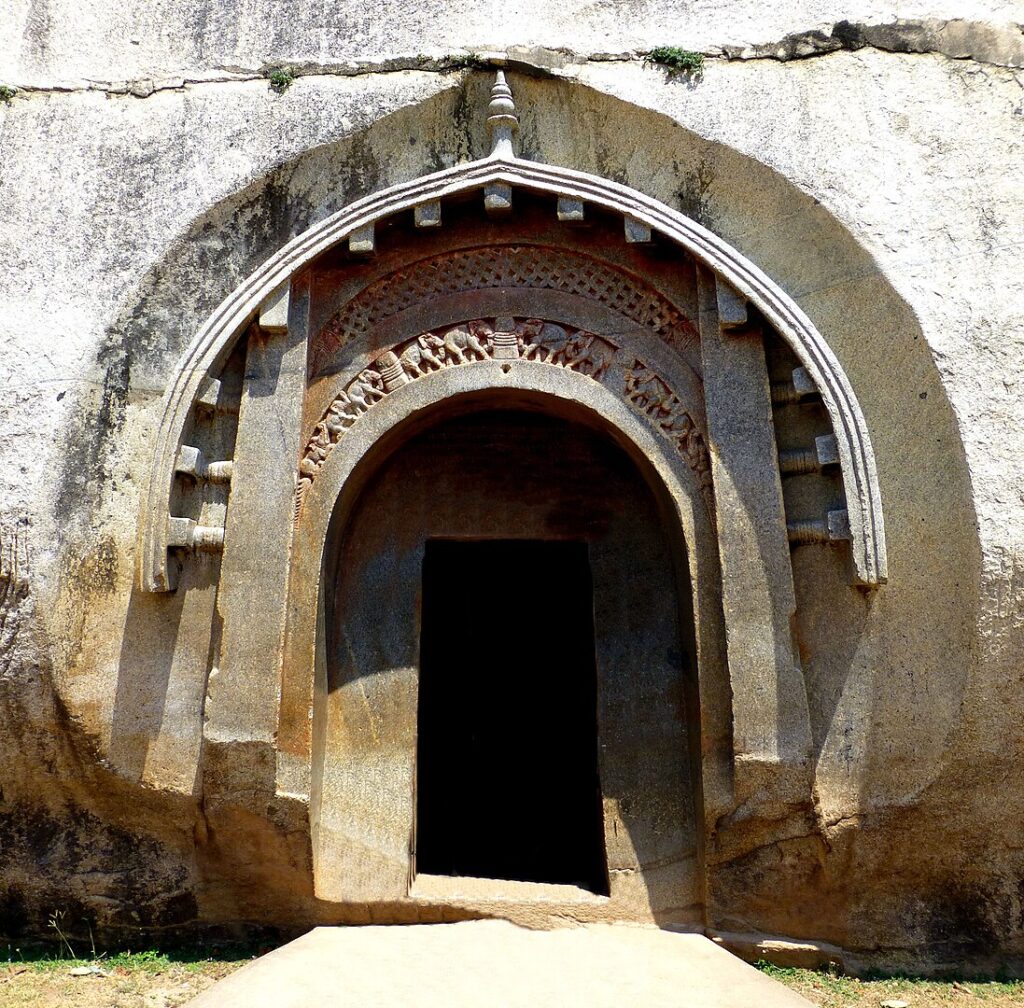
The Lomas Rishi Cave is the most famous and visually striking cave in the complex. Its entrance features a beautifully carved horseshoe-shaped arch that resembles a traditional wooden hut. Elephant carvings near the entrance add to its artistic appeal. This façade later became a model for Indian rock-cut architecture and inspired cave designs at Ajanta, Ellora, Karla, and Bhaja.
Sudama Cave
Dedicated by Ashoka to the Ajivikas in 261 BCE, the Sudama Cave contains two chambers — a rectangular hall and a circular inner chamber. The polished granite walls and impressive acoustics make it one of the finest examples of Mauryan engineering.
Karan Chaupar Cave
This cave consists of a single rectangular chamber with smooth polished interiors. It contains inscriptions dating back to Ashoka’s reign and was likely used as a meditation hall by ascetics.
Visvakarma Cave (Viswa Jhopri)
The Visvakarma Cave appears to have remained unfinished. Despite its incomplete structure, it still offers insight into the construction techniques used during the Mauryan period.
Spiritual Importance
The Barabar Caves hold immense spiritual significance because they were associated with multiple religious traditions. Initially occupied by the Ajivikas, the caves later became meditation sites for Buddhist monks and Jain ascetics.
Their secluded setting among rocky hills created a calm and silent environment ideal for spiritual reflection. The caves symbolize the intellectual and religious diversity of ancient Magadha, which was once one of the greatest centers of philosophy and learning in India.
Even today, visitors often describe the atmosphere inside the caves as peaceful and meditative. The natural echoes within the chambers add a unique mystical experience for travelers exploring the site.
Inscriptions and Historical Records
Several Brahmi inscriptions found inside the caves provide valuable historical evidence about the Mauryan Empire and the Ajivika sect. These inscriptions mention Emperor Ashoka and Dasaratha Maurya, helping historians accurately date the caves.
The records are especially important because very little information about the Ajivika philosophy survives today. As a result, the Barabar Caves serve as one of the few remaining physical links to this nearly forgotten spiritual tradition.
Influence on Indian Cave Architecture
The Barabar Caves played a foundational role in the development of Indian rock-cut architecture. The horseshoe-shaped chaitya arch seen at the entrance of the Lomas Rishi Cave later became a defining feature in Buddhist cave complexes across India.
Architectural elements first seen here influenced later masterpieces such as the Ajanta Caves in Maharashtra, the Karla Caves near Lonavala, and the Bhaja Caves. Because of this, historians often regard the Barabar Caves as the starting point of India’s cave temple tradition.
Visiting Barabar Caves
The Barabar Caves are located around 24 km from Gaya and about 40 km from Bodh Gaya in Bihar. Their proximity to important Buddhist heritage sites makes them a popular stop for travelers exploring the Buddhist Circuit.
Surrounded by rugged granite hills and scenic landscapes, the caves offer a blend of history, archaeology, spirituality, and natural beauty. The short trek to some of the caves also adds a sense of adventure to the visit.
Best Time to Visit
The ideal time to visit is between October and March, when the weather remains cool and comfortable for sightseeing and climbing.
Nearby Attractions
Travelers often combine a visit to the Barabar Caves with nearby historical destinations such as:
- Mahabodhi Temple.
- Nalanda University Ruins.
- Rajgir.
- Telhara University Ruins.
These places together provide a deeper understanding of Bihar’s rich spiritual and educational heritage.
Travel Tips
- Wear comfortable walking shoes, as reaching some caves involves climbing rocky paths.
- Carry drinking water, especially during warmer months.
- Visit early in the morning for pleasant weather and fewer crowds.
- Photography enthusiasts should carry a camera, as the granite hills and cave entrances offer stunning views.
- Hiring a local guide can help you better understand the history and inscriptions of the caves.
Google Maps
FAQs
Why are the Barabar Caves famous?
The Barabar Caves are famous for being the oldest surviving rock-cut caves in India. They are also known for their mirror-like polished interiors and their connection to the Mauryan Empire and the Ajivika sect.
Who built the Barabar Caves?
Most of the caves were commissioned by Emperor Ashoka during the 3rd century BCE, while some were completed by his grandson Dasaratha Maurya.
Which is the most famous cave in the Barabar complex?
The Lomas Rishi Cave is considered the most famous because of its beautifully carved entrance and its influence on later Indian cave architecture.
What is the significance of the Mauryan polish?
The Mauryan polish refers to the smooth, glossy finish on the granite walls inside the caves. This polishing technique was highly advanced for its time and remains one of the caves’ most remarkable features.
Are the Barabar Caves connected to Buddhism?
Although the caves were originally dedicated to the Ajivika sect, Buddhist monks later used them for meditation. The caves also influenced Buddhist cave architecture in later centuries.
How can I reach Barabar Caves?
The caves can be reached by road from Gaya and Bodh Gaya. The nearest major railway station is Gaya Junction, while the nearest airport is Gaya International Airport.
What is the best time to visit Barabar Caves?
The best time to visit is from October to March when the weather is pleasant and suitable for exploring the caves and surrounding hills.