Image Source:Bitan Roy
About Hindola Mahal
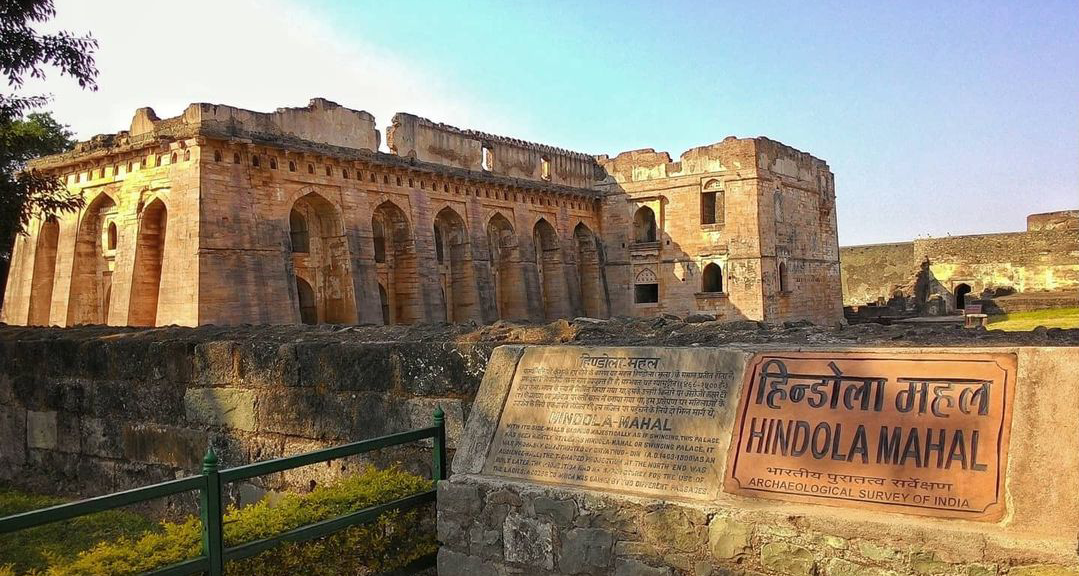
Set within the historic landscape of Mandu, Hindola Mahal is one of the most striking structures from the region’s medieval past. The name “Hindola” literally means “swing,” and as soon as you see the monument, you’ll understand why—the massive sloping walls give it the appearance of a structure gently swaying in motion.
Part of the larger complex that includes Rewa Kund and nearby royal buildings, Hindola Mahal stands as a beautiful blend of history, architecture, and timeless romance.
History and Purpose
Built in the early 16th century during the Malwa Sultanate period, Hindola Mahal was originally designed as a durbar hall or assembly space—likely used for royal gatherings and administrative purposes. Its massive structure and strategic location also suggest that it may have served as an observation point for monitoring the surrounding region.
Over time, the monument became closely associated with the legendary love story of Baz Bahadur and Rani Roopmati. While Roopmati is more directly linked to her own pavilion, the entire Mandu complex—including Hindola Mahal—echoes their story of love, devotion, and eventual tragedy.
Architecture and Design
Hindola Mahal is a masterpiece of simplicity and strength. Its most distinctive feature is its sloping side walls, which are thick, angled, and designed to support the massive weight of the structure—giving it that unique “swinging” appearance.
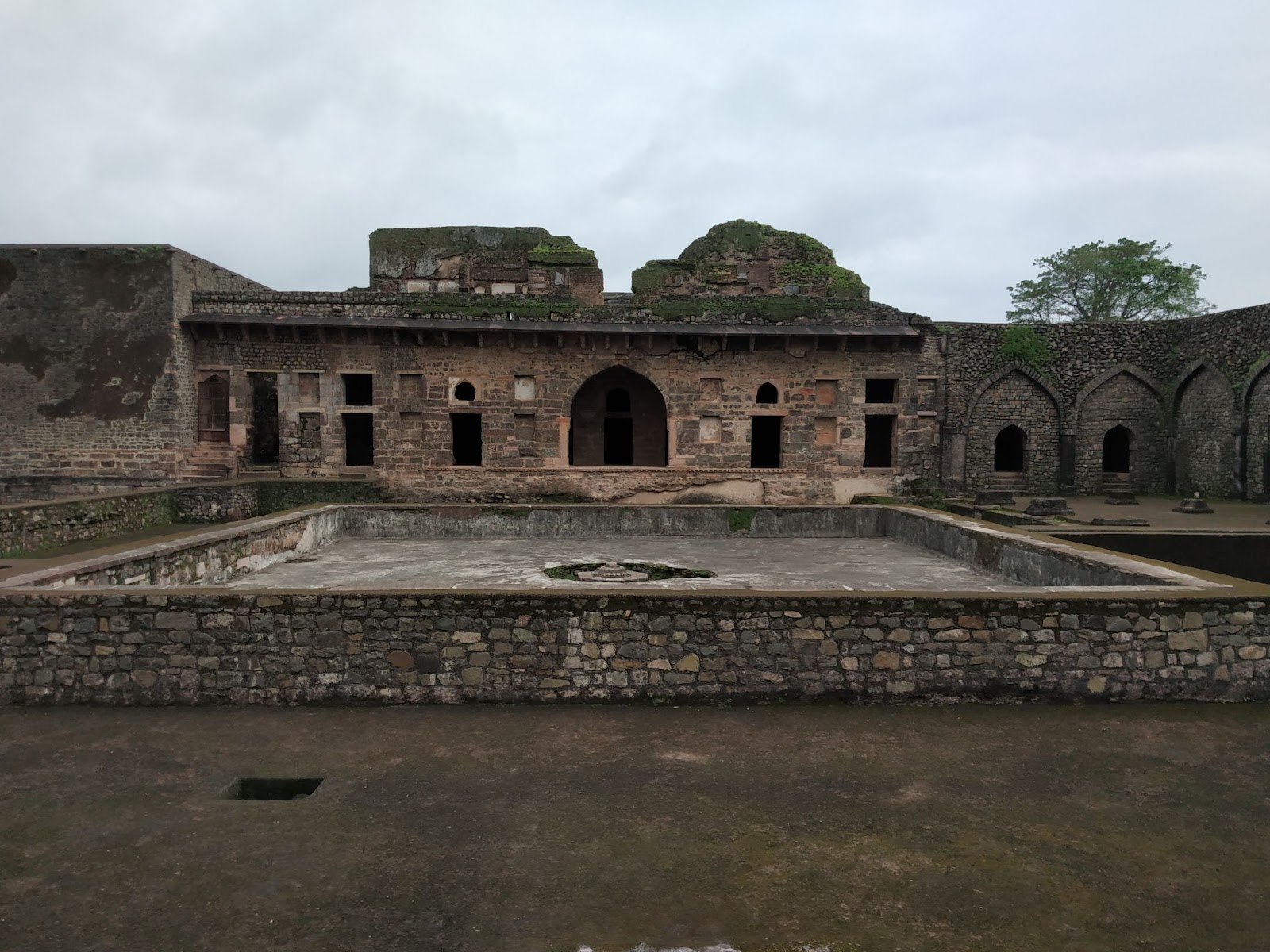
Inside, the hall is big and open, with high ceilings and large arched openings that allow light and air to flow freely. The original structure includes:
- A spacious central hall
- Smaller rooms on either side
- Strong, buttressed walls for stability
As the monument evolved over time, additional sections were built, especially toward the western side. These expansions added corridors and arched passageways, enhancing both its functionality and visual appeal.
Scenic Setting and Views
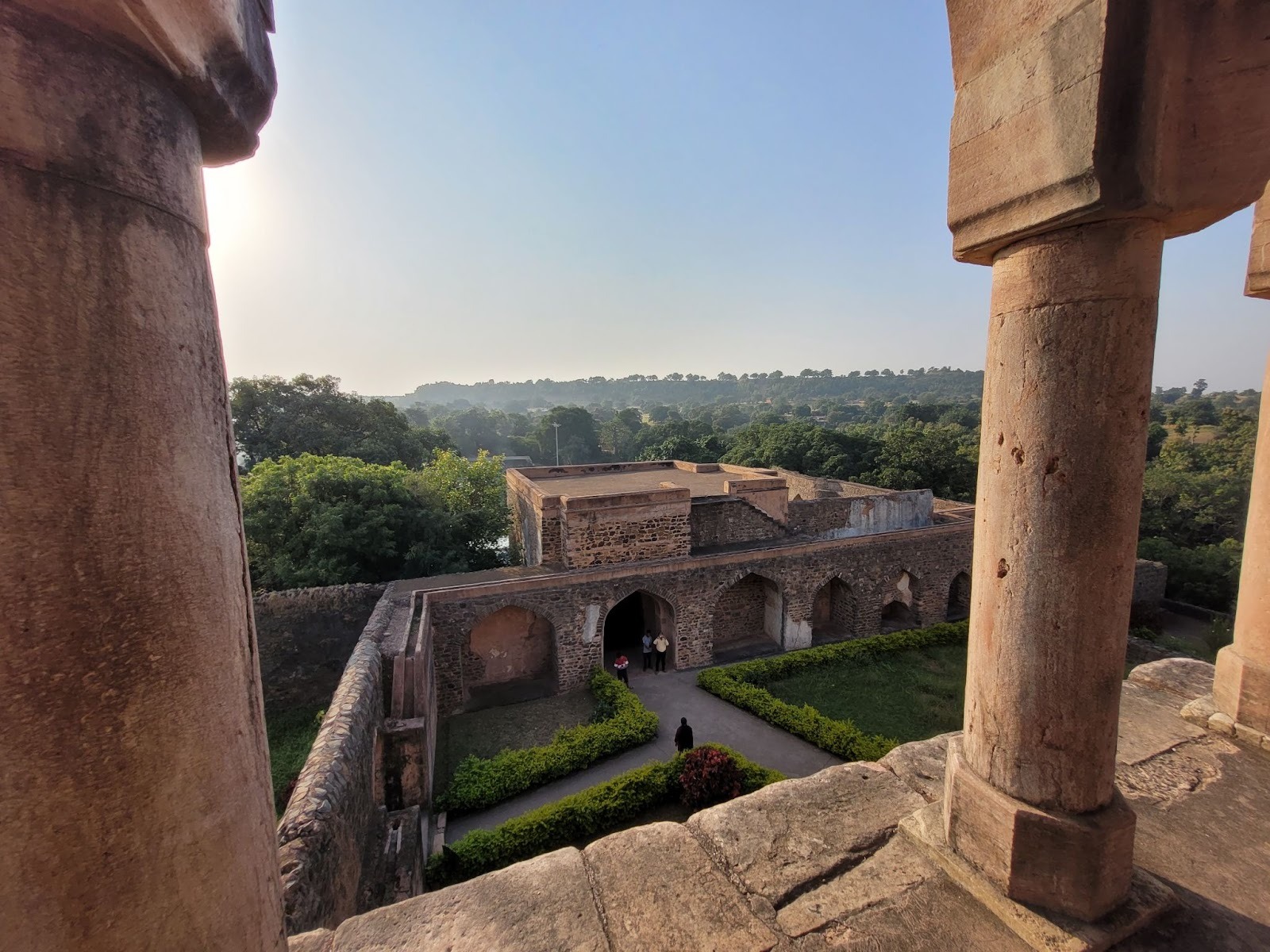
One of the most memorable aspects of Hindola Mahal is its location. Perched near the edge of a plateau, it offers sweeping views of the surrounding landscapes, including the lush Nimar Valley.
During sunset, the entire area is bathed in golden light, creating a magical atmosphere. On clear days, you may even catch distant glimpses of the Narmada River, adding to the charm of the setting.
Connection with Rewa Kund
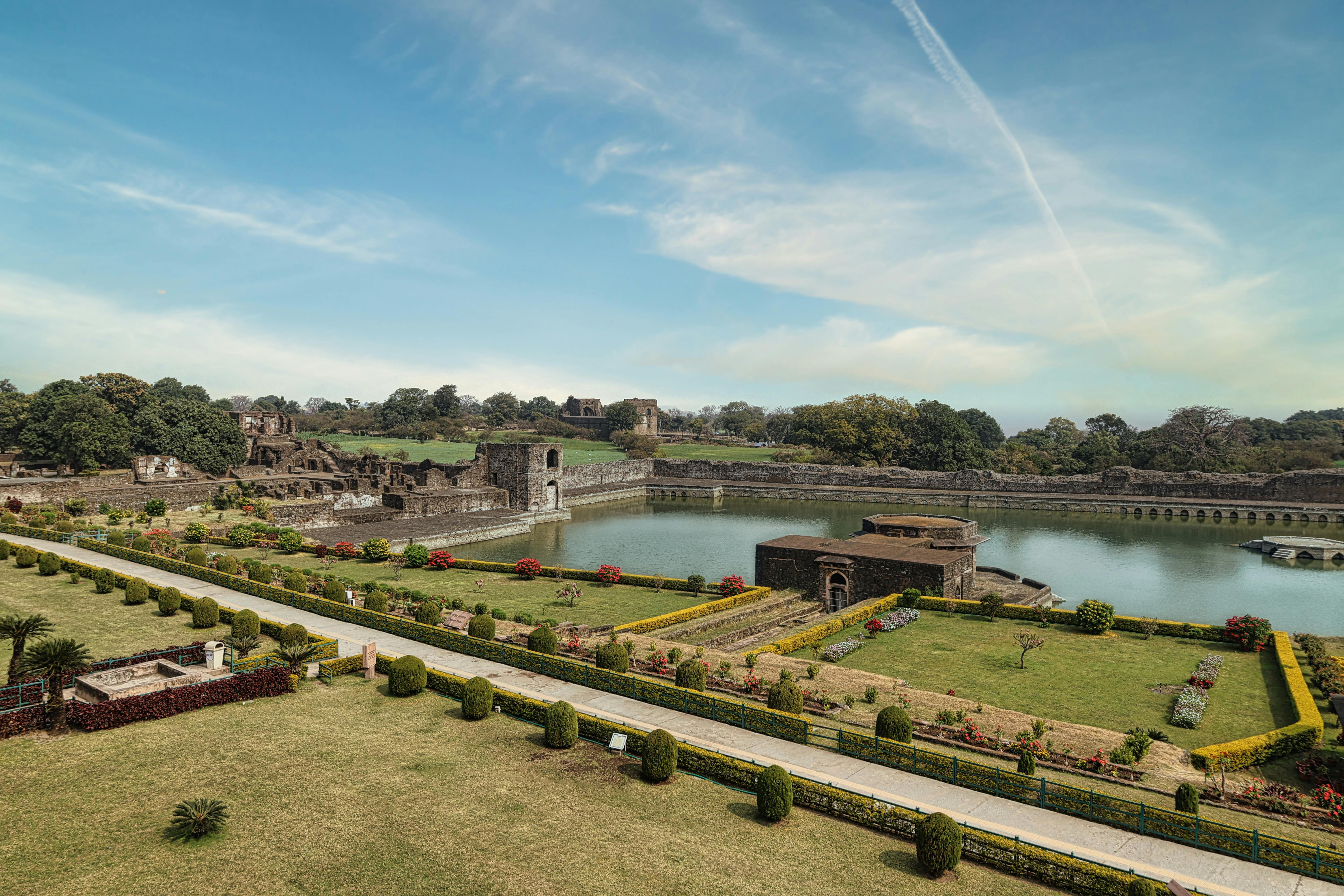
Just a short distance away lies Rewa Kund, a historic water reservoir closely tied to the story of Roopmati and Baz Bahadur. The architectural planning of the area ensured efficient water collection and storage.
During the monsoon, rainwater from the rooftops and surrounding structures would flow through channels into the reservoir, showcasing an early and effective water management system. This integration of architecture and utility reflects the ingenuity of the builders of Mandu.
The Legendary Love Story
The story of Baz Bahadur and Rani Roopmati adds a deeply emotional layer to any visit here. Baz Bahadur, a ruler known for his love of music and art, is said to have fallen in love with Roopmati, a gifted singer.
Their romance, however, met a tragic end during the invasion of Mandu by the Mughal general Adham Khan. After Baz Bahadur was defeated, Roopmati chose not to be captured and is believed to have taken her own life, preserving her dignity.
Even today, the ruins of Mandu—including Hindola Mahal—carry echoes of this poignant story.
Timings and Entry Fee
- Timings: 8:00 AM to 6:00 PM
- Entry Fee:
- Indian visitors: ₹25
- Foreign visitors: ₹300
(Fees may vary slightly, so it’s always good to check before visiting.)
How to Reach
Hindola Mahal is located within the Royal Palace Complex of Mandu in the Dhar district of Madhya Pradesh. Situated near Jahaz Mahal and about 1.5 km from the Mandu Bus Stand, it is one of the easiest monuments to access while exploring the historic fort city.
By Air
The nearest airport is Devi Ahilya Bai Holkar Airport, Indore, approximately 95 km from Mandu. Regular flights connect Indore with major Indian cities. From the airport, tourists can hire taxis or cabs to reach Mandu.
By Rail
The nearest major railway station is Indore Junction, which has good rail connectivity with Delhi, Mumbai, Ahmedabad, Jaipur, and Bhopal. From the station, buses and taxis are available for Mandu.
By Road
Mandu is well connected by road to Indore (about 100 km), Dhar (35 km), and other nearby cities. State-run and private buses frequently operate between Indore, Dhar, and Mandu. Once in Mandu, Hindola Mahal can be reached by taxi, auto-rickshaw, or even on foot as part of the heritage circuit.
Nearby Attractions of Hindola Mahal
Jahaz Mahal
Located right beside Hindola Mahal, Jahaz Mahal is one of Mandu’s most famous monuments. Built between two lakes, the palace resembles a ship floating on water and is renowned for its elegant architecture.
Taveli Mahal
Part of the Royal Palace Complex, Taveli Mahal once served as a stable and now houses an archaeological museum displaying artifacts discovered in Mandu.
Nahar Jharokha
This royal viewing pavilion was used by the sultans to observe public ceremonies and gatherings. It offers insight into the courtly life of the Malwa rulers.
Jami Masjid
One of the largest and finest mosques in central India, Jami Masjid is admired for its grand courtyards, massive domes, and Afghan-inspired architecture.
Hoshang Shah’s Tomb
Known as India’s first marble mausoleum, this stunning monument is believed to have inspired some of the architectural elements later seen in the Taj Mahal.
Ashrafi Mahal
Situated opposite Jami Masjid, Ashrafi Mahal consists of the ruins of a madrasa and a victory tower, making it an important historical landmark in Mandu.
Dilawar Khan Mosque
One of the earliest Islamic monuments in Mandu, this mosque reflects the transition from local temple architecture to Indo-Islamic design.
Baz Bahadur’s Palace
Famous for its beautiful courtyards and scenic setting, the palace was built by Mandu’s last independent ruler and offers magnificent views of the surrounding landscape.
Rani Roopmati Pavilion
Perched on a hilltop overlooking the Narmada Valley, this iconic pavilion is associated with the legendary romance of Baz Bahadur and Rani Roopmati.
Rewa Kund
A historic reservoir built to supply water to Rani Roopmati’s residence, Rewa Kund remains a peaceful and picturesque attraction.
Hindola Mahal is best visited as part of the Royal Palace Complex tour, which includes Jahaz Mahal, Taveli Mahal, and Nahar Jharokha. Its distinctive sloping walls, which give it the name “Swinging Palace,” make it one of the finest examples of Malwa Sultanate architecture in Mandu.
Travel Tips
- Visit early morning or late afternoon for pleasant weather and soft lighting
- Combine your visit with nearby attractions like Rewa Kund and Roopmati Pavilion
- Carry water and wear comfortable shoes, as exploring Mandu involves walking
- Photography lovers should not miss sunset views
Maps
FAQs
1. Why is Hindola Mahal called the “Swinging Palace”?
Because of its sloping side walls, which create the illusion of a swinging motion.
2. What was Hindola Mahal originally used for?
It was primarily a durbar hall or assembly space for royal gatherings.
3. Is Hindola Mahal connected to Rani Roopmati?
While her main residence was Roopmati Pavilion, Hindola Mahal is part of the same historical complex linked to her story.
4. What is the best time to visit Hindola Mahal?
October to March is ideal, with cooler weather and clearer views.
5. How much time is needed to explore the site?
Around 30–60 minutes is enough to explore and take in the surroundings.
6. Are guides available at the site?
Yes, local guides are often available and can enrich your visit with detailed stories and historical insights.