Image Source: Aamin
About Rewa Kund
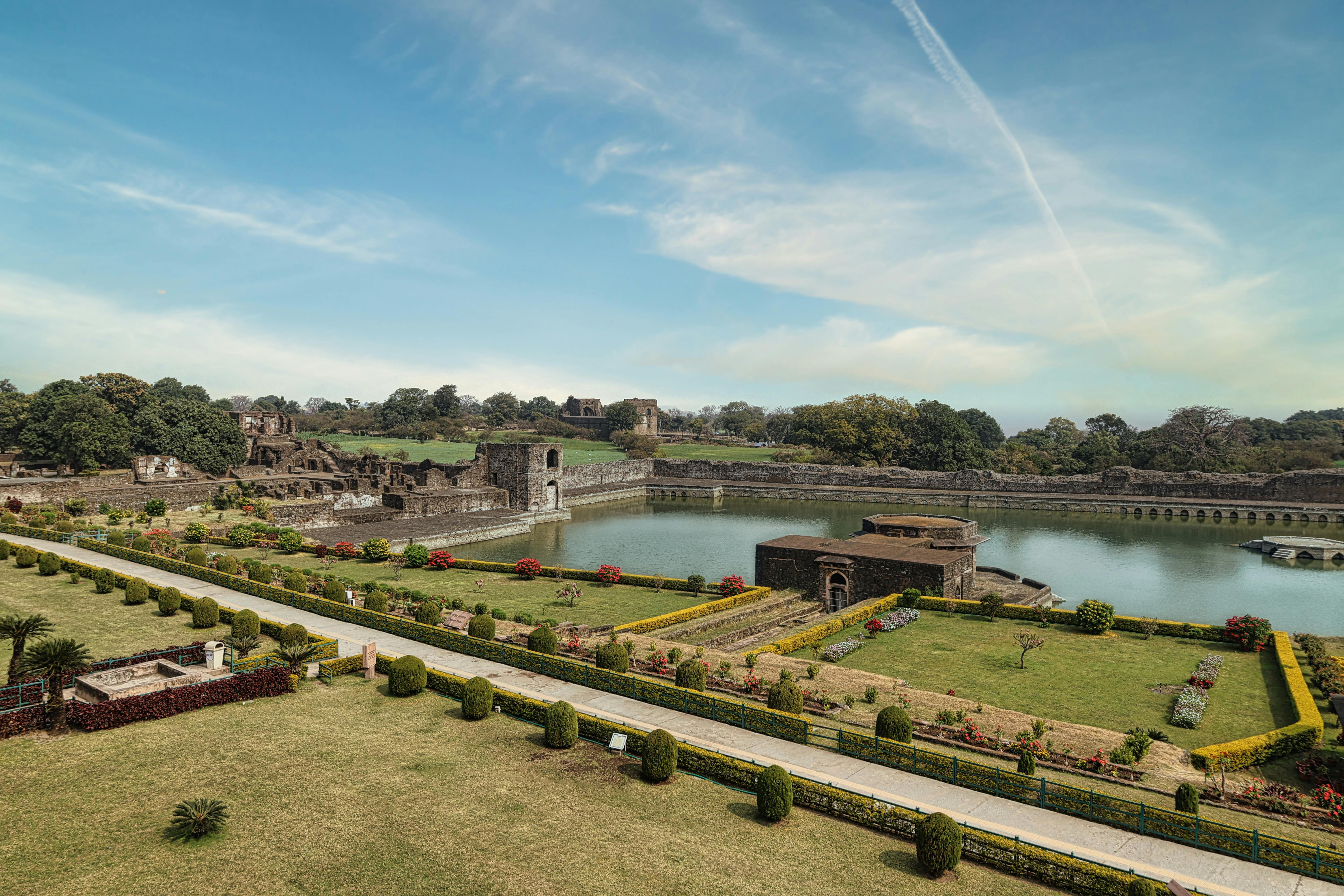
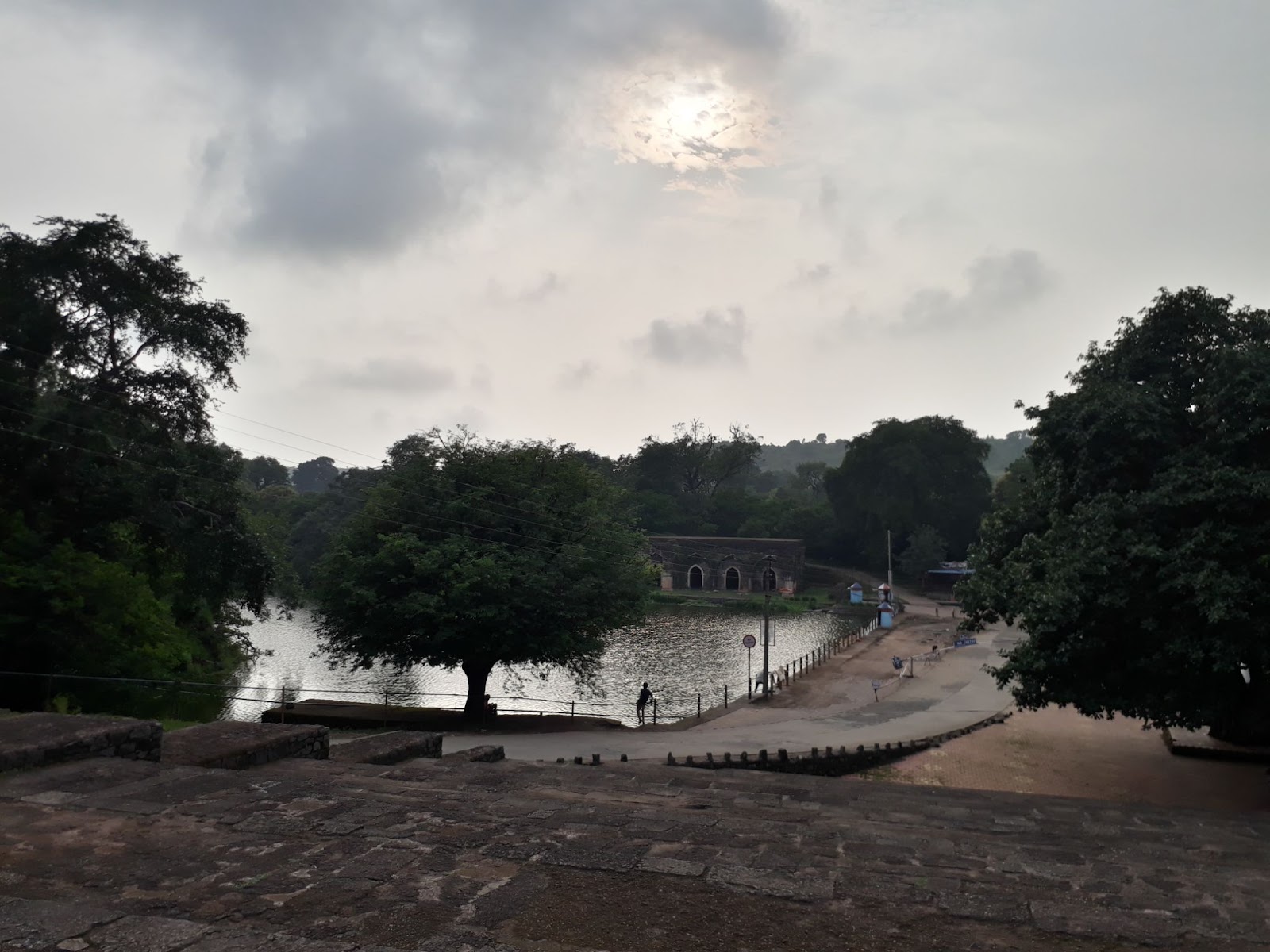
Set amidst the romantic ruins of Mandu in Madhya Pradesh, Rewa Kund is more than just a water reservoir—it’s a story carved in stone, water, and memory. Surrounded by ancient architecture and sweeping views of the Malwa plateau, this calm water body quietly reflects one of the most famous love stories of medieval India.
A Tale of Love and Devotion
Rewa Kund is closely linked to the legendary romance between Baz Bahadur, the last independent ruler of Mandu, and Rani Roopmati, a poetess and singer known for her beauty and devotion.
According to popular belief, Roopmati refused to stay in Mandu unless she could see or have access to the sacred waters of the Narmada River, which she deeply revered. To fulfill her wish, Baz Bahadur ordered the construction of Rewa Kund—a specially designed reservoir that ensured a steady supply of Narmada water to her residence, the nearby Roopmati Pavilion.
This act wasn’t just practical—it was symbolic of his love and commitment, turning Rewa Kund into a lasting tribute to their bond.
Architecture and Design
Rewa Kund is a man-made reservoir, thoughtfully designed with both utility and aesthetics in mind. It measures roughly 230 feet from north to south and about 170 feet from east to west.
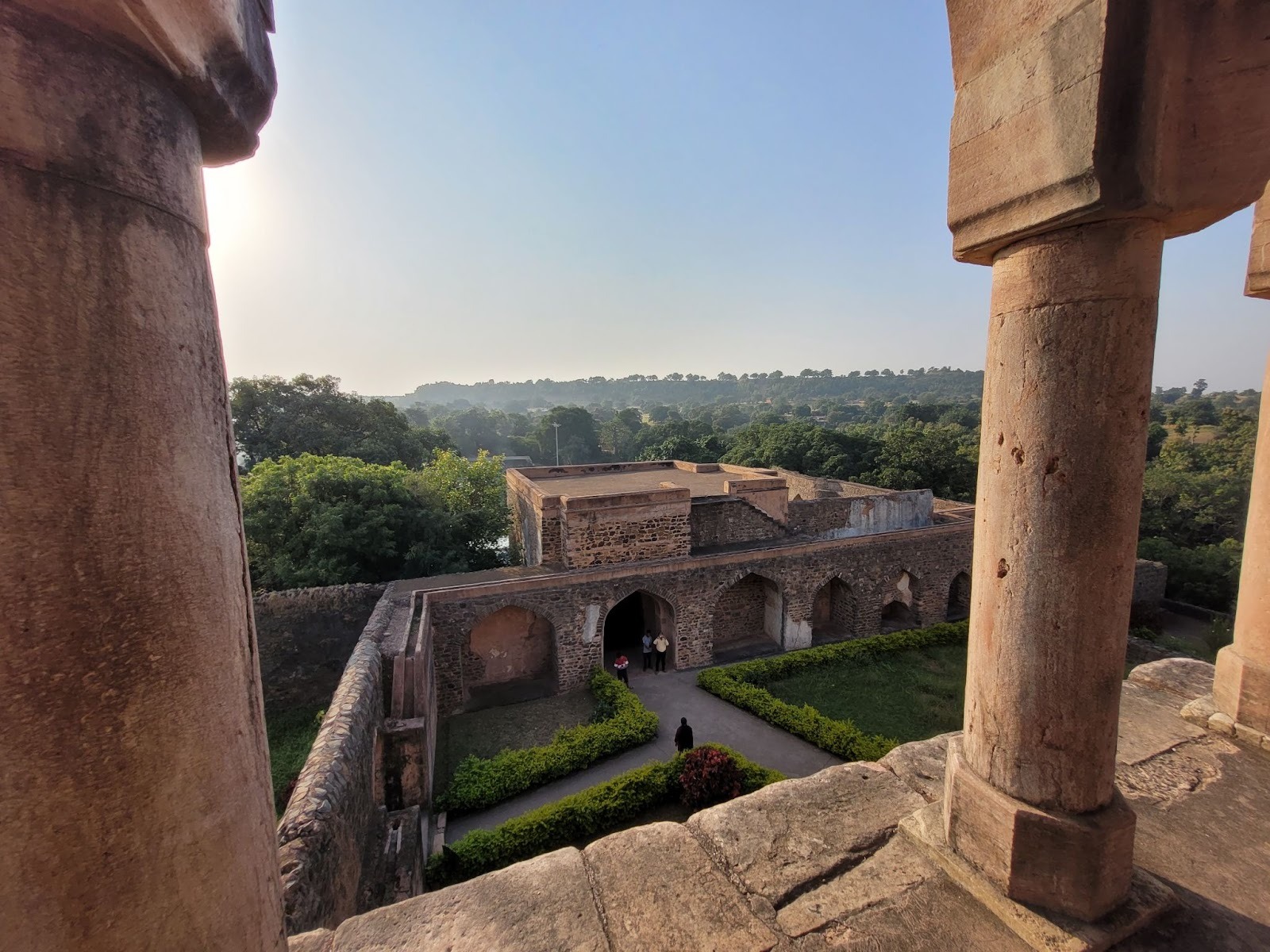
One of its most interesting features is the pavilion structure along the northwestern edge. Over time, this section has been expanded, and you can notice a mix of architectural styles in its pillars and arches—each telling a story of different phases of construction and restoration.
These pavilions were likely used as resting spots, offering shade and a perfect vantage point to admire the calm waters below.
Ingenious Water System
What makes Rewa Kund particularly fascinating is its engineering. At the northern end, there’s a clever water-lifting mechanism (now mostly historical in function) that once helped channel water toward the nearby Baz Bahadur Palace.
For its time, this system was remarkably advanced, showcasing the ingenuity of medieval builders in managing water resources in a hilly terrain like Mandu.
Present-Day Experience
Today, Rewa Kund remains a serene and well-preserved site. The water is generally clean and clear, reflecting the surrounding ruins and sky like a mirror.
Bathing in the kund is now prohibited to maintain its cleanliness and heritage value. Visitors usually come here to soak in the peaceful atmosphere, explore the nearby monuments, and relive the romantic history that lingers in the air.
The kund also serves as a great stop while visiting other attractions in Mandu, especially the Roopmati Pavilion and Baz Bahadur Palace, which are located nearby.
Why Visit Rewa Kund?
- To explore a lesser-known yet historically rich site in Mandu.
- To experience a beautiful blend of history, romance, and architecture.
- To enjoy a quiet, scenic spot away from crowded tourist areas.
- To understand medieval water management systems.
Travel Tips
- Visit early morning or late afternoon for the best light and fewer crowds.
- Combine your visit with nearby attractions for a fuller experience.
- Wear comfortable footwear, as exploring Mandu involves some walking.
- Respect the heritage site—avoid littering or stepping into restricted areas.
How to Reach
Rewa Kund is located in the southern part of Mandu, opposite Baz Bahadur’s Palace and approximately 5 km from the Mandu Bus Stand. This historic reservoir forms part of the famous Rewa Kund Group of Monuments and is closely associated with the legendary love story of Baz Bahadur and Rani Roopmati.
By Air
The nearest airport is Devi Ahilya Bai Holkar Airport, Indore, situated about 95–100 km from Mandu. From the airport, visitors can hire taxis or private cabs to reach Mandu comfortably.
By Rail
The nearest major railway station is Indore Junction, which is well connected to major cities such as Delhi, Mumbai, Jaipur, Ahmedabad, and Bhopal. From the station, buses and taxis are available for Mandu.
By Road
Mandu enjoys excellent road connectivity with Indore, Dhar, Ujjain, and Ratlam. Regular state transport and private buses operate to Mandu. Once in Mandu, Rewa Kund can be reached by taxi, auto-rickshaw, or private vehicle as part of the heritage circuit.
Local Transportation
Most tourists visit Rewa Kund along with Baz Bahadur’s Palace and Rani Roopmati Pavilion, as these attractions are located within the same monument complex and can be explored together.
Nearby Attractions
Baz Bahadur’s Palace
Located directly opposite Rewa Kund, this magnificent palace was built by Baz Bahadur, the last independent ruler of Malwa. The structure is known for its elegant courtyards, acoustic halls, and scenic surroundings.
Rani Roopmati Pavilion
One of Mandu’s most iconic landmarks, this hilltop pavilion offers breathtaking views of the Narmada Valley. It is closely associated with the legendary romance of Baz Bahadur and Rani Roopmati.
Kakda Kho View Point
A scenic gorge and waterfall viewpoint surrounded by lush greenery, Kakda Kho is especially beautiful during the monsoon season and offers spectacular valley views.
Jahaz Mahal
Famous for its ship-like appearance, Jahaz Mahal is one of Mandu’s most photographed monuments. Built between two lakes, it creates the illusion of a floating vessel.
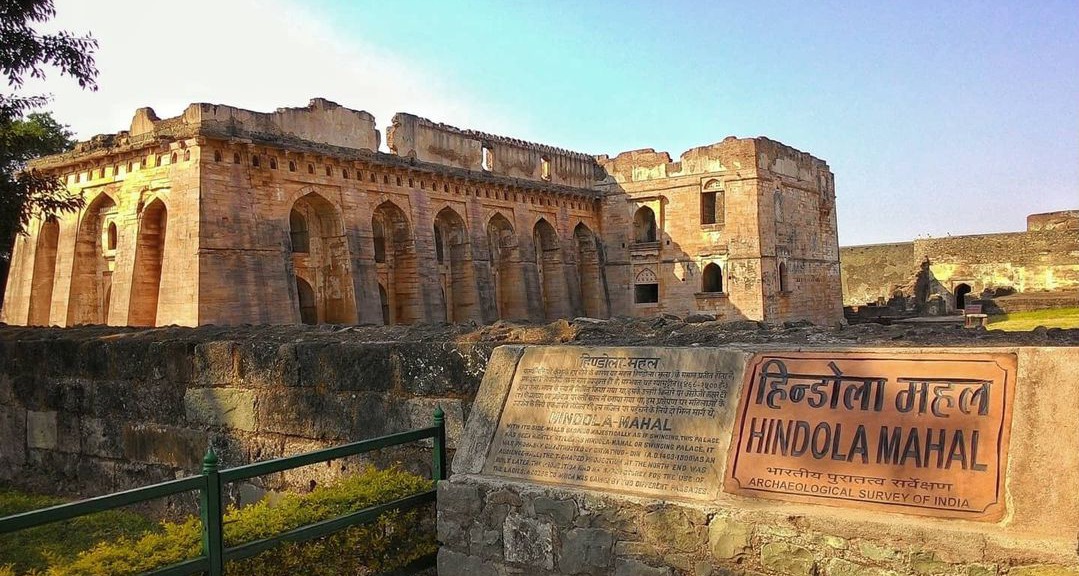
Hindola Mahal
Popularly known as the “Swinging Palace,” Hindola Mahal is admired for its sloping walls and distinctive Afghan-style architecture.
Jami Masjid
One of the grandest mosques in Central India, Jami Masjid features impressive domes, spacious courtyards, and remarkable Indo-Islamic architectural elements.
Hoshang Shah’s Tomb
Constructed entirely of white marble, Hoshang Shah’s Tomb is considered India’s first marble mausoleum and is believed to have influenced the design of the Taj Mahal.
Ashrafi Mahal
Located opposite Jami Masjid, the ruins of Ashrafi Mahal include a historic madrasa and the remains of a victory tower built during the Malwa Sultanate.
Dilawar Khan Mosque
One of Mandu’s earliest Islamic monuments, this mosque showcases a fascinating blend of Hindu, Jain, and Islamic architectural traditions.
Nilkanth Mahadev Temple
Nestled amidst lush greenery, this revered Shiva temple attracts both pilgrims and tourists seeking spiritual and scenic experiences.
Map
The lake is located right across Baz Bhadur palace, 5 km away from Mandu road, Madhya Pradesh
Timing
8 am – 6 pm
Entry fees
Indian- Rs 25.
Foreigner – Rs 300.
FAQs
1. What is Rewa Kund famous for?
It is known for its connection to the love story of Baz Bahadur and Rani Roopmati, as well as its historical water system.
2. Is Rewa Kund natural or man-made?
It is a man-made reservoir designed to store and supply water.
3. Can visitors swim or bathe in the kund?
No, bathing is not allowed to preserve the site.
4. Where is Rewa Kund located?
It is located in Mandu, in the Dhar district of Madhya Pradesh.
5. What are the nearby attractions?
Roopmati Pavilion and Baz Bahadur Palace are both close by and often visited together.
6. What is the best time to visit?
The winter months (October to March) are ideal, as the weather is pleasant for exploring Mandu.