Image Source: shekhar photographer
About Santoshi Mata Mandir
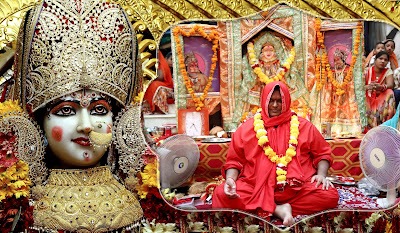
The Santoshi Mata Mandir in Hari Nagar, New Delhi, is one of the most revered Shakti temples in the capital and is widely regarded as the most prominent temple dedicated to Maa Santoshi in Delhi. The temple holds exceptional spiritual and cultural importance due to its distinction of housing the largest Ashtadhatu (eight-metal) vigrah of Maa Santoshi in Asia, making it a major destination for devotees from Delhi and beyond.
Located in G Block, Hari Nagar, the temple stands as a powerful center of faith, devotion, and community service, especially vibrant on Fridays and during Navratri, when worship of Maa Santoshi is considered highly auspicious.
History
The temple was formally established on 3 July 1981 by Satguru Shri Shamsher Bahadur Saxena ji and Satguru Maa Smt. Kanta Saxena ji, whose spiritual vision laid the foundation for this sacred space. The inspiration for the Hari Nagar temple came from the renowned Santoshi Mata Temple of Jodhpur, which is traditionally situated near a lake known locally as the “Red Sea” and surrounded by hills—an image that deeply influenced the spiritual layout and ethos of the Delhi shrine.
As the temple grew in stature and devotion, significant milestones followed. A Shivalay was consecrated within the premises on 29 February 1984, further expanding the temple’s spiritual scope. The most defining moment came on 9 February 1998, when the monumental Ashtadhatu idol of Maa Santoshi was installed, elevating the temple to pan-Indian prominence.
Garbhagriha and Sacred Layout
The garbhagriha (sanctum sanctorum) of the temple is architecturally and symbolically inspired by the celebrated Mahalakshmi temples of Mumbai and Pune, reflecting classical Shakti worship traditions.
Within the sanctum, three divine forms are seated together—Maa Vaishno, Maa Santoshi, and Maa Saraswati—representing power, contentment, and wisdom. Maa Vaishno is worshipped here as the unified manifestation of Mahakali, Mahalakshmi, and Mahasaraswati, symbolizing supreme feminine energy. At the left entrance of the sanctum stands Shri Hanumant Lal (Lord Hanuman), depicted in a posture of eternal service, guarding and serving the three goddesses with unwavering devotion.
Rituals, Chowkis, and Worship Practices
The temple follows a structured and vibrant devotional schedule. Special chowkis (devotional assemblies) form the spiritual heartbeat of the temple, drawing large congregations throughout the week. Devotion to Maa Santoshi is observed every Friday evening at 6:00 PM and Sunday night at 9:00 PM, while Maa Vaishno chowki is held every Tuesday at 6:00 PM.
Alongside worship, bhandaras (community meals) are organized regularly on Tuesdays, Fridays, and Sundays, reinforcing the temple’s role as a space of collective devotion and service. The temple usually remains open from 5:00 AM to 12:00 noon and again from 5:00 PM to 10:00 PM, but during Navratri, it transforms into a round-the-clock spiritual hub, remaining open 24 hours to accommodate the continuous flow of devotees.
Facilities and Devotee Services
The Santoshi Mata Mandir is equipped with modern amenities to ensure safety and comfort for visitors. The premises are secured with CCTV surveillance, metal detectors, and X-ray baggage scanners, particularly during festivals and peak devotional hours. For convenience, the temple provides RO drinking water, power backup facilities, a cloakroom, and a dedicated shoe storage area, ensuring a smooth darshan experience for all devotees.
Location and How to Reach
The temple is located at GC-28, G Block, Hari Nagar, New Delhi, and is easily accessible via Santoshi Mata Road. The nearest metro station is Tilak Nagar Metro Station, from where the temple can be reached by a short walk, auto-rickshaw, or local transport. Its central position within West Delhi makes it a frequent destination for daily worshippers as well as festival visitors.
Spiritual Significance
For devotees, the Santoshi Mata Mandir functions much like a spiritual lighthouse—a constant source of guidance, peace, and inner satisfaction. While daily prayers maintain a steady rhythm of devotion, the temple’s spiritual radiance shines most intensely on Fridays and during Navratri, when the presence of Asia’s largest metal idol of Maa Santoshi becomes a focal point of collective faith and celebration.