Image Source: S Siddharth
A Forgotten Mughal-Era Memorial in the Heart of South Delhi
History
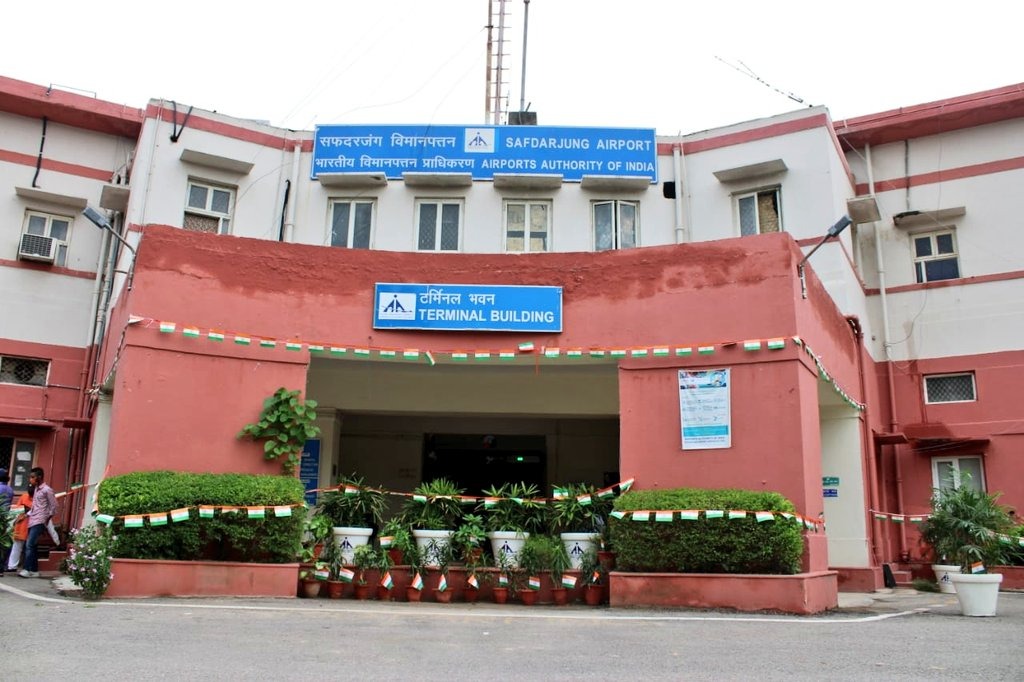
Najaf Khan’s Tomb is one of Delhi’s lesser-known but historically significant Mughal-period monuments, located near Safdarjung Airport and Bhikaji Cama Place in South Delhi. Najaf Khan (Mirza Najaf Khan Bahadur) was a powerful Persian-origin nobleman, military commander, and statesman during the late Mughal period, serving under Emperor Shah Alam II in the 18th century. He played a crucial role in stabilizing the weakening Mughal administration at a time when the empire was facing threats from the Marathas, Rohillas, and the British East India Company.
Najaf Khan was known not only for his military acumen but also for his political influence at the Mughal court. After his death in 1782 CE, his tomb was constructed as a commemorative structure befitting his stature. Over time, however, the monument slipped into obscurity, overshadowed by more prominent Mughal tombs such as Humayun’s Tomb and Safdarjung’s Tomb. Today, Najaf Khan’s Tomb stands as a quiet reminder of Delhi’s turbulent late Mughal phase.
Architecture
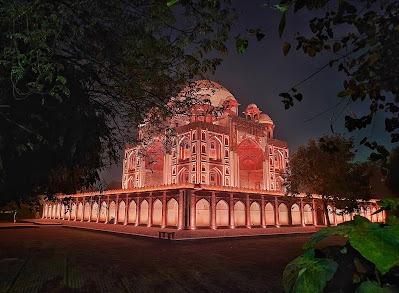
Architecturally, Najaf Khan’s Tomb reflects the transitional Mughal style of the 18th century, when imperial resources were declining but traditional design principles were still followed. The tomb is built primarily of stone masonry with plastered surfaces, rather than the extensive use of red sandstone and marble seen in earlier Mughal masterpieces.
The structure follows a square plan topped with a central dome, a common feature of Mughal funerary architecture. The dome, though modest in scale, provides a sense of vertical emphasis and dignity to the monument. The façade is simple, with arched openings on multiple sides that allow light and air into the interior chamber. Decorative elements are restrained, indicating the economic and political constraints of the late Mughal era.
Inside, the tomb chamber houses the cenotaph of Najaf Khan, while the actual grave lies below, following Islamic burial traditions. The absence of elaborate ornamentation shifts the focus from grandeur to solemnity, making the monument architecturally understated yet historically evocative. The surrounding area once formed part of a larger funerary landscape, though urban development has significantly altered its original setting.
Cultural and Local Significance
Located close to major administrative and commercial hubs such as RK Puram, Chanakyapuri, and Sarojini Nagar, Najaf Khan’s Tomb is an important yet overlooked heritage site of South Delhi. It contributes to the broader narrative of Delhi’s Mughal legacy, especially the lesser-documented late Mughal period.
For history enthusiasts, researchers, and heritage walkers, the tomb offers insight into the lives of influential nobles who shaped Delhi’s political landscape during its decline as an imperial capital. Its proximity to other historic sites like Safdarjung’s Tomb, Lodhi Garden, and Humayun’s Tomb complex makes it a meaningful stop on a South Delhi heritage trail.
How to Reach
Najaf Khan’s Tomb is easily accessible due to its central location in South Delhi.
- By Metro:
The nearest metro station is Bhikaji Cama Place Metro Station on the Pink Line. From there, the tomb is a short auto-rickshaw or cab ride. - By Road:
The site is well-connected via Ring Road and can be reached easily from AIIMS, Safdarjung Enclave, and Chanakyapuri. App-based cabs and local autos are readily available. - By Bus:
Several DTC bus routes operate along Ring Road and nearby areas, making it convenient for budget travelers.
Visitor Information
- Entry Fee: Free
- Best Time to Visit: Morning or late afternoon, especially during winter months
- Photography: Allowed
- Ideal For: History lovers, architecture enthusiasts, heritage photographers, and cultural explorers