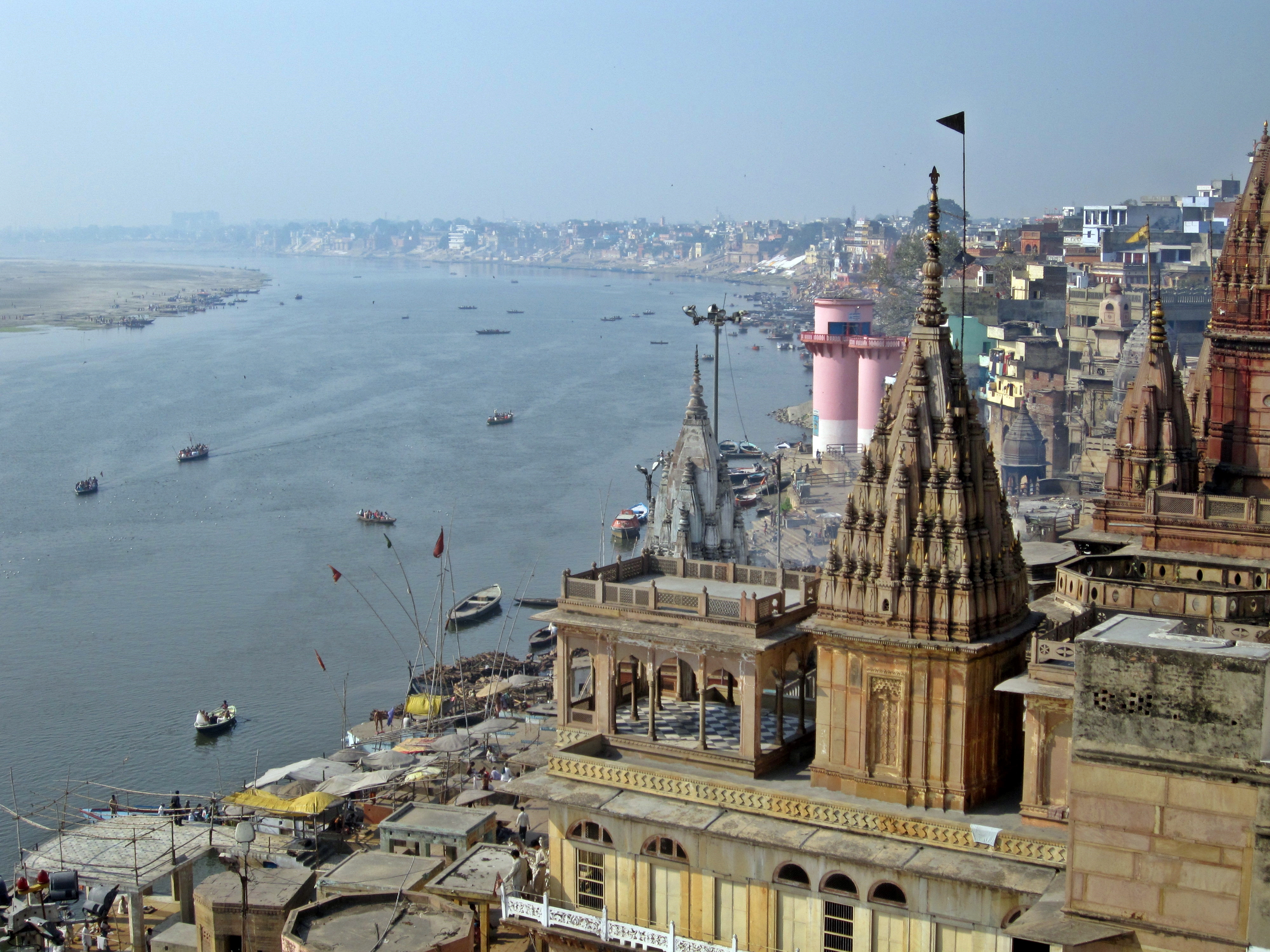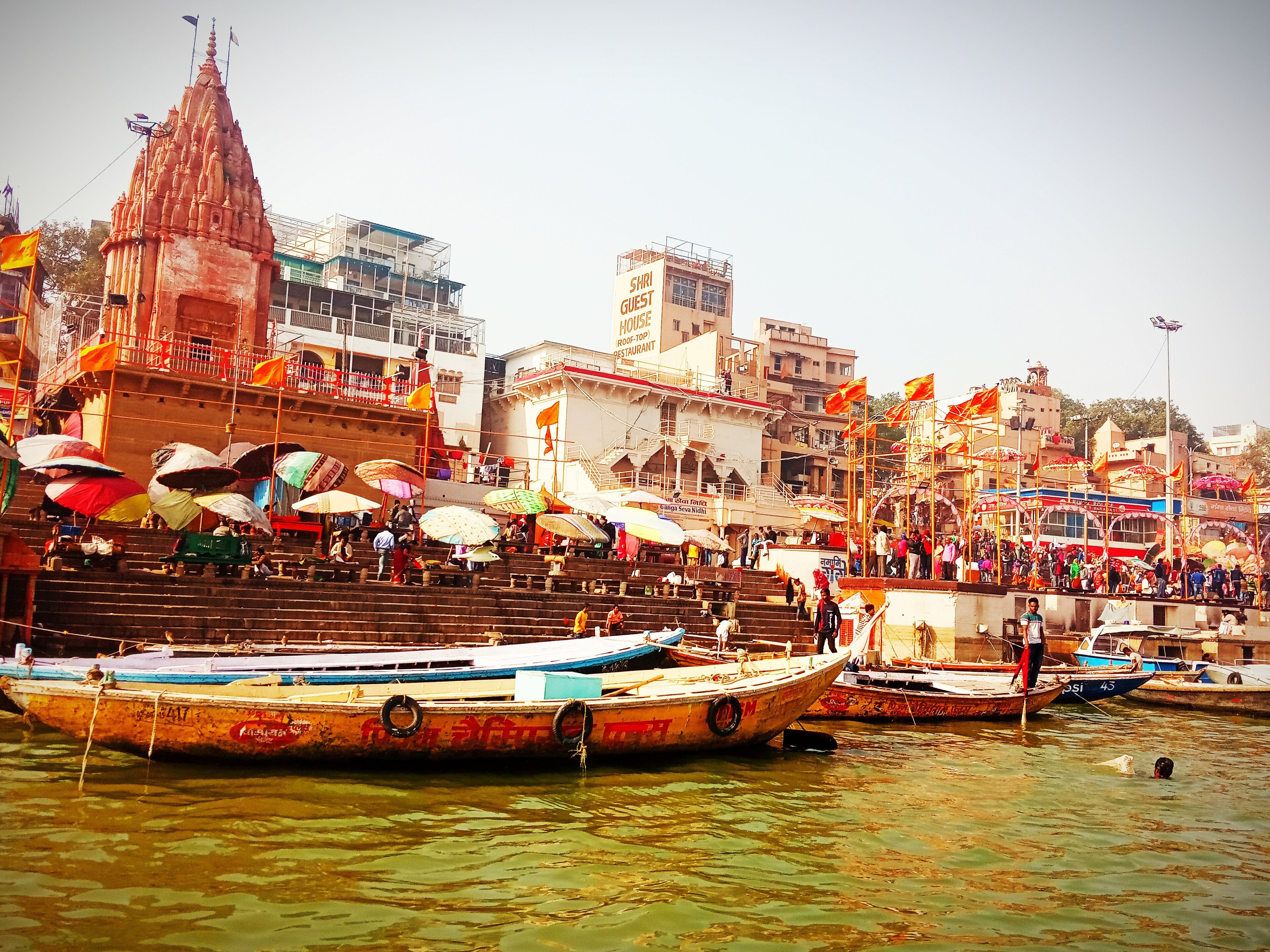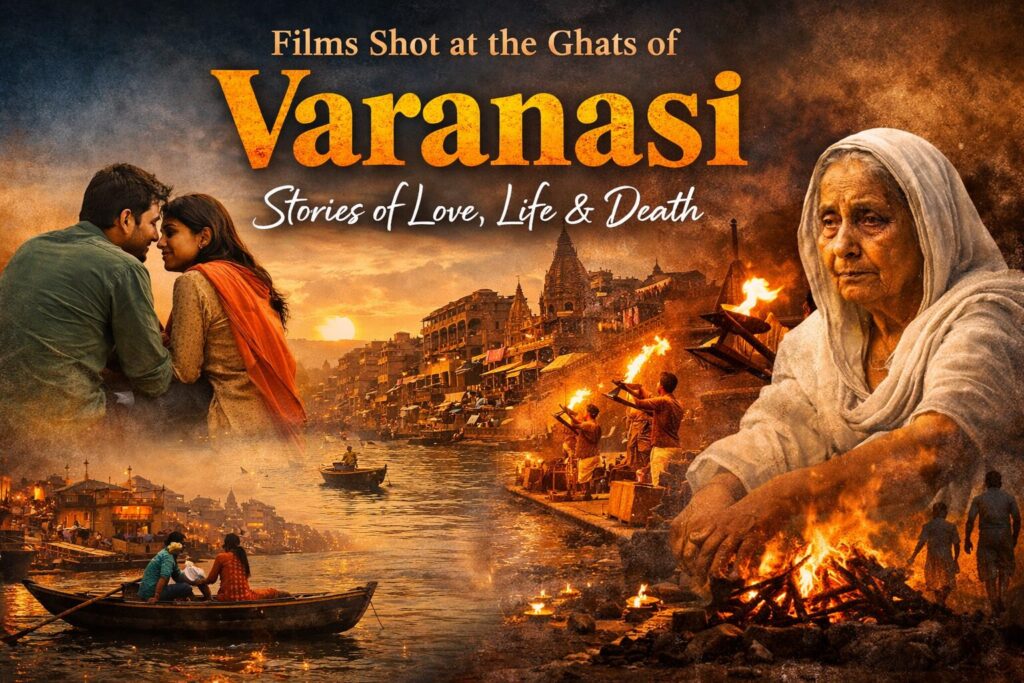
When films are shot on the ghats of Varanasi, they do not enter a quiet location. They enter a place where life and death already share the same steps. A camera may focus on actors, but behind them someone is bathing, someone is praying, and someone is burning a body. That is why stories set here feel different. The city does not act. It witnesses. And every film that passes through its ghats ends up borrowing something from its long memory.
Masaan – Where Grief Learns to Breathe
In Masaan, the ghats are not dramatic. They are patient. A young woman walks past funeral fires carrying shame she cannot name, and the river does not react. It has seen worse. Nearby, a boy falls in love on a boat ride, as if romance is trying to grow between ashes and smoke.
Varanasi in this film feels like an old soul who does not interrupt human suffering but allows it to exist. Death is routine, love is fragile, and both share the same stone steps. The city seems to whisper that pain is not special here. Everyone who comes must eventually place their sorrow beside the river and let it float away.
Raanjhanaa – Where Love Grows Loud and Clumsy
In Raanjhanaa, the ghats belong to youth. Boys shout slogans near temples. Girls walk past the river pretending they are not being watched. Love begins where morning prayers have just ended. Here, Varanasi feels restless and emotional. It is not a city waiting for liberation but a city full of stubborn hearts. The ghats become confession corners where feelings too heavy for homes are released into open air. When love breaks, it breaks publicly, against the background of bells and river light. The city watches young people fall apart and does not stop them. It has watched many before.
Water – Where Silence Lives on the Steps
In Water, the ghats are quiet in a different way. Widows sit near the river, not to bathe but to wait. Boats pass. Pilgrims pray. Life continues around them while they remain frozen in custom. The river promises purification, but their lives remain untouched by freedom. Varanasi here does not appear cruel, but it appears heavy with rules older than compassion. The ghats turn into benches of exile, where women watch happiness float by like boats they are not allowed to board.
Piku – Where Endings Do Not Need Drama
In Piku, the journey ends at the ghats. An old man’s ashes are carried to the river after a lifetime of arguments and stubborn love. There is no grand ritual scene, only water and quiet hands. Varanasi feels gentle here. Not mystical, not frightening. Just accepting. The river receives what remains of a man and also what remains of a difficult relationship. The ghats become a place where words finally stop and only release remains. It is not about dying. It is about finishing.
Jolly LLB 2 – Where God and Courtrooms Share the Same Air
In Jolly LLB 2, the ghats appear behind tea stalls, protests, and legal fights. A lawyer walks past temples while thinking about justice. Poor families live beside sacred steps. This Varanasi prays in the morning and argues by afternoon. Faith does not erase struggle. The river flows behind broken systems and tired people. The ghats are not shown as holy escape routes but as everyday surroundings where life must still be fought, case by case.
Banaras: A Mystic Love Story – Where Love Sounds Like Prayer
This film wraps romance inside ritual. Lovers meet where bells ring and priests chant. The river looks less like water and more like destiny.
Varanasi feels like a quiet matchmaker here. Love seems guided by something older than the characters themselves. The ghats do not just host meetings. They bless them. Emotion feels spiritual, and separation feels written in scripture.
What These Films Reveal About the Ghats
Across all these stories, the ghats appear as more than steps of stone.
They are places where
people confess love,
release ashes,
wait for justice,
and sit with rules they did not choose.
Sometimes the ghats look romantic. Sometimes they look cruel. Sometimes they look tired. But they never look empty.
Each film chooses a different emotion and places it on the same riverbank. Grief in Masaan. Obsession in Raanjhanaa. Silence in Water. Closure in Piku. Struggle in Jolly LLB 2. Mysticism in Banaras: A Mystic Love Story. The city does not change. Only the human story does.
The Life Behind the Camera
While actors perform, real life does not pause. A boatman rows past a love scene. A priest waits for a shot to finish before lighting a pyre. A child watches a film crew and then jumps back into the river. For the city, a film shoot is just another ritual. Like a wedding. Like a funeral. Like a festival.
Conclusion
Films shot at the ghats of Varanasi do not create emotion. They discover it. The river has already learned every human story: desire, regret, faith, rebellion, surrender. Cinema only gives these stories faces and voices.
That is why Varanasi never feels like a backdrop on screen. It feels like an elder presence watching younger lives repeat old mistakes. The camera leaves, the actors go home, but the river keeps flowing, ready for the next story to arrive.