Image Source: Shuvendu Mazumdar
Introduction
Located within the famous Bhimbetka Rock Shelters in Madhya Pradesh, Auditorium Cave is one of the most fascinating prehistoric sites in India. Often referred to as Cave 3, it is among the largest and most significant caves in the Bhimbetka complex. For travelers interested in history, archaeology, and ancient human civilization, this remarkable cave offers a unique opportunity to step back thousands of years into the lives of our earliest ancestors.
Situated about 3 km from the Bhimbetka entrance area, Auditorium Cave is a highlight of the UNESCO World Heritage Site and attracts visitors from across the world who come to explore India’s rich prehistoric heritage.
Exploring the Grandeur of Auditorium Cave
The Auditorium Cave gets its name from its vast interior, which resembles a large natural hall or auditorium. Stretching across a broad rock formation, the cave features interconnected passages and tunnels that open into a spacious central chamber. Its towering rock walls and naturally formed arches create an atmosphere similar to that of a grand cathedral, leaving visitors awestruck by its scale and beauty.
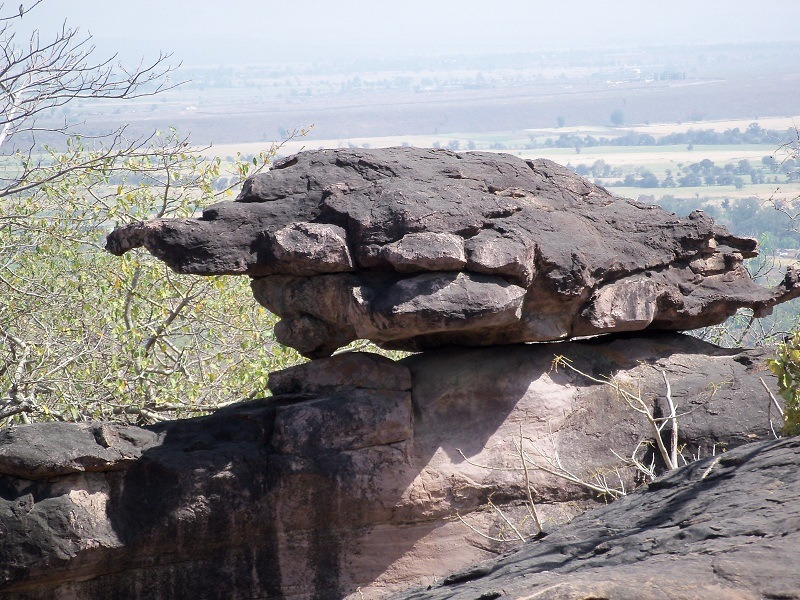
One of the first features that catches the eye is a striking rock formation known as Chief’s Rock or King’s Rock. Standing almost vertically near the entrance, this massive boulder serves as a natural landmark and can be spotted from various points around the shelter complex.
As visitors walk through the cave, they gain insight into a time when early humans lived as hunter-gatherers, seeking shelter beneath these ancient rock formations. The cave offers a rare glimpse into the environment and lifestyle of prehistoric communities that once inhabited the region.
Archaeological Significance
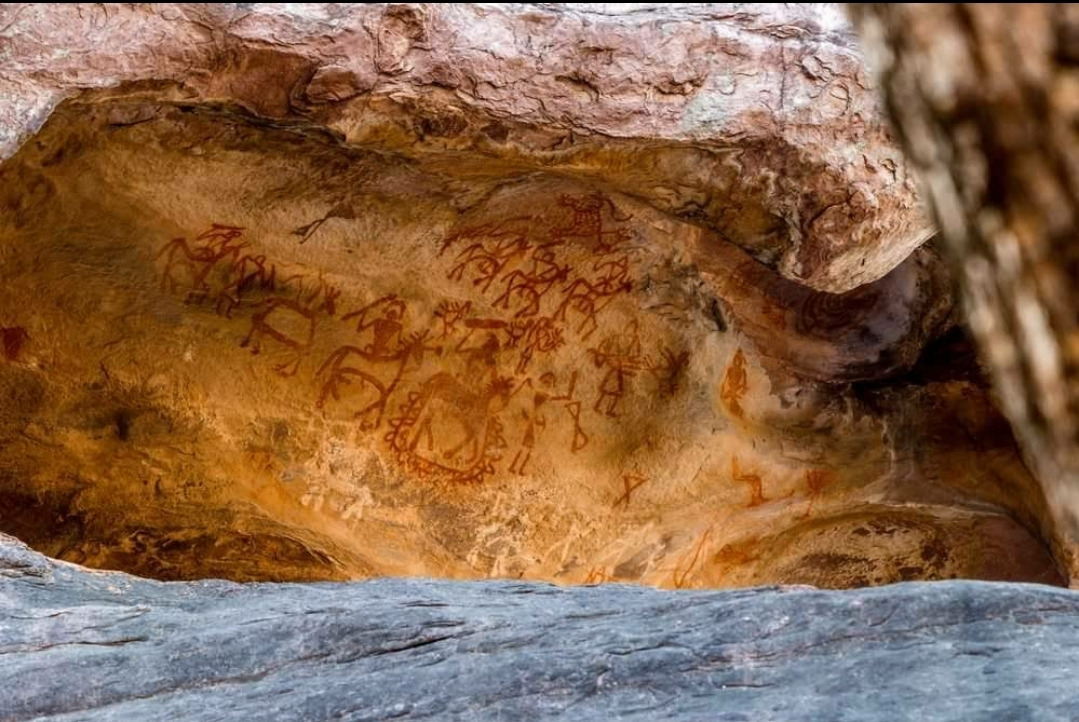
Auditorium Cave holds immense archaeological importance and has been the focus of extensive research. During studies conducted in the 1990s, archaeologists discovered several cupules—small cup-shaped depressions carved into the rock surface—along with traces of red pigment. These findings suggest that the cave may have been used for symbolic or ritualistic activities by early humans.
Further discoveries included an additional cupule connected to a winding groove, strengthening the link between these markings and the Acheulian cultural period. The petroglyphs carved into the durable quartzite rock provide valuable evidence of some of the earliest forms of human expression.
Researchers estimate that certain markings within the cave may be more than 290,000 years old, with some studies suggesting an even greater antiquity. These discoveries make Auditorium Cave one of the most important prehistoric archaeological sites in South Asia.
Visitor Information and Timings
Auditorium Cave is open to visitors throughout the year as part of the Bhimbetka Rock Shelters complex.
Visiting Hours: 7:00 AM to 6:00 PM
Entry Fee (subject to change):
- Indian Citizens: ₹25 per person.
- Foreign Tourists: ₹500 per person.
- Two-Wheeler Parking/Entry: ₹100.
- Car Parking/Entry: ₹300.
The best time to visit is between October and March when the weather is pleasant and ideal for exploring the rock shelters on foot.
How to Reach Auditorium Cave
Auditorium Cave is located within the Bhimbetka Rock Shelters, approximately 45 km southeast of Bhopal in Madhya Pradesh.
By Air
The nearest airport is Raja Bhoj Airport, Bhopal, which is well connected to major Indian cities. From the airport, visitors can hire a taxi to reach Bhimbetka in about one hour.
By Train
The nearest major railway station is Bhopal Junction, which has regular train services from Delhi, Mumbai, Chennai, Kolkata, and other major cities. Taxis and buses are available from Bhopal to Bhimbetka.
By Road
Bhimbetka is situated near the Bhopal–Hoshangabad Highway (NH-46). Regular buses, private taxis, and self-drive vehicles can easily reach the site. Once inside the Bhimbetka complex, Auditorium Cave can be reached by following the designated walking trail.
Nearby Attractions
Bhimbetka Rock Shelters
The entire rock shelter complex contains over 700 rock shelters, many of which feature prehistoric paintings depicting hunting scenes, animals, dances, and daily life.
Bhojpur Temple
Located about 30 km away, this historic temple is famous for its massive Shiva Lingam and impressive unfinished architecture dating back to the 11th century.
Ratapani Wildlife Sanctuary
A paradise for nature lovers, this sanctuary is home to leopards, sloth bears, deer, and a variety of bird species. It offers an excellent wildlife experience near Bhimbetka.
Lakha Juar Caves
These caves contain some of the finest examples of prehistoric rock art in the region and are highly valued by archaeologists and historians.
Kerwa Dam
A peaceful getaway near Bhopal, Kerwa Dam is ideal for picnics, photography, and enjoying scenic views of the surrounding landscape.
Maps
FAQs
Why is Auditorium Cave famous?
Auditorium Cave is renowned for its archaeological discoveries, ancient cupules, petroglyphs, and evidence of some of the earliest human activities found in India.
Is Auditorium Cave suitable for families?
Yes. The cave and surrounding pathways are suitable for families, students, history enthusiasts, and casual tourists.
How much time is needed to explore Auditorium Cave?
Most visitors spend around 30 to 45 minutes exploring the cave, although a complete tour of the Bhimbetka Rock Shelters may take 2 to 3 hours.
What is the best time to visit?
The winter season from October to March offers the most comfortable weather for sightseeing and walking around the rock shelters.
Are guides available at Bhimbetka?
Yes, local guides are often available near the entrance and can provide valuable information about the history, rock art, and archaeological significance of the site.
Is photography allowed inside Auditorium Cave?
Photography is generally permitted for personal use, but visitors should follow any guidelines issued by the Archaeological Survey of India during their visit.
Why is it called Auditorium Cave?
The cave’s large central chamber and spacious interior resemble a natural auditorium or hall, which inspired its name.