Image Source: BALAJI DEPURI
About Virupaksha Temple
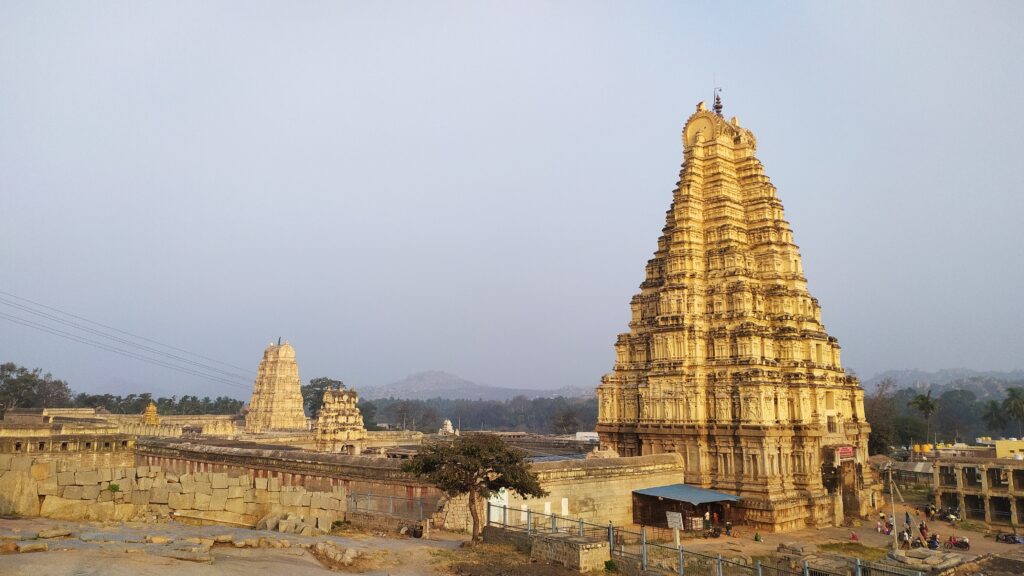
Standing proudly amidst the ancient ruins of Hampi, Virupaksha Temple is one of the most revered and iconic landmarks in Karnataka. Recognized as part of the UNESCO World Heritage Site of Hampi, this magnificent temple is not merely a historical monument—it remains a vibrant center of worship that has been active for centuries.
Dedicated to Lord Virupaksha, a form of Lord Shiva, the temple is located at the western end of Hampi Bazaar along the banks of the Tungabhadra River. Its towering entrance, sacred atmosphere, and remarkable architecture draw pilgrims, history enthusiasts, and travelers from around the world.
History and Significance
Virupaksha Temple is believed to have been in continuous worship since the 7th century AD, making it one of the oldest functioning temples in India. While the temple existed in a simpler form earlier, it flourished during the reign of the Vijayanagara Empire between the 14th and 16th centuries.
The rulers of Vijayanagara considered Lord Virupaksha their guardian deity and generously patronized the temple. Over time, they expanded the complex into the grand structure visible today. Despite the destruction that followed the fall of the Vijayanagara Empire in 1565, Virupaksha Temple remarkably survived and continues to serve as an active place of worship.
For locals and devotees, the temple represents not just faith but also the enduring spirit of Hampi’s glorious past.
Architecture of Virupaksha Temple
Virupaksha Temple is a stunning example of Vijayanagara architecture. The first sight that greets visitors is the majestic eastern gopuram, rising nearly 160 feet high with nine distinct tiers. This towering gateway dominates the Hampi skyline and reflects the artistic excellence of the Vijayanagara craftsmen.
The temple complex features spacious courtyards, pillared halls, shrines, and intricately carved mandapas. The renowned Ranga Mandapa was added by Emperor Krishnadevaraya in the early 16th century to commemorate his coronation. Its pillars showcase detailed carvings and bas-reliefs depicting scenes from Hindu epics such as the Mahabharata and Ramayana.
One fascinating feature inside the temple is the ancient pinhole camera phenomenon, where an inverted shadow of the temple tower is projected onto a wall inside a dark chamber—an intriguing blend of architecture and science.
The Divine Sanctum
At the heart of the temple lies the sacred sanctum housing the Shivalinga of Lord Virupaksha. Devotees offer prayers and seek blessings from the deity, who is revered as an incarnation of Lord Shiva.
The temple is also associated with Goddess Pampa, believed to be the daughter of Brahma and the divine consort of Lord Virupaksha. In fact, the name “Hampi” is derived from “Pampa,” highlighting the deep spiritual connection between the region and the goddess.
The presence of resident temple elephants, including the famous tradition of receiving blessings from them, adds to the unique experience for visitors.
Annual Festivals and Celebrations
Virupaksha Temple comes alive during its annual festivals, attracting thousands of devotees and tourists.
One of the most significant celebrations is the celestial marriage festival of Lord Virupaksha and Goddess Pampa, usually held in December. The event is marked by rituals, processions, music, and cultural performances.
Another major attraction is the annual chariot festival, celebrated during February or March. Decorated temple chariots are pulled through the streets of Hampi, creating a vibrant and spiritually charged atmosphere.
Mahashivaratri is also celebrated with great enthusiasm, making it one of the best times to witness the temple’s spiritual grandeur.
Visiting Information
Virupaksha Temple is open daily for devotees and visitors.
Temple Timings:
- Morning: 6:00 AM to 1:00 PM.
- Evening: 5:00 PM to 9:00 PM.
Entry Fee: Free
Photography is generally permitted in the outer areas, though visitors should be respectful of religious practices inside the sanctum. Comfortable footwear is recommended, as exploring Hampi often involves considerable walking.
The best time to visit is between October and February when the weather is pleasant and ideal for sightseeing.
How to Reach Virupaksha Temple
Virupaksha Temple is located in the heart of Hampi, in the Vijayanagara district of Karnataka.
By Air:
The nearest airport is Hubballi Airport, approximately 165 km away. Kempegowda International Airport in Bengaluru is another major option, located about 340 km from Hampi.
By Rail:
The closest railway station is Hosapete Junction (Hospet), around 13 km from Hampi. Regular trains connect Hosapete with Bengaluru, Hyderabad, Goa, and other major cities. From the station, auto-rickshaws, taxis, and local buses are easily available.
By Road:
Hampi enjoys good road connectivity from Bengaluru (around 340 km), Hyderabad (around 380 km), and Hubballi (around 160 km). KSRTC buses frequently operate services to Hospet, from where travelers can continue to Hampi.
Local transport options in Hampi include bicycles, scooters, auto-rickshaws, and coracle rides across the Tungabhadra River.
Nearby Attractions
While visiting Virupaksha Temple, travelers can also explore several nearby attractions:
- Hampi Bazaar – The historic market street once bustling with traders during the Vijayanagara era.
- Hemakuta Hill Temples – A cluster of ancient shrines offering panoramic sunset views over Hampi.
- Kadalekalu Ganesha – A massive monolithic statue of Lord Ganesha carved from a single rock.
- Sasivekalu Ganesha – Another iconic Ganesha statue known for its unique form.
- Krishna Temple Complex – A beautiful temple built by Krishnadevaraya.
- Achyutaraya Temple – Renowned for its intricate carvings and peaceful surroundings.
- Matanga Hill – One of the best places in Hampi to witness sunrise and panoramic views of the ruins.
- Tungabhadra River – Enjoy coracle rides and scenic views along the riverbanks.
Maps
FAQs
1. Why is Virupaksha Temple famous?
Virupaksha Temple is famous for being one of the oldest functioning temples in India and a key monument of the UNESCO-listed Hampi ruins.
2. Which deity is worshipped in Virupaksha Temple?
The temple is dedicated to Lord Virupaksha, a form of Lord Shiva.
3. Is there an entry fee to visit the temple?
No, entry to Virupaksha Temple is free for all visitors.
4. What is the best time to visit Virupaksha Temple?
The ideal time to visit is from October to February when the weather is cooler and more comfortable for exploring Hampi.
5. How far is Virupaksha Temple from Hospet Railway Station?
The temple is approximately 13 km from Hosapete (Hospet) Railway Station.
6. Can tourists take photographs inside the temple?
Photography is allowed in many parts of the temple complex, but restrictions may apply near the sanctum. Visitors should follow local guidelines.
7. How much time is needed to explore the temple?
Most visitors spend around 1–2 hours exploring the temple complex and its surroundings.