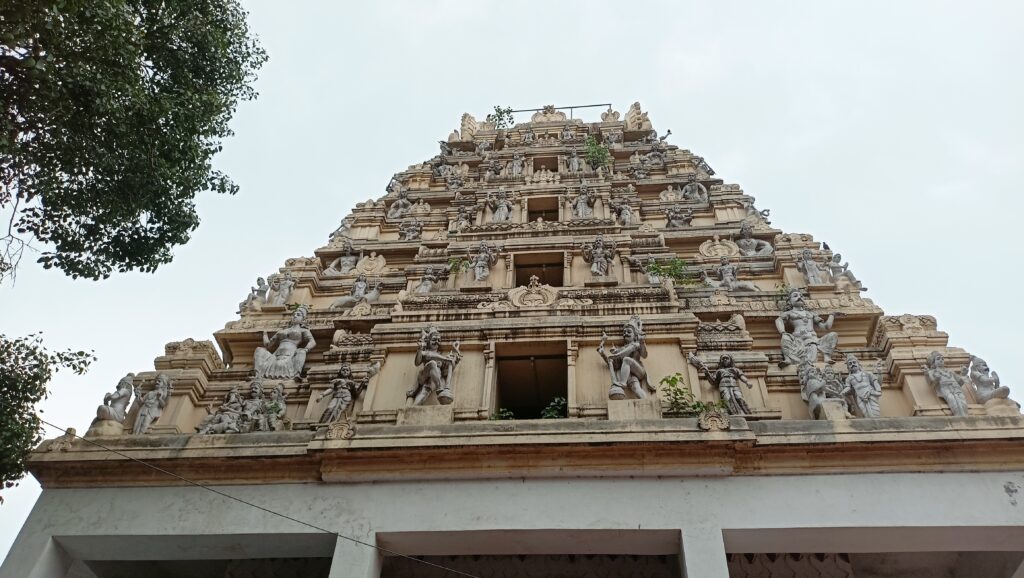
Image Source: Animesh Panda
About Basavanagudi Nandi Temple
The Basavanagudi Nandi Temple, popularly known as the Bull Temple, is one of Bengaluru’s oldest and most cherished landmarks. Located in the historic neighborhood of Basavanagudi in South Bengaluru, the temple dates back to 1537 and is believed to have been built by the city’s founder, Kempegowda. Dedicated to Nandi, the sacred bull and devoted vehicle of Lord Shiva, the temple has remained an important spiritual and cultural center for centuries.
Surrounded by old Bengaluru’s charm, tree-lined avenues, and traditional markets, the temple continues to attract devotees, history enthusiasts, and tourists alike.
The Legend of the Bull Temple
Like many ancient temples in India, the Bull Temple is steeped in fascinating legends. According to local folklore, a bull frequently entered nearby groundnut fields and destroyed crops, leaving farmers frustrated. One day, an enraged farmer struck the bull with a club. Miraculously, the bull instantly turned into stone.
Realizing the divine nature of the incident, the villagers decided to build a shrine to honor the sacred bull. However, they soon noticed that the stone bull was growing larger each day. Alarmed, the farmer prayed to Lord Shiva for guidance. The deity instructed him to retrieve a trident buried nearby and place it on the bull’s forehead. This halted its growth, and the trident mark can still be seen on the statue today.
This legend lives on through the annual Kadalekayi Parashe (Groundnut Fair), when farmers offer their first harvest of groundnuts to Nandi in gratitude and devotion.
Architecture and Design
The temple showcases classic Dravidian-style architecture, featuring intricately carved pillars, ornate motifs, and depictions of various Hindu deities. Though simple in its overall layout, the temple exudes an aura of serenity and devotion.
Within the temple complex, visitors can also find idols of Surya (the Sun God) and Chandra (the Moon God), each depicted riding their celestial chariots.
The Monolithic Nandi Statue
The highlight of the temple is its magnificent monolithic Nandi statue, carved from a single granite rock. Standing approximately 4.5 meters tall and about 6 meters long, it is among the largest Nandi statues in the world.
The idol is adorned with garlands, bells, and decorative ornaments, creating an awe-inspiring sight for devotees and visitors alike.
Kadalekayi Parashe: Bengaluru’s Famous Groundnut Fair
Every year during November and December, Basavanagudi comes alive with the vibrant Kadalekayi Parashe, or Groundnut Fair. This centuries-old festival celebrates the harvest season, with farmers offering their first crop of groundnuts to Nandi as a token of gratitude.
The surrounding streets transform into bustling markets filled with groundnuts of every variety, local snacks, handicrafts, and festive celebrations. The event draws thousands of visitors from across Karnataka and is considered one of Bengaluru’s most unique cultural festivals.
Other Attractions Around the Temple
Adjacent to the temple lies the scenic Bugle Rock Park, a peaceful green space known for its ancient rock formations that are estimated to be over 3,000 million years old. Also located nearby is Kempegowda’s Watchtower, one of the historical watchtowers built by Bengaluru’s founder to mark the city’s boundaries.
These ancient rock formations are part of the same geological stretch as the famous Lalbagh Rock, making the area significant from both historical and geological perspectives.
Visiting Hours
The temple is open daily from 6:00 AM to 8:00 PM, offering visitors a tranquil space for prayer, meditation, and spiritual reflection.
Entry Fee
Entry to the temple is completely free, making it an accessible destination for all visitors.
How to Reach Basavanagudi Nandi Temple
Basavanagudi Nandi Temple is located about 5 km from Majestic Bus Station and KSR Bengaluru City Railway Station, making it easily accessible from different parts of the city.
- By Metro: The nearest metro stations are National College and Lalbagh stations on the Green Line. From there, the temple is a short auto-rickshaw ride away.
- By Bus: BMTC buses frequently operate to Basavanagudi from major areas such as MG Road, Majestic, Jayanagar, and Koramangala.
- By Train: KSR Bengaluru City Railway Station is the nearest major railway station.
- By Air: Kempegowda International Airport is around 40 km away, and taxis or airport buses provide convenient connectivity.
The temple is best visited in the early morning or evening when the weather is pleasant and the surroundings are less crowded.
Nearby Attractions
Visitors can explore several attractions close to the temple:
- Bugle Rock Park – A historic park famous for ancient rock formations and walking trails.
- Kempegowda Watchtower – One of Bengaluru’s original boundary markers.
- Dodda Ganapathi Temple – A popular temple dedicated to Lord Ganesha, located just opposite the Bull Temple.
- Lalbagh Botanical Garden – Bengaluru’s iconic botanical garden, known for its glasshouse and rare plant species.
- Gavi Gangadhareshwara Temple – A unique cave temple dedicated to Lord Shiva.
- Gandhi Bazaar – A bustling local market famous for flowers, traditional eateries, and South Indian snacks.
Maps
FAQs
1. Why is the temple called the Bull Temple?
The temple is dedicated to Nandi, the sacred bull and vehicle of Lord Shiva, which is why it is popularly known as the Bull Temple.
2. What is special about the Nandi statue?
The statue is carved from a single granite rock and is among the largest monolithic Nandi statues in the world.
3. Is there an entry fee to visit the temple?
No, entry to the temple is completely free.
4. What is the best time to visit?
The best time to visit is early morning or evening. Visiting during the Kadalekayi Parashe festival offers a unique cultural experience.
5. How much time is needed to explore the temple?
Most visitors spend about 30 minutes to an hour exploring the temple and nearby attractions.
6. Is photography allowed inside the temple?
Photography is generally allowed in the temple premises, but visitors should follow local guidelines and respect religious practices.