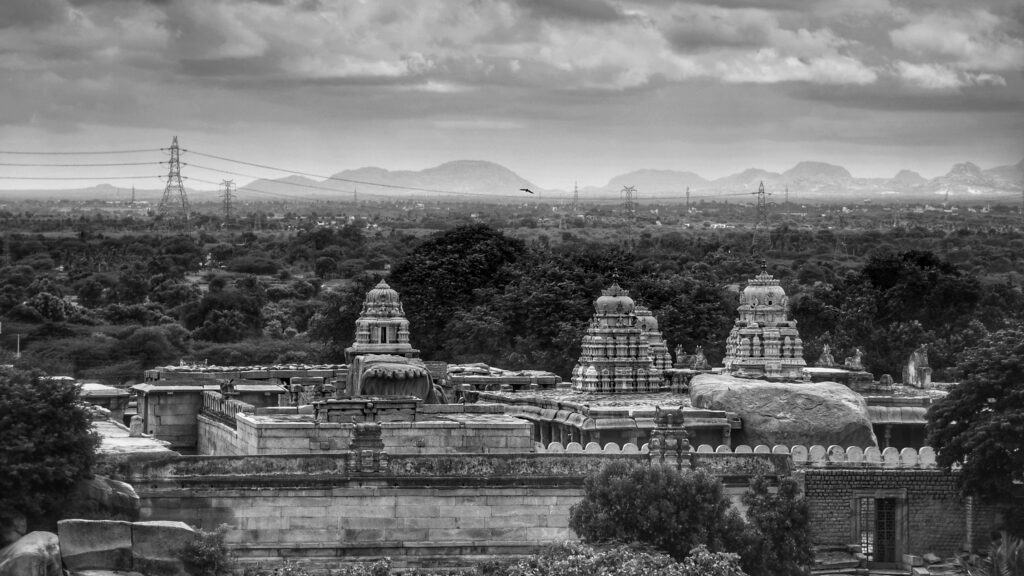
Image Source: Akshay Daniel
About Lepakshi Veerabhadra Temple
Nestled in the historic village of Lepakshi in Andhra Pradesh’s Anantapur district, the Lepakshi Veerabhadra Temple stands as one of the finest architectural masterpieces of the Vijayanagara Empire. Dedicated to Veerabhadra, the fierce warrior form of Lord Shiva, this magnificent temple is not only a sacred pilgrimage destination but also a treasure trove of art, sculpture, mythology, and engineering brilliance.
Renowned for its stunning stone carvings, intricate fresco paintings, and mysterious hanging pillar, the temple attracts thousands of devotees, history enthusiasts, architects, and travelers every year. The site has been recognized as a Monument of National Importance and remains one of South India’s most celebrated heritage attractions.
Location of Lepakshi Veerabhadra Temple
The temple is situated in Lepakshi village, approximately 15 kilometers east of Hindupur and around 120–140 kilometers from Bengaluru. It is built atop a low rocky hill known as Kurma Saila, which resembles the shape of a tortoise—a feature considered highly auspicious in Hindu architecture and symbolism.
Surrounded by the tranquil landscapes of rural Andhra Pradesh, the temple offers visitors a peaceful atmosphere combined with centuries of history and spiritual significance.
Historical Significance
The temple was constructed during the 16th century, around 1530–1540 CE, during the reign of Vijayanagara ruler Achyuta Deva Raya. It was commissioned by two brothers, Virupanna Nayaka and Viranna, who served as governors under the Vijayanagara Empire.
According to local legend, Virupanna used royal funds to build the temple without prior approval from the king. When accused of misusing the treasury, he is said to have blinded himself as an act of repentance. Visitors are often shown reddish marks on a temple wall, believed by locals to be associated with this legendary event.
The temple’s inscriptions, predominantly written in Kannada, reflect the cultural and administrative influence of the Vijayanagara rulers and their patrons from Karnataka.
The Legend Behind Lepakshi
The name “Lepakshi” is deeply rooted in the epic Ramayana. According to tradition, when Ravana abducted Goddess Sita, the divine bird Jatayu fought bravely to rescue her. Mortally wounded, Jatayu fell at this spot.
When Lord Rama later found him, he is believed to have said, “Le Pakshi”, meaning “Rise, O Bird” in Telugu. The village subsequently came to be known as Lepakshi, making the site an important location in Ramayana folklore.
Architectural Marvel of the Vijayanagara Era
The Lepakshi Temple is an outstanding example of Vijayanagara architecture, showcasing remarkable craftsmanship and artistic excellence.
The temple complex consists of:
- Mukha Mandapa (Assembly Hall).
- Ardha Mandapa (Ante Chamber).
- Garbhagriha (Sanctum Sanctorum).
- Kalyana Mandapa (Marriage Hall).
- Multiple subsidiary shrines and courtyards.
The temple is enclosed within massive granite walls and features beautifully carved pillars, ornate ceilings, and elaborate sculptures depicting scenes from Hindu mythology.
One of the most fascinating aspects of the structure is the incredible precision with which massive stone blocks were assembled centuries ago without modern technology.
Magnificent Sculptures and Frescoes
Every corner of the temple is adorned with detailed sculptures and paintings that narrate stories from the Ramayana, Mahabharata, Puranas, and Shaivite traditions.
Visitors can admire:
- Images of gods and goddesses.
- Celestial dancers and musicians.
- Mythological warriors.
- Saints and sages.
- Episodes from Hindu epics.
- Decorative floral and geometric motifs.
The temple’s ceiling paintings are among the largest and best-preserved examples of Vijayanagara fresco art. Created using natural mineral and vegetable pigments, these paintings continue to display remarkable color and detail despite being centuries old.
The famous ceiling mural in the Ardha Mandapa, measuring approximately 23 feet by 13 feet, depicts various manifestations of Lord Shiva and is considered one of the largest frescoes of its kind in Asia.
Main Deity: Lord Veerabhadra
At the heart of the temple lies the sanctum housing a nearly life-sized idol of Lord Veerabhadra. The deity is portrayed in a powerful warrior form, carrying weapons and adorned with symbolic ornaments.
Devotees visit the shrine seeking courage, protection, strength, and divine blessings. The atmosphere inside the sanctum remains deeply spiritual, offering a stark contrast to the artistic grandeur found throughout the temple complex.
Famous Attractions Inside Lepakshi Temple
The Hanging Pillar
Perhaps the most famous attraction in the temple is its mysterious hanging pillar.
Out of the temple’s numerous pillars, one pillar does not completely touch the ground. Visitors can pass a thin cloth, paper, or handkerchief beneath it. Despite centuries of study, this architectural feat continues to fascinate engineers and architects worldwide.
The pillar demonstrates the advanced engineering skills of Vijayanagara craftsmen.
Monolithic Nandi Statue
Located about 200 meters from the temple, the giant Nandi statue is one of the largest monolithic Nandi sculptures in India.
Carved from a single granite rock, the statue measures approximately:
- 20 feet (6 meters) in height.
- 30 feet (9 meters) in length.
The Nandi faces directly toward the temple’s Nagalinga, maintaining a symbolic spiritual connection.
Nagalinga Sculpture
One of the most iconic carvings at Lepakshi is the massive Nagalinga sculpture. Carved from a single granite boulder, it features a Shiva Linga protected by a seven-hooded serpent.
According to local tradition, sculptors created this masterpiece during a lunch break while waiting for their meal to be prepared.
Giant Footprint
Another intriguing attraction is a gigantic footprint embedded in the rock.
Many devotees believe it to be:
- The footprint of Lord Hanuman, or.
- A footprint left by Goddess Sita.
Interestingly, the depression often contains water throughout the year, adding to its mystery and spiritual significance.
Kalyana Mandapa
The unfinished Kalyana Mandapa is believed to have been intended for the celestial wedding ceremony of Lord Shiva and Goddess Parvati.
Its pillars are covered with exceptionally detailed carvings depicting gods, dancers, musicians, and mythological scenes, offering insight into the artistic brilliance of the Vijayanagara period.
Religious and Cultural Importance
The Lepakshi Veerabhadra Temple remains an active center of worship and cultural heritage. Major Hindu festivals, particularly Maha Shivaratri, are celebrated with great devotion and attract large numbers of pilgrims.
The temple also serves as an important destination for students of architecture, archaeology, history, and art. Its unique blend of mythology, spirituality, engineering, and artistic excellence makes it one of Andhra Pradesh’s most valuable heritage monuments.
Best Time to Visit
The ideal time to visit Lepakshi Temple is between:
- October and March.
During these months, the weather remains pleasant for sightseeing and exploring the temple complex.
Visitors planning to attend Maha Shivaratri can experience special rituals, cultural programs, and festive celebrations.
Temple Timings
Opening Hours: 6:00 AM to 6:00 PM (daily)
It is advisable to visit during the early morning or late afternoon for comfortable weather and better photography opportunities.
Maps
FAQs
1. Why is Lepakshi Temple famous?
Lepakshi Temple is famous for its hanging pillar, giant monolithic Nandi statue, Nagalinga sculpture, exquisite Vijayanagara-era frescoes, and rich association with the Ramayana.
2. Who built the Lepakshi Veerabhadra Temple?
The temple was built in the 16th century by Virupanna Nayaka and Viranna during the reign of Vijayanagara ruler Achyuta Deva Raya.
3. What is the mystery of the hanging pillar?
One of the temple’s pillars does not fully touch the ground, allowing visitors to pass a cloth underneath. It remains a remarkable example of ancient engineering.
4. What does the name Lepakshi mean?
According to legend, Lord Rama said “Le Pakshi” (“Rise, O Bird”) to the dying Jatayu, giving the village its name.
5. How far is Lepakshi from Bengaluru?
Lepakshi is located approximately 120–140 kilometers from Bengaluru and can be reached in about 2.5 to 3 hours by road.
6. Is photography allowed inside the temple?
Photography is generally permitted in the temple premises, although restrictions may apply in certain sacred areas.
7. What is the significance of the giant Nandi?
The Nandi is one of the largest monolithic bull statues in India and symbolically faces the Nagalinga sculpture near the temple.
8. Which festivals are celebrated at the temple?
Maha Shivaratri is the most important festival celebrated at Lepakshi Temple, attracting thousands of devotees.
9. Is Lepakshi Temple a UNESCO World Heritage Site?
No, the temple is not a UNESCO World Heritage Site, but it is protected by the Archaeological Survey of India as a Monument of National Importance.
10. How much time is required to explore Lepakshi Temple?
Most visitors spend 2 to 3 hours exploring the temple complex, including the Nandi statue, Nagalinga, hanging pillar, and surrounding attractions.