Image Source: Vinayaraj
About Ramanathaswamy Temple
Located on the sacred island of Rameswaram, the Ramanathaswamy Temple stands as one of the most spiritually significant temples in India. Dedicated to Lord Shiva, worshipped here as Ramanathaswamy, the temple is deeply connected with the epic Ramayana and attracts millions of pilgrims every year. More than just a religious monument, the temple is a remarkable blend of mythology, devotion, architecture, and centuries of South Indian history.
Set close to the shores of the Bay of Bengal, the temple creates a powerful spiritual atmosphere with its towering gateways, endless stone corridors, sacred water tanks, and rhythmic temple rituals. For devotees, a visit to Rameswaram is considered a journey of purification and faith, while for travelers and history enthusiasts, the temple offers a fascinating glimpse into Tamil Nadu’s rich cultural heritage.
Mythological Importance of Ramanathaswamy Temple
The temple’s origins are closely tied to the story of Lord Rama from the Ramayana. According to Hindu belief, after defeating Ravana in Lanka, Rama wanted to seek forgiveness for the sin of killing a Brahmin king. He worshipped Lord Shiva at this very site to attain absolution. It is believed that Rama instructed Hanuman to bring a Shiva lingam from Mount Kailash, but as Hanuman was delayed, Sita created a lingam from sand for the ritual. This lingam became known as the Ramalingam and remains the principal deity of the temple.
When Hanuman returned with the lingam from Kailash, Rama honored it by placing it within the temple complex and declared that it should be worshipped before the Ramalingam. Even today, temple traditions follow this sequence, preserving the ancient legend in daily worship practices.
Because of this sacred connection with Rama and Shiva, the temple holds immense importance for both Shaivites and Vaishnavites. It symbolizes harmony between different Hindu traditions and is regarded as one of the holiest pilgrimage destinations in the country.
One of the Sacred Jyotirlingas
The Ramanathaswamy Temple is revered as one of the twelve Jyotirlingas of Lord Shiva. Jyotirlingas are considered highly sacred shrines where Shiva is believed to have manifested as an infinite pillar of divine light. Among all Jyotirlingas, Ramanathaswamy is the southernmost, drawing pilgrims from every corner of India.
The temple is also part of the Char Dham pilgrimage circuit, which includes Badrinath, Dwarka, and Puri. Completing the Char Dham journey is considered spiritually rewarding in Hindu tradition. In addition, the temple is recognized as a Paadal Petra Sthalam, one of the sacred Shiva temples praised by the Tamil Shaivite saints known as the Nayanars.
Architectural Grandeur
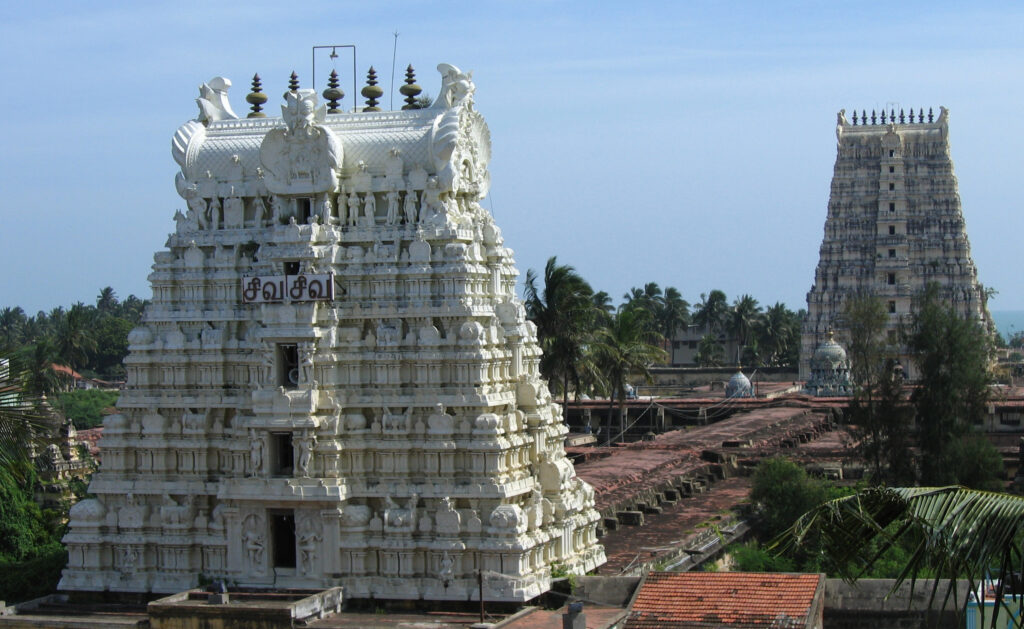
One of the most striking features of the Ramanathaswamy Temple is its extraordinary Dravidian architecture. The temple complex spreads across a vast area and is enclosed by massive stone walls and imposing gopurams (gateway towers). The eastern Rajagopuram rises dramatically above the town skyline and serves as a grand entrance to the sacred complex.
However, the temple’s most celebrated architectural feature is its magnificent corridor system. These corridors are often described as the longest temple corridors in India and among the longest in the world. Stretching for nearly 3,850 feet in total length, the corridors are lined with approximately 1,212 beautifully carved stone pillars. Walking through these endless halls is an unforgettable experience, as the symmetry, carvings, and perspective create a mesmerizing visual effect.
The corridors were primarily constructed during the reign of the Sethupathi rulers, especially Muthuramalinga Sethupathi, who played a major role in expanding the temple during the 17th and 18th centuries. The famous Chokkatan Mandapam within the corridor complex showcases the artistic brilliance of Tamil temple craftsmanship.
Apart from the main sanctum, the temple also contains shrines dedicated to Goddess Parvatavardhini, Vishalakshi, Lord Vishnu, Ganesha, and several other deities. Ancient mandapams, carved ceilings, and detailed sculptures further enhance the temple’s grandeur.
The Sacred Theerthams
The temple is equally famous for its sacred water bodies, known as theerthams. There are 22 holy wells inside the temple complex, each believed to possess unique spiritual and medicinal properties. Pilgrims traditionally bathe in these waters before entering the sanctum for darshan.
What makes these wells fascinating is that the taste and temperature of the water differ from one well to another, despite all of them being located within the same complex. Devotees believe that bathing in the theerthams cleanses sins and purifies the soul.
Outside the temple, the most important water body is Agni Theertham, located along the seashore. Pilgrims often begin their spiritual journey here by taking a dip in the sea at sunrise before proceeding to the temple.
Historical Evolution of the Temple
Although the temple’s spiritual roots trace back to ancient mythology, its present structure evolved over several centuries. Various dynasties and rulers contributed to its expansion, renovation, and maintenance.
The Sethupathi kings of Ramanathapuram were among the temple’s greatest patrons. They funded large-scale construction works, including corridors, halls, and gateway towers. Contributions also came from rulers connected with Sri Lanka, such as Parakramabahu and Nissanka Malla, highlighting the temple’s importance across the region.
During the Vijayanagara period, additional architectural elements such as ornate pillars and mandapams were added, enriching the temple’s artistic beauty. Maratha rulers later donated rest houses and facilities for pilgrims traveling long distances to Rameswaram.
Like many historic temples in India, Ramanathaswamy Temple also witnessed periods of turmoil. In the early 14th century, the forces of Malik Kafur reportedly attacked parts of the region during military campaigns in South India. Despite such disruptions, the temple survived and continued to flourish as a major spiritual center.
Rituals and Daily Worship
Religious rituals at Ramanathaswamy Temple follow centuries-old traditions and are performed with great devotion. Pilgrims usually begin with bathing rituals in the theerthams before proceeding for darshan of the deity.
Daily worship includes sacred ceremonies such as abhishekam (ritual bathing of the deity), alangaram (decoration), neivedyam (food offering), and deepa aradanai (lamp worship). The rhythmic chanting of Vedic hymns, temple bells, and the fragrance of incense create an intensely spiritual atmosphere throughout the day.
One unique tradition followed here is that devotees first worship the Vishvalingam brought by Hanuman before offering prayers to the main Ramalingam.
Festivals Celebrated at the Temple
The temple comes alive during major Hindu festivals, when thousands of devotees gather in Rameswaram for special ceremonies and processions.
Maha Shivaratri
Maha Shivaratri is one of the grandest festivals celebrated here. Devotees stay awake all night, offering prayers and participating in elaborate rituals dedicated to Lord Shiva.
Ramanavami
Since the temple is deeply connected with Lord Rama, Ramanavami is celebrated with great enthusiasm. Special recitations from the Ramayana and ceremonial processions are organized during the festival.
Navaratri
The Navaratri festival honors Goddess Parvati through music, rituals, and colorful decorations inside the temple complex.
Theerthavari Festival
The sacred Theerthavari ceremony involves ritual bathing processions and special prayers connected with the temple’s holy waters.
These festivals transform the temple town into a vibrant spiritual center filled with devotional music, cultural performances, and traditional celebrations.
How to Reach Ramanathaswamy Temple, Rameswaram
By Air
The nearest airport is Madurai International Airport, located about 175 km from Ramanathaswamy Temple. The airport is well connected to major Indian cities such as Chennai, Bengaluru, Hyderabad, Mumbai, and Delhi. From Madurai, visitors can hire a taxi or take a bus to Rameswaram, a journey of around 3.5 to 4.5 hours.
By Train
Rameswaram Railway Station is the nearest railhead, situated approximately 2 km from the temple. It has direct train services from Chennai, Madurai, Coimbatore, Tiruchirappalli, and several other cities. Auto-rickshaws, taxis, and cycle rickshaws are easily available outside the station to reach the temple.
By Road
Ramanathaswamy Temple is well connected by road via National Highway 87 (NH-87). Regular government and private buses operate from Madurai, Chennai, Tiruchirappalli, Thanjavur, Coimbatore, and nearby towns. Visitors travelling by car can enjoy the scenic drive across the iconic Pamban Bridge, which connects Rameswaram Island to mainland Tamil Nadu.
Nearby Attractions
Agni Theertham (200 metres)
Located just outside the eastern entrance of the temple, Agni Theertham is a sacred seashore where pilgrims take a holy dip before offering prayers. It is one of the most important theerthams associated with the temple.
Gandhamadhana Parvatham (3 km)
The highest point on Rameswaram Island, Gandhamadhana Parvatham houses a small shrine believed to contain the footprints of Lord Rama. It also offers panoramic views of the island and surrounding sea.
Lakshmana Theertham (2 km)
A sacred temple tank dedicated to Lord Lakshmana, this peaceful pilgrimage site is visited by devotees who perform rituals and take a holy bath before visiting other shrines.
House of Dr. A.P.J. Abdul Kalam (2 km)
The ancestral home of India’s former President Dr. A.P.J. Abdul Kalam has been converted into a museum displaying his personal belongings, photographs, and achievements.
Dr. A.P.J. Abdul Kalam Memorial (5 km)
This beautifully designed memorial honours the life and contributions of the “Missile Man of India.” It features exhibits on his scientific achievements and inspiring journey.
Villoondi Theertham (7 km)
This freshwater spring located in the middle of the sea is associated with the Ramayana. Legend says Lord Rama created it by shooting an arrow into the ground to provide drinking water for Sita.
Pamban Bridge (12 km)
India’s first sea bridge is an engineering marvel that offers spectacular views of the Bay of Bengal. It is one of the most photographed landmarks near Rameswaram.
Kothandaramaswamy Temple (14 km)
Located on the road to Dhanushkodi, this ancient temple is believed to be the place where Vibhishana surrendered to Lord Rama. The temple is surrounded by scenic coastal landscapes.
Dhanushkodi Beach (20 km)
Known for its untouched beauty and the meeting point of the Bay of Bengal and the Indian Ocean, Dhanushkodi Beach is perfect for sightseeing, photography, and witnessing breathtaking sunrises.
Dhanushkodi Ghost Town (20 km)
The ruins of this once-thriving town, destroyed in the devastating 1964 cyclone, attract visitors interested in history, nature, and dramatic coastal scenery.
Ariyaman Beach (27 km)
A popular family-friendly beach with calm waters and clean surroundings, Ariyaman Beach is ideal for picnics, leisurely walks, and relaxing by the sea.
Sea World Aquarium (2 km)
Featuring a wide variety of colourful marine fish, corals, and aquatic species, this aquarium is a fun stop for families and children visiting Rameswaram.
Modern-Day Importance
Today, the Ramanathaswamy Temple remains one of the most visited pilgrimage destinations in India. Managed by the Hindu Religious and Charitable Endowments Department of Tamil Nadu, the temple continues to undergo restoration and infrastructure improvements to accommodate growing numbers of devotees.
Facilities for pilgrims, including accommodation, food services, and better access to the sacred theerthams, have been expanded over the years. Despite modernization, the temple has preserved its ancient traditions and timeless spiritual atmosphere.
For many visitors, a journey to Rameswaram is not only a religious pilgrimage but also an emotional and cultural experience. The sound of temple chants, the cool stone corridors, the sacred sea breeze, and the stories of the Ramayana together create a sense of peace and reverence that stays with travelers long after they leave.
Google Maps
FAQs
Where is Ramanathaswamy Temple located?
The temple is located in Rameswaram on Rameswaram Island in the Ramanathapuram district of Tamil Nadu.
Why is Ramanathaswamy Temple famous?
The temple is famous for being one of the twelve Jyotirlingas, its association with Lord Rama, its massive pillared corridors, and its sacred theerthams.
What is the significance of the 22 theerthams?
The 22 theerthams are sacred water wells inside the temple complex. Bathing in them is believed to purify devotees spiritually and cleanse sins.
Is Ramanathaswamy Temple part of the Char Dham?
Yes, the temple is one of the four sacred Char Dham pilgrimage sites in Hinduism.
Who built the temple corridors?
The famous corridors were mainly constructed and expanded by the Sethupathi rulers of Ramanathapuram during the 17th and 18th centuries.
What is the best time to visit Ramanathaswamy Temple?
The best time to visit is between October and March, when the weather in Rameswaram is relatively pleasant for sightseeing and pilgrimage.
Can non-Hindus visit the temple?
Non-Hindus are generally allowed inside parts of the temple complex, though access to the inner sanctum may be restricted according to temple rules.
What should visitors wear while visiting the temple?
Modest traditional attire is recommended. Many devotees prefer wearing simple cotton clothes, especially if participating in ritual baths.
Which are the major festivals celebrated here?
Major festivals include Maha Shivaratri, Ramanavami, Navaratri, and the Theerthavari Festival.
How much time is needed to explore the temple?
A proper visit, including ritual bathing and exploring the corridors and shrines, usually takes around 2 to 4 hours depending on crowd levels.