
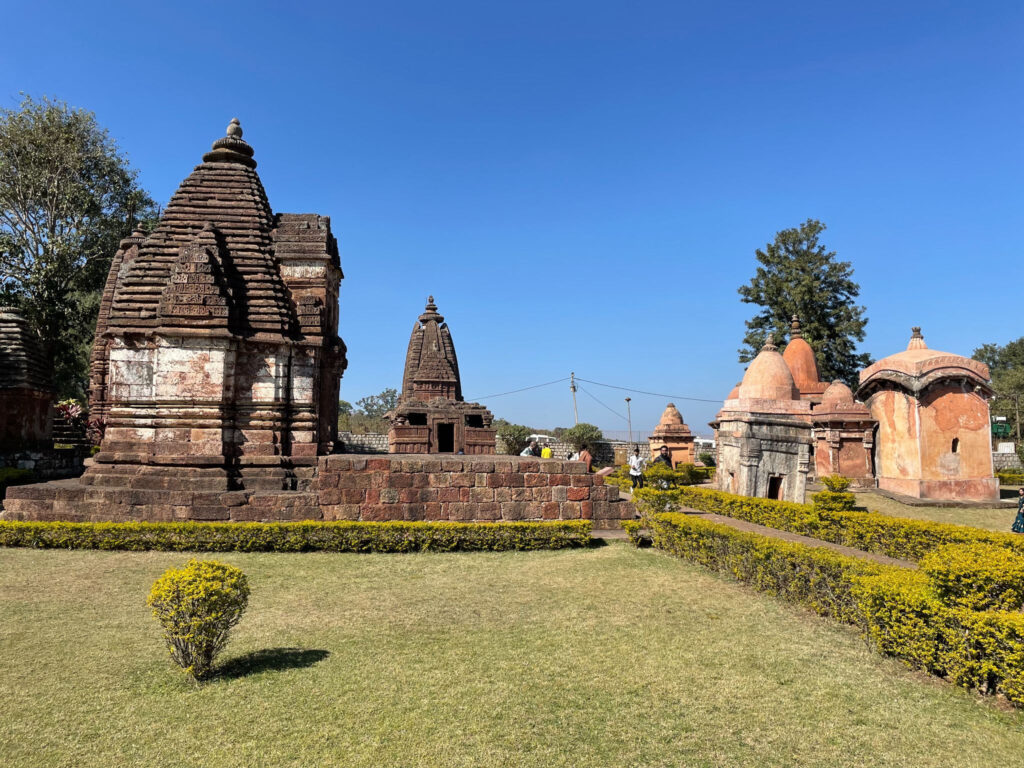
Image Source: Pratheesh
About Kalachuri Temple
The ancient Kalachuri Temples of Madhya Pradesh stand as a remarkable reminder of India’s rich architectural and spiritual heritage. Located near the sacred origin of the Narmada River at Amarkantak, these temples reflect the artistic brilliance and religious devotion of the Kalachuri dynasty, which ruled central India during the 10th and 11th centuries CE. Today, the temple complex is protected by the Archaeological Survey of India (ASI) and continues to attract history lovers, pilgrims, architects, and travelers from across the country.
What makes the Kalachuri Temple Complex truly fascinating is that it is not a single temple but a collection of shrines built over different periods by various rulers. Each temple carries its own unique design, religious significance, and architectural details. The beautifully carved pillars, sculpted walls, ancient mandapas, and towering shikharas showcase the excellence of medieval Indian temple architecture. Walking through the complex feels like stepping into a different era where art, faith, and craftsmanship blended perfectly.
The temples are surrounded by the peaceful atmosphere of Amarkantak, adding to their spiritual charm. Since the Narmada River is considered one of the holiest rivers in India, the entire region holds immense religious importance. Over centuries, saints, pilgrims, and devotees have visited this sacred land, making the Kalachuri temples not only historical monuments but also living centers of faith.
Karna Temple – The Crown Jewel of the Complex
Among all the structures in the Kalachuri Temple Complex, the Karna Temple is undoubtedly the most prominent and historically significant. Also known as the Trimukhi Temple, this grand structure was built during the reign of King Lakshmikarna between 1041 and 1073 CE. The temple stands on a high raised platform, giving it a majestic appearance that immediately captures attention.
The complex consists of three shrines dedicated to different deities — the Jogila Temple, Vishnu Temple, and Shiva Temple. The arrangement of these shrines reflects the inclusive religious practices of the time, where Shaivism and Vaishnavism coexisted harmoniously. The temple architecture follows the Nagara style, characterized by its curvilinear towers, intricate carvings, and beautifully designed pillars.
One of the most striking aspects of the Karna Temple is its detailed stonework. Even though parts of the structure have suffered damage over time, the surviving carvings still display exceptional artistry. The temple’s elevated platform, sculpted walls, and ornamental motifs reveal the advanced engineering and craftsmanship achieved during the Kalachuri period.
Machendranatha Temple – A Sacred Shiva Shrine
Another important structure within the complex is the Machendranatha Temple, which was also built during the 11th century under the Kalachuri rulers. Dedicated to Lord Shiva, this temple is a fine example of traditional Nagara-style architecture.
The temple features a sanctum housing a Shiva Linga, which remains the focal point of worship. The sanctum is connected to a vestibule and mandapa supported by beautifully carved pillars. Despite the passage of centuries, the temple still retains its spiritual atmosphere and architectural elegance.
The simplicity of the temple’s exterior contrasts beautifully with the intricate details found inside. The balanced proportions, geometric patterns, and sacred layout highlight the sophisticated planning methods used by ancient temple architects. Devotees visiting the temple often describe the surroundings as calm and deeply meditative.
Pataleshwar Temple – A Blend of Spirituality and Architecture
The Pataleshwar Temple is another magnificent structure associated with King Lakshmikarna of the Kalachuri dynasty of Tripuri. This temple is especially admired for its unique architectural layout and religious importance.
The temple consists of a sanctum, vestibule, and mandapa. Its mandapa is designed in a pyramidal form, while the sanctum follows the pancha-ratha style, a common feature in medieval temple architecture where the walls project outward in five divisions. The temple’s stone carvings and structural symmetry demonstrate the high level of architectural sophistication achieved during that era.
According to local beliefs, Adi Shankaracharya visited this temple during the 8th century and installed a Shiva Linga here. This association adds immense spiritual value to the site and attracts devotees who seek blessings and inner peace.
The peaceful environment around the temple enhances its mystical charm, making it one of the most spiritually significant spots in the complex.
Keshava Narayan Temple – A Vishnu Temple with Intricate Carvings
The Keshava Narayan Temple is among the most visually stunning temples in the complex. Dedicated to Lord Vishnu, the temple was constructed during the 18th century by the Bhonsle rulers, much later than the original Kalachuri structures. Despite being a later addition, the temple blends beautifully with the surrounding heritage architecture.
The temple is admired for its detailed carvings, decorative pillars, and elegant shikhara designed in the Nagara style. The main complex consists of two shrines connected through a common mandapa and vestibule. The carvings on the walls depict floral motifs, divine figures, and mythological themes that showcase the artistic richness of the period.
Visitors are often mesmerized by the fine detailing found across the temple structure. The combination of spiritual significance and artistic beauty makes the Keshava Narayan Temple one of the highlights of the Kalachuri Temple Complex.
Panch Math – Five Temples with Distinct Styles
Panch Math is a fascinating group of five temples built during the 15th century by the Gond rulers. These temples were constructed on a raised platform and represent different variations of Nagara-style architecture.
Although smaller in scale compared to some other temples in the complex, Panch Math holds great historical and architectural importance. Each shrine reflects unique design elements, showing how temple architecture evolved over time under different ruling dynasties.
The simple yet elegant structures provide insight into the craftsmanship of the Gond period. The quiet surroundings and ancient ambiance make Panch Math an interesting stop for visitors interested in medieval Indian architecture and history.
Johila Temple – The Newest Addition to the Complex
The Johila Temple is considered the newest structure within the Kalachuri Temple Complex. It is believed to have been constructed by a local chief and showcases a blend of traditional temple styles.
Built on a raised platform, the temple features a pyramidal structure and a shikhara adorned with side transepts on all sides. Though smaller compared to the major temples, Johila Temple contributes to the overall diversity and historical layering of the complex.
Its relatively later construction highlights how the sacred significance of Amarkantak continued across centuries, encouraging rulers and local leaders to contribute to the religious landscape of the region.
Architecture of the Kalachuri Temples
The Kalachuri Temples are excellent examples of Nagara-style temple architecture, which became highly popular in northern and central India during the medieval period. The temples are known for their elevated platforms, intricately carved pillars, sculpted walls, and beautifully designed shikharas.
Stone was the primary construction material, and artisans displayed extraordinary skill in carving religious motifs, floral patterns, celestial figures, and mythological scenes. The structural layout of sanctum, vestibule, and mandapa seen across the temples reflects classical Hindu temple design principles.
Even today, the ruins and surviving structures reveal the grandeur of the Kalachuri dynasty and their contribution to Indian art and architecture.
Best Time to Visit
The ideal time to visit the Kalachuri Temple Complex is between October and March, when the weather in Amarkantak remains pleasant and comfortable for sightseeing. The monsoon season also adds lush greenery to the surroundings, making the landscape especially scenic.
Early mornings and evenings are particularly peaceful for exploring the temples and enjoying the spiritual atmosphere of the area.
Timings
Opening Hours: 8:00 AM – 5:00 PM.
Visitors are advised to explore the complex during daylight hours to fully appreciate the architectural details and surrounding beauty.
How to Reach Kalachuri Temple

By Car:
One can easily reach Kalachuri Temple by car from nearby cities like Nagpur, Raipur, and Bhopal. Jabalpur is well-connected with these cities through National Highways.

By Train:
Jabalpur Junction is the nearest railway station to Kalachuri Temple, located at a distance of about 3 km. Jabalpur is well-connected with major cities in India through rail network.

By Air:
The nearest airport to Kalachuri Temple is Jabalpur Airport, located at a distance of about 20 km. It is well-connected with major cities in India like Delhi, Mumbai, and Hyderabad through regular flights.
FAQs
1. Where is the Kalachuri Temple Complex located?
The Kalachuri Temple Complex is located in Amarkantak, Madhya Pradesh, near the origin of the sacred Narmada River.
2. Who built the Kalachuri Temples?
Most of the temples were built by the Kalachuri dynasty during the 10th and 11th centuries CE, while some later structures were added by Gond and Bhonsle rulers.
3. Which is the most important temple in the complex?
The Karna Temple, also known as the Trimukhi Temple, is considered the most significant and architecturally impressive temple in the complex.
4. What architectural style do the temples follow?
The temples mainly follow the Nagara style of temple architecture, known for its curvilinear towers and intricate carvings.
5. Is the Kalachuri Temple Complex protected?
Yes, the site is protected and maintained by the Archaeological Survey of India (ASI).
6. What are the temple visiting timings?
The complex is open daily from 8:00 AM to 5:00 PM.
7. Why is Amarkantak spiritually important?
Amarkantak is considered sacred because it is the source of the Narmada River, one of the holiest rivers in India.
8. What is the best time to visit the temples?
The best time to visit is from October to March when the weather is cool and pleasant.