
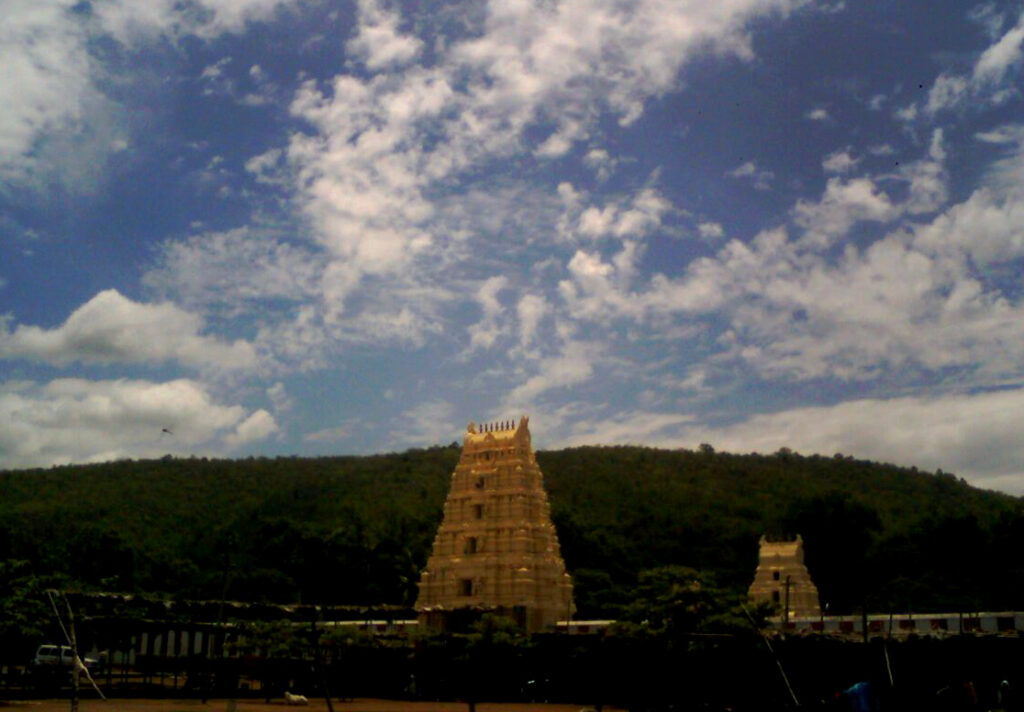
Image Source: Adityamadhav83
About Mahanandiswara Swamy Temple
The Mahanandi Temple, also known as Mahanandiswara Swamy Temple, is one of the most revered temples in Andhra Pradesh. It is dedicated to Lord Shiva in the form of Mahanandiswara Swamy.
The temple is located at the foothills of the Nallamala Hills near Nandyal town in the Nandyal district, about 15 kilometers away from Nandyal and 250 kilometers from Hyderabad. Surrounded by dense forests, fertile fields, and natural springs, the temple is not only a sacred pilgrimage center but also a scenic retreat for devotees and travelers.
Religious Significance
Mahanandi is one of the nine Nandi shrines (Navanandis) in the region, making it an important spiritual circuit for Shaivites. The presiding deity, Mahanandiswara, is worshipped in the form of a Swayambhu Linga (self-manifested). The temple holds deep spiritual importance, with references found in ancient texts and inscriptions dating back over 1,500 years.
Unique Features of the Temple
The temple is most famous for its eternal freshwater pools (pushkarinis) that surround the sanctum. The water is crystal clear, fresh, and maintains a pleasant temperature throughout the year. The most remarkable feature is that water continuously flows into the tanks and sanctum without stagnation, symbolizing purity and divinity.
The main tank, Kalyani Pushkarini, is located just outside the sanctum and is considered sacred for ritual bathing before darshan. Pilgrims often marvel at how the water maintains a constant level regardless of seasons.
Legend and Mythology
According to legend, Lord Shiva once appeared here in the form of Mahanandiswara to bless his devotees. The Nandi (sacred bull of Shiva) is said to have grazed in this region, giving rise to the nine Nandi temples. Another belief is that the water springs were created by divine intervention to provide sustenance for devotees and sages living in the forested Nallamala region.
Architecture
The Mahanandi Temple showcases a mix of Chalukyan and Vijayanagara architectural influences. The sanctum (garbhagriha) houses the lingam, and the temple complex includes pillared halls and mandapas with intricate carvings. The temple is simple yet powerful in design, with natural elements like flowing water incorporated into the sacred space, making it unique among Shiva temples in India.
Festivals and Celebrations
The temple is particularly vibrant during Maha Shivaratri, when thousands of devotees throng to offer prayers to Lord Shiva through night-long vigils, rituals, and special abhishekams. Other important occasions include Kartika Masam and the annual Brahmotsavam, which draw devotees from across the state. Ritual baths in the temple tanks during these times are believed to purify devotees and bestow blessings.