Image Source: Laxmanvety
About Undavalli Caves
Nestled on a sandstone hillside overlooking the majestic Krishna River, the ancient Undavalli Caves are among the finest examples of India’s rock-cut architectural heritage. Located in the Guntur district of Andhra Pradesh, just a short drive from Vijayawada, these caves beautifully combine history, spirituality, art, and engineering in one extraordinary monument. Surrounded by lush greenery and scenic countryside, the caves offer not only historical insight but also stunning panoramic views that make the visit even more memorable.
Recognized as a Centrally Protected Monument of National Importance by the Archaeological Survey of India, Undavalli Caves attract historians, architecture enthusiasts, pilgrims, and travelers from across the country. The site reflects centuries of cultural exchange and religious transformation, making it one of the most fascinating heritage destinations in South India.
Historical Background of Undavalli Caves
The caves are believed to have been carved between the 4th and 5th centuries CE during the reign of the Vishnukundina dynasty, which ruled large parts of Andhra Pradesh from around 420 to 620 CE. The architecture and sculptural style show strong influences of Gupta-era art, especially in the pillars, shrine layouts, and monastic chambers.
What makes Undavalli Caves truly unique is the way they reveal the gradual evolution of religious traditions over centuries. The caves were not associated with a single faith throughout history. Instead, they transformed over time, reflecting the changing spiritual landscape of the region.
Jain Influence
The earliest phase of the caves is linked to Jainism. Several carvings and architectural patterns on the lower levels resemble Jain rock-cut traditions seen in ancient sites like Udayagiri Caves and Khandagiri Caves. Images resembling Jain tirthankaras and ascetic figures suggest that the caves may originally have served as a Jain monastic retreat.
Buddhist Phase
Over time, Buddhist monks are believed to have occupied portions of the complex. Certain chambers and artistic elements indicate that the caves functioned as a Buddhist vihara or monastery. The calm, meditative atmosphere of the interiors and the simple monastic layouts support this interpretation.
Hindu Transformation
In later centuries, the caves gradually evolved into Hindu temple complexes. Sculptures and shrines dedicated to Shiva, Vishnu, Brahma, and several Vaishnava saints were added. This transition reflects the rise of Hindu devotional traditions in South India during the early medieval period.
Because of these multiple layers of religious history, Undavalli Caves stand today as a remarkable symbol of India’s cultural coexistence and spiritual diversity.
Architectural Marvel of the Undavalli Caves
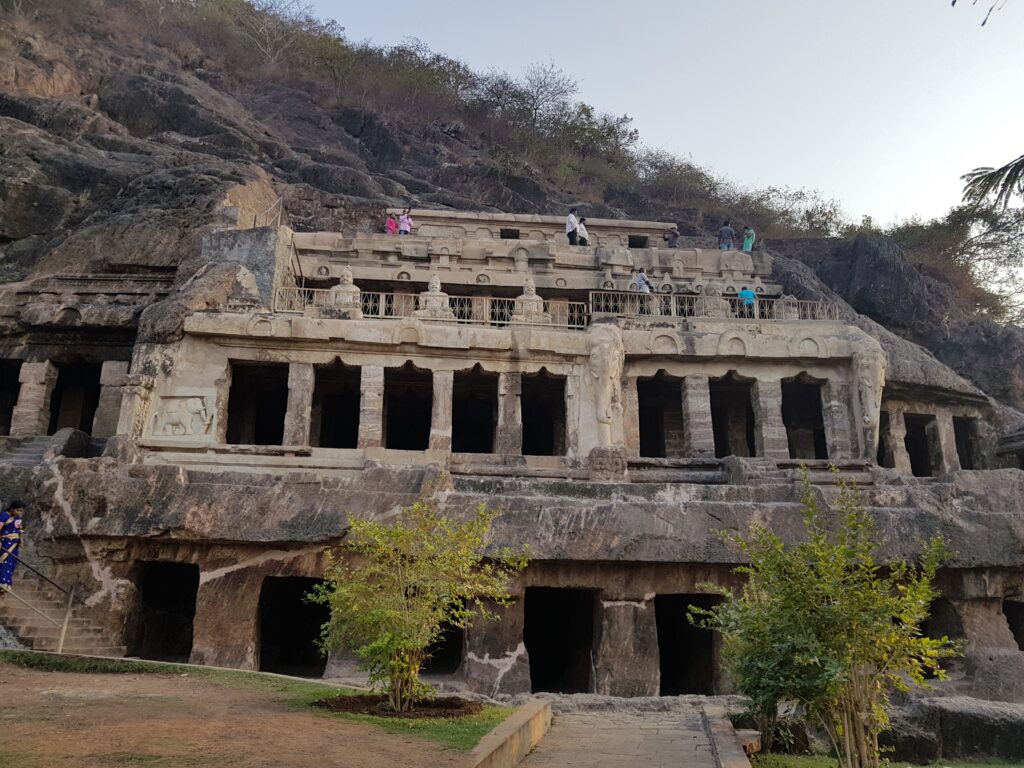
The cave complex is spread across four levels, all carved directly into a massive sandstone hill. The craftsmanship involved in creating such a structure with ancient tools continues to amaze archaeologists and visitors alike.
Ground Floor
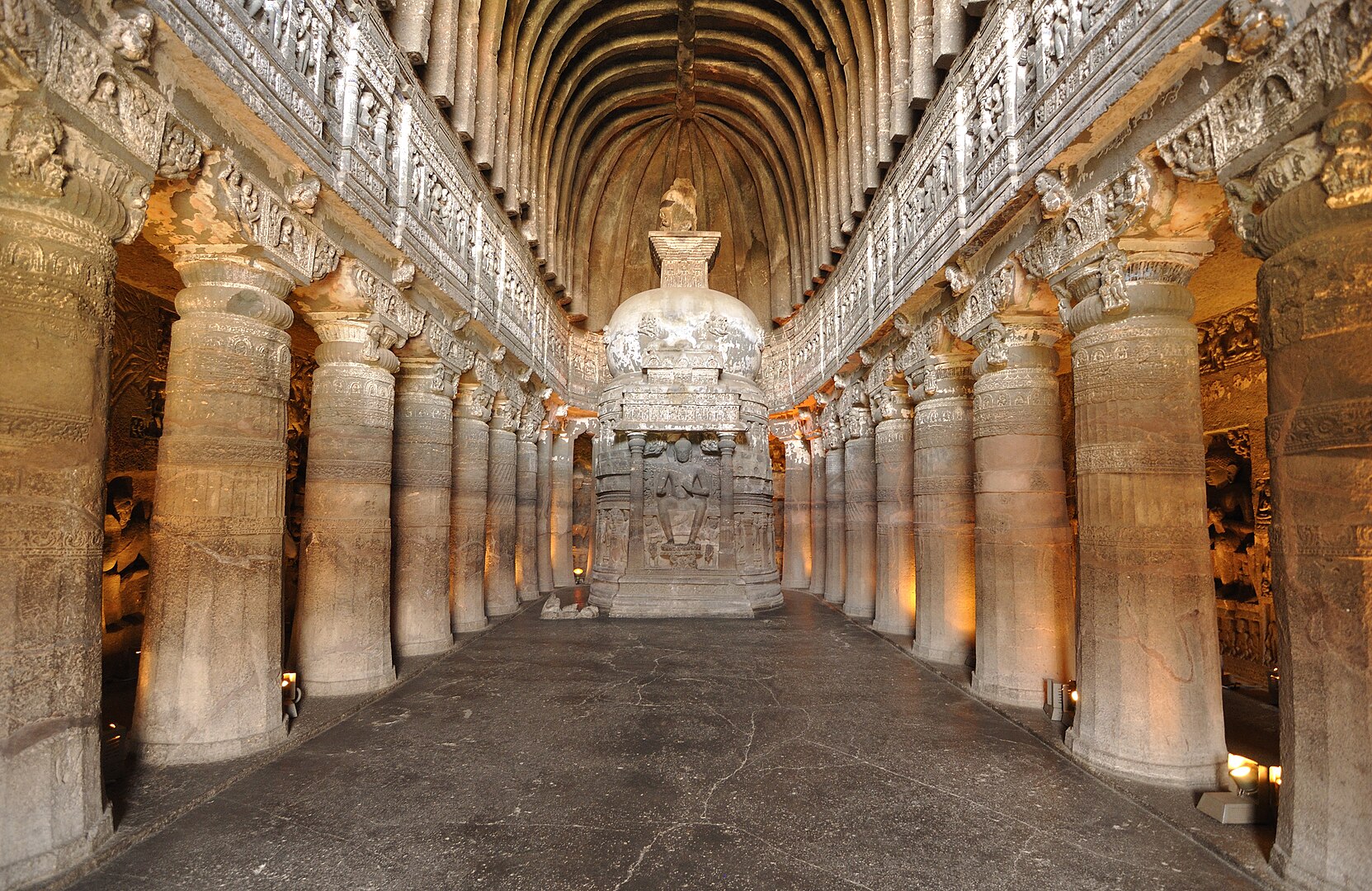
The lowest level consists of a large unfinished pillared hall supported by eight pillars and multiple doorways. Although incomplete, this section offers valuable insight into how ancient craftsmen planned and executed large-scale rock-cut structures. The unfinished surfaces also allow visitors to observe different stages of excavation and carving.
First Floor
The first storey contains a triple-shrine arrangement, each connected to spacious pillared halls. These shrines are believed to have been associated with the Hindu Trinity—Shiva, Vishnu, and Brahma. However, traces of Jain and Buddhist artistic styles can still be identified, showing how the caves underwent continuous adaptation over centuries.
The pillars on this floor are particularly impressive, featuring elegant carvings and symmetrical designs that reflect the sophisticated engineering skills of the time.
Second Floor – The Main Attraction
The second level is undoubtedly the highlight of the entire complex. Here lies a massive monolithic sculpture measuring nearly 5 meters in length. The statue is traditionally identified as Lord Vishnu in a reclining posture known as Anantasayana.
However, scholars have debated the identity of the figure for years. Unlike traditional Vishnu depictions that feature the five-headed serpent Adishesha, the serpent canopy here has eight heads. Additionally, the closed eyes and certain stylistic features resemble representations of Parshvanatha, an important Jain tirthankara. This has led some historians to believe the sculpture may have originally belonged to Jain traditions before later Hindu modifications.
Apart from the reclining figure, the walls of this level feature carvings of Vaishnava deities, sages, Hanuman, and Shaivite imagery. Some sculptures are also attributed to the later Chalukyan period, showing that artistic additions continued long after the caves were first created.
Upper Floor
The topmost level remains unfinished and contains another triple-shrine layout. Though incomplete, this section is extremely important for researchers because it reveals ancient construction techniques, pillar alignments, and excavation methods used in rock-cut architecture.
Artistic Excellence and Craftsmanship
The Undavalli Caves showcase extraordinary stone-carving skills. Every hall, pillar, shrine, and sculpture was carved from a single block of sandstone, demonstrating incredible precision and planning. The high-relief carvings, balanced proportions, and integration of multiple religious themes highlight the artistic sophistication of ancient Indian craftsmen.
The caves also reveal how architecture evolved through different dynasties and religious influences without completely erasing earlier traditions. This layered artistic identity is one of the reasons why the site holds immense archaeological importance today.
Scenic Beauty Around the Caves
Apart from their historical significance, the caves are also known for their peaceful surroundings. Perched above the Krishna River, the site offers sweeping views of green fields, river plains, and distant hills. During the monsoon and winter seasons, the landscape becomes especially beautiful, making it a favorite destination for photographers and nature lovers.
Several smaller rock-cut shrines and historical remains nearby further enhance the atmosphere, giving visitors a glimpse into the region’s rich ancient past.
How to Reach Undavalli Caves
The caves are well connected by road and can be easily reached from nearby cities.
- Vijayawada is the nearest major city, located around 8–10 km away.
- Regular APSRTC buses and taxis operate from Vijayawada, Guntur, and Amaravati.
- The nearest railway station is Vijayawada Junction.
- Vijayawada International Airport serves as the closest airport.
One of the most scenic ways to approach the caves is through the APCRDA Tourist Bus-cum-Boat service along the Krishna River near the Prakasam Barrage, offering beautiful views of the surrounding landscape.
Nearby Attractions
Visitors often combine a trip to Undavalli Caves with other nearby heritage sites, including:
- Akkanna Madanna Caves.
- Mogalrajapuram Caves.
- Prakasam Barrage.
- Amaravati.
Together, these destinations form an important cultural and archaeological circuit in Andhra Pradesh.
Why Undavalli Caves Are Important
Undavalli Caves are much more than just an ancient monument. They represent centuries of artistic innovation, religious harmony, and architectural brilliance. The coexistence of Jain, Buddhist, and Hindu influences within a single cave complex makes the site exceptionally rare in Indian history.
For historians and travelers alike, the caves provide a fascinating journey into the spiritual and cultural evolution of South India. Whether you visit for history, architecture, photography, or peaceful surroundings, Undavalli Caves leave a lasting impression with their timeless beauty and mystery.