
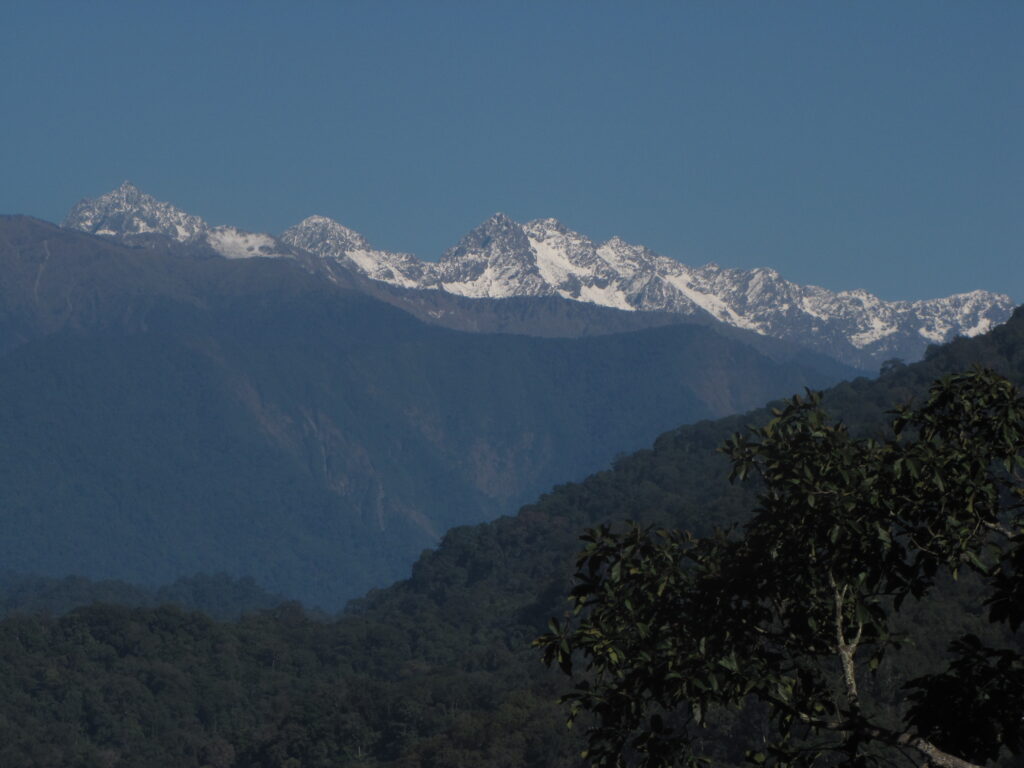
Image Source: Rohit Naniwadekar
About Namdapha National Park
Deep in the remote eastern frontiers of Arunachal Pradesh lies Namdapha National Park & Tiger Reserve, a sprawling expanse of raw nature covering over 1,985 square kilometres. Set in the Eastern Himalayas, this UNESCO-recognized Indo-Burma biodiversity hotspot is one of the richest and most ecologically diverse landscapes in India.
Namdapha is legendary for being the only park in the world where four big cats – tiger, leopard, snow leopard, and clouded leopard – share the same wild habitat. The park is a paradise for wildlife photography, jungle trekking, river exploration, and tribal cultural encounters, offering travellers an immersive escape into nature’s purest form.
Unique Experiences & Things to Do
Wildlife Safaris & Birding Expeditions : You can spot rare and endangered species such as Hoolock gibbons (India’s only ape), Asiatic black bears, Malayan sun bears, red pandas, and over 450 bird species, including hornbills, wren-babblers, and the critically endangered white-bellied heron.
Eastern Himalayas Jungle Treks – Popular trekking routes like the Deban–Hornbill–Bulbulia–Firmbase trail take you deep into virgin forests, bamboo groves, elephant grasslands, and mist-shrouded valleys.
Noa-Dihing River Exploration – This lifeline of Namdapha offers serene boat rides, riverside camping, and excellent bird-watching opportunities at sunrise.
Lisu Tribal Village Visits – Meet the indigenous Lisu (Yobin) tribe, known for their bamboo stilt houses, hunting traditions, and handwoven textiles. Visitors can also encounter Chakma and Tangsa communities in nearby settlements.
Photography Hotspots – From gibbons swinging in the canopy to orchids blooming in monsoon, Namdapha is a living postcard for nature lovers and macro photographers.
History & Conservation Heritage
It was declared a wildlife sanctuary in 1972 and upgraded to a National Park and Tiger Reserve in 1983, Namdapha has been a cornerstone of India’s Project Tiger initiative. Its remarkable altitudinal range from 200 meters to 4,571 meters allows it to house multiple vegetation zones like tropical evergreen rainforest, subtropical broadleaf forest, temperate pine forest, alpine meadows, and snow-clad peaks.
This diversity has made Namdapha a vital sanctuary for endemic and migratory species. Despite its beauty, the park faces conservation challenges like illegal logging and poaching, making responsible eco-tourism a key support system for its preservation.
How to Reach Namdapha National Park
Nearest Town: Miao (entry point to Deban forest camp).
By Air: Dibrugarh Airport (Assam) ~160 km away; well-connected to Guwahati and Kolkata.
By Rail: Tinsukia Railway Station ~140 km away; onward journey by road via Namsai.
By Road: State transport buses and shared taxis connect Tinsukia/Dibrugarh to Miao. Roads can be rough, especially during monsoon, so a sturdy vehicle is recommended.
Best Time to Visit
November to March: Dry season with pleasant weather, ideal for trekking and wildlife sightings.
Avoid June–September: Heavy rainfall causes slippery trails, swollen rivers, and leech infestation, but monsoon trekkers may enjoy lush greenery and blooming orchids.
Travel Tips for Visitors
Permits: Inner Line Permit (ILP) required for Indian nationals; Protected Area Permit (PAP) for foreign travelers. Both can be obtained online or from Arunachal tourism offices.
Guides & Porters: Essential for safety — the dense forest and high-altitude sections can be disorienting without local expertise.
Gear Checklist: Trekking shoes with strong grip, leech socks, rainproof clothing, binoculars, insect repellent, and extra batteries for cameras.
Accommodation: Forest Rest Houses at Deban offer basic but scenic lodging; Miao has budget guesthouses and homestays run by local families.
Responsible Travel: Avoid plastic, respect tribal customs, and keep noise low to not disturb wildlife.