
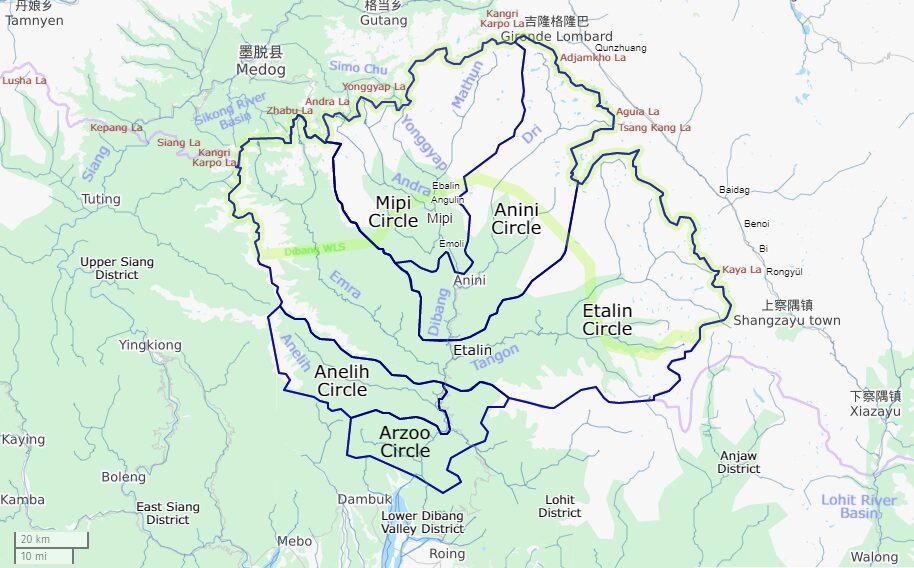
Image Source: Wikimedia
About Anini–Mipi–Athunli Trek
The Anini–Mipi–Athunli Trek is a breathtaking high-altitude journey into the Dibang Valley district of Arunachal Pradesh, a region known for its unspoiled landscapes and deep connection with the Idu Mishmi tribe.
Starting from Anini, one of the most remote district headquarters in India, the trail passes through Mipi village and culminates at Athunli Lake, a pristine glacial lake tucked amidst snow-clad peaks. The trek is a rare blend of alpine beauty, cultural immersion, and raw adventure, offering panoramic views of the Eastern Himalayas and untouched valleys.
Unique Experiences
Trekking from Anini to Athunli is like moving through different worlds. From the rolling meadows near Anini, to the subtropical forests around Mipi, and finally into the rugged, icy wilderness surrounding Athunli Lake. Along the way, you encounter Idu Mishmi hamlets where locals still weave textiles by hand and share oral legends about the sacred mountains.
Athunli Lake
The crystalline Athunli Lake, shimmering under the clear blue sky, is surrounded by jagged peaks that reflect perfectly in its still waters. The route also offers opportunities to spot Himalayan monals, musk deer, and perhaps even the elusive red panda.
How to Reach
Anini can be reached from Roing via a challenging but spectacular road journey, crossing Mayudia Pass and passing through lush forests and winding mountain roads.
From Anini, trekkers typically travel to Mipi by road or on foot, and then continue on the trekking trail towards Athunli Lake. The trek is moderately difficult and requires good physical fitness, with the best trekking season being October to April, when the weather is clear and the trails are accessible. Special permits are required for entry into the Dibang Valley, and hiring local guides is strongly recommended due to the remote terrain.
Travel Tips
Carry high-altitude gear including warm clothing, waterproof layers, and sturdy trekking boots.
Bring energy-rich snacks and water purification tablets, as supplies are limited en route.
Respect Idu Mishmi customs — photography may require permission, especially during rituals.
Be prepared for unpredictable weather, as snow can occur even in spring.