
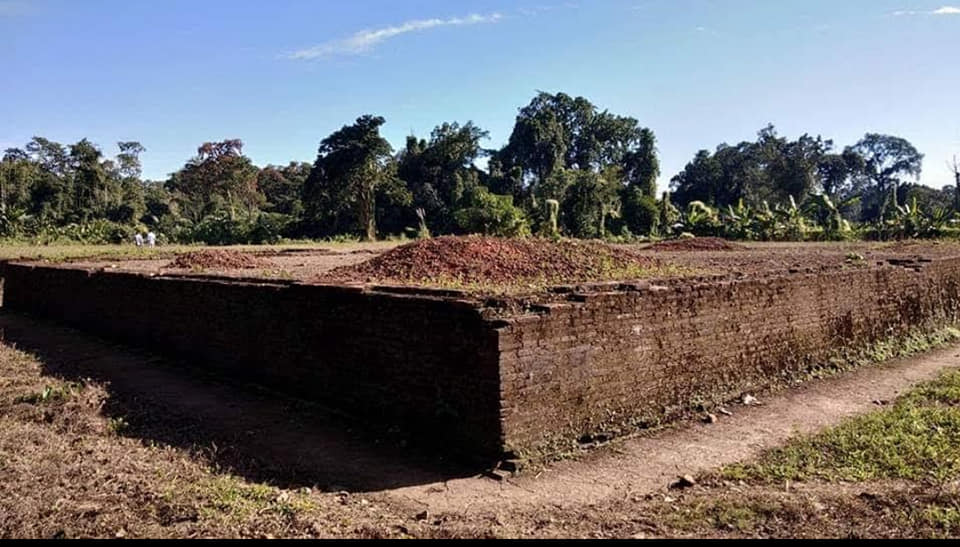
Image Source: XaxaBaba
About Bhismaknagar Fort
Nestled in the verdant foothills of the Lower Dibang Valley in Arunachal Pradesh, Bhismaknagar Fort is one of the oldest archaeological sites in Northeast India, dating back to the 8th–10th century CE.
Associated with the Chutia Kingdom and intertwined with legends from the Mahabharata, this sprawling complex blends history, folklore, and scenic beauty. According to local tradition, Bhismaknagar was the capital of King Bhismaka, the father of Princess Rukmini, who married Lord Krishna. While historians place its construction in the early medieval period, its mythological link gives it a revered place in local culture.
History
Archaeological studies identify Bhismaknagar as a major political and cultural hub in the early history of the region. The fort is believed to have been built by the Idu Mishmi tribe in collaboration with the Chutia rulers, serving both as a defensive bastion and an administrative center. Its strategic location allowed control over trade and migration routes between the Brahmaputra Valley and the eastern Himalayan highlands.
Mythology
Legends tie it to the famous marriage of Rukmini and Krishna, adding a layer of sacredness for pilgrims. Even today, Bhismaknagar Festival is celebrated here annually, attracting devotees and cultural performers from across the region.
Architectural Features
Bhismaknagar Fort covers an area of around 10 square kilometers, making it one of the largest fort complexes in Arunachal Pradesh.
Walls – Constructed of finely dressed stone and mud mortar, the walls rise up to 4.5 meters and are nearly 6 meters thick in places, designed to withstand both warfare and natural erosion.
Layout – The fort has three grand entrances and six interconnected gates leading into different sections.
Interiors – Archaeological excavations have revealed remains of temples, a royal palace complex, water tanks, drainage systems, and decorative terracotta figurines.
Craftsmanship – The stonework shows remarkable precision for its time, and some walls still carry decorative motifs despite centuries of weathering.
This blend of defensive architecture and royal residential planning suggests Bhismaknagar was not just a fort but a thriving city in its prime.
How to Reach
Bhismaknagar is located about 30 km from Roing, the district headquarters of Lower Dibang Valley.
By Air: The nearest airport is Dibrugarh Airport (150 km), connected by road via Tinsukia and Roing.
By Rail: The closest major railway station is Tinsukia (~120 km).
By Road: Roing is connected to Assam via the Dhola–Sadiya Bridge over the Brahmaputra. Local taxis from Roing can take you to the fort.