
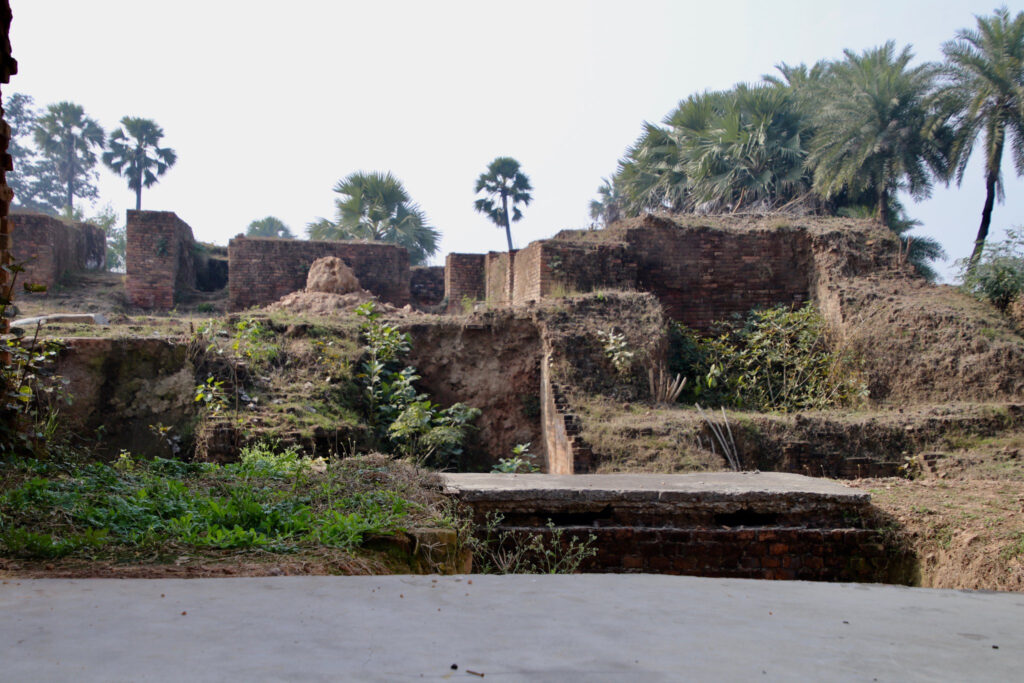
Image Source: KashKarti
About Telhara University
The Telhara University Ruins, located near the Nalanda district in Bihar, are one of the lesser-known yet historically significant remnants of India’s ancient education system. While Nalanda and Vikramshila are widely celebrated, Telhara—referred to in Buddhist texts as Tilas-ākāśa Mahavihara—was also a major Buddhist monastery and university. Rediscovered in the 21st century during excavation works, Telhara is gradually gaining recognition as a crucial piece in the puzzle of India’s ancient learning centers.
History
The antiquity of Telhara Mahavihara dates back to the Gupta period (5th century CE) and continued to flourish through the Pala dynasty (8th–12th century CE). Historical accounts suggest that Telhara was visited by the Chinese traveler Xuanzang (Hsuan Tsang) in the 7th century, who mentioned it alongside Nalanda and Odantapuri as prominent centers of learning.
Telhara was a Buddhist monastic university, where students studied subjects like Mahayana philosophy, Buddhist scriptures, logic, grammar, and medicine. Like Nalanda, it attracted monks and scholars from different parts of Asia, playing a role in spreading Buddhist teachings across the continent.
Archaeology
Excavations at Telhara village in the Hilsa subdivision of Nalanda district (about 30 km from Nalanda ruins) have unearthed significant findings that confirm the presence of a large university complex. The discovery came to light during the construction of a court building in 2009, when workers accidentally stumbled upon ancient bricks and structures.
Key archaeological highlights include:
Viharas (Monasteries): Large monastic complexes with cells for monks, arranged around courtyards.
Stupas and Shrines: Fragments of stupas and prayer halls that reflect the religious life of monks.
Artifacts: Terracotta plaques, seals, and inscriptions indicating Buddhist symbolism.
Pottery and Sculptures: Painted pottery, stone carvings, and idols depicting Buddha and Bodhisattvas.
The use of large-sized bricks, similar to those at Nalanda and Vikramshila, confirms its identity as a significant Mahavihara.
Connection with Nalanda and Other Universities
Telhara University was part of the Buddhist education network of Magadha, which also included Nalanda, Odantapuri, Vikramshila, and Jagaddala. Together, these centers formed the backbone of Buddhist learning in ancient India. While Nalanda was the most prominent, Telhara played a supporting role in nurturing monks, scholars, and translators who carried Buddhist knowledge abroad.
Decline and Destruction
Like Nalanda, Telhara University faced decline after the 12th-century Turkish invasions led by Bakhtiyar Khilji. The Mahavihara was reportedly destroyed, its libraries burned, and the monks dispersed. For centuries, the ruins lay buried under soil and forgotten by mainstream history, until modern excavations revived its memory.
Rediscovery and Excavation
In 2009, while constructing the Hilsa subdivision court, workers uncovered ancient walls and artifacts, leading to a full-scale excavation by the Archaeological Survey of India (ASI) and the Bihar State Archaeology Department. Since then, archaeologists have revealed evidence of multi-layered structures from different dynastic periods, showcasing Telhara’s long academic and spiritual history.
Visiting Telhara University Ruins
Telhara is located about 30 km from Nalanda and around 80 km from Patna, making it accessible as part of a heritage tour. Unlike Nalanda, Telhara is still under excavation and lacks extensive tourist infrastructure, but history enthusiasts can explore:
Excavated Monastic Ruins – The exposed sections of viharas and stupas.
Nearby Nalanda Museum and Xuanzang Memorial Hall – To understand the broader Buddhist heritage.
Rajgir and Bodh Gaya – Complementary destinations forming the Buddhist Circuit of Bihar.
Best time to visit
The best time to visit is from October to March, when the weather is comfortable for exploring open-air archaeological sites.