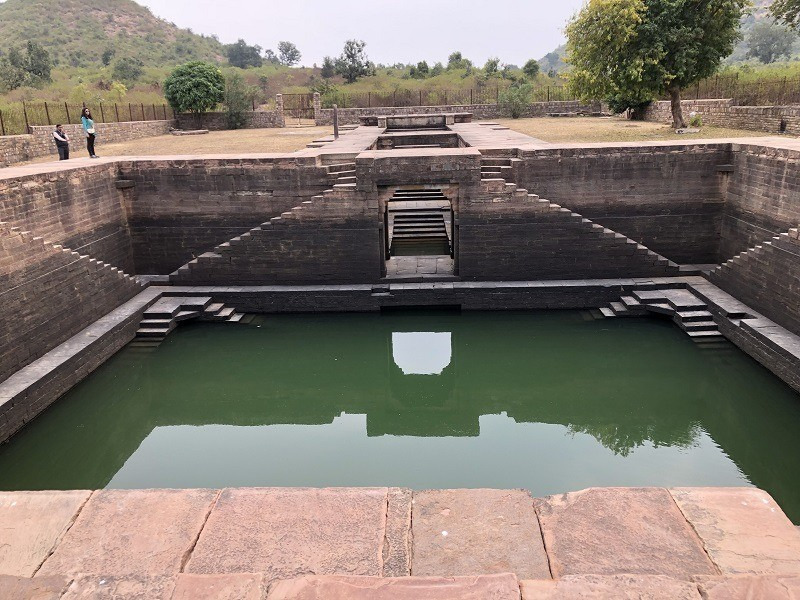
Image Source: Flickr
About Battis Baoli
Hidden amid the historic town of Chanderi, Battis Baoli is one of the most fascinating architectural treasures of central India. Located around 5 km from the Chanderi Bus Station, this ancient stepwell reflects the grandeur, engineering brilliance, and artistic excellence of a bygone era. Surrounded by the timeless charm of Chanderi’s forts, palaces, and narrow stone pathways, Battis Baoli offers visitors a glimpse into the region’s rich medieval heritage.
The name “Battis Baoli” literally means “32-step well” or “32 ghats,” referring to the beautifully designed series of steps and platforms that descend into the well. Even after surviving centuries of changing dynasties, weather conditions, and neglect, the structure continues to stand proudly as a reminder of the remarkable craftsmanship of the past.
History of Battis Baoli
The story behind Battis Baoli is both intriguing and historically significant. According to inscriptions found at the site, the construction of this magnificent stepwell began in 1484 AD during the reign of Sultan Ghiyasuddin Khilji of the Malwa Sultanate. The project was initiated by a nobleman named Taghi, who envisioned not just a water reservoir, but a complete cultural and spiritual complex.
The site originally included a beautifully landscaped garden and a mosque alongside the stepwell. Historians often draw comparisons between the mosque here and the famous Al-Aqsa Mosque because of certain architectural inspirations and stylistic similarities. This combination of water architecture, religious structures, and garden spaces highlights how stepwells in medieval India were not merely functional spaces but also social and cultural gathering points.
One of the most remarkable aspects of Battis Baoli is its mysterious water system. The water level inside the well is believed to remain nearly constant throughout the year, even during dry seasons. This has long fascinated locals and historians alike, showcasing the advanced water management knowledge possessed by ancient builders.
Architectural Beauty and Design
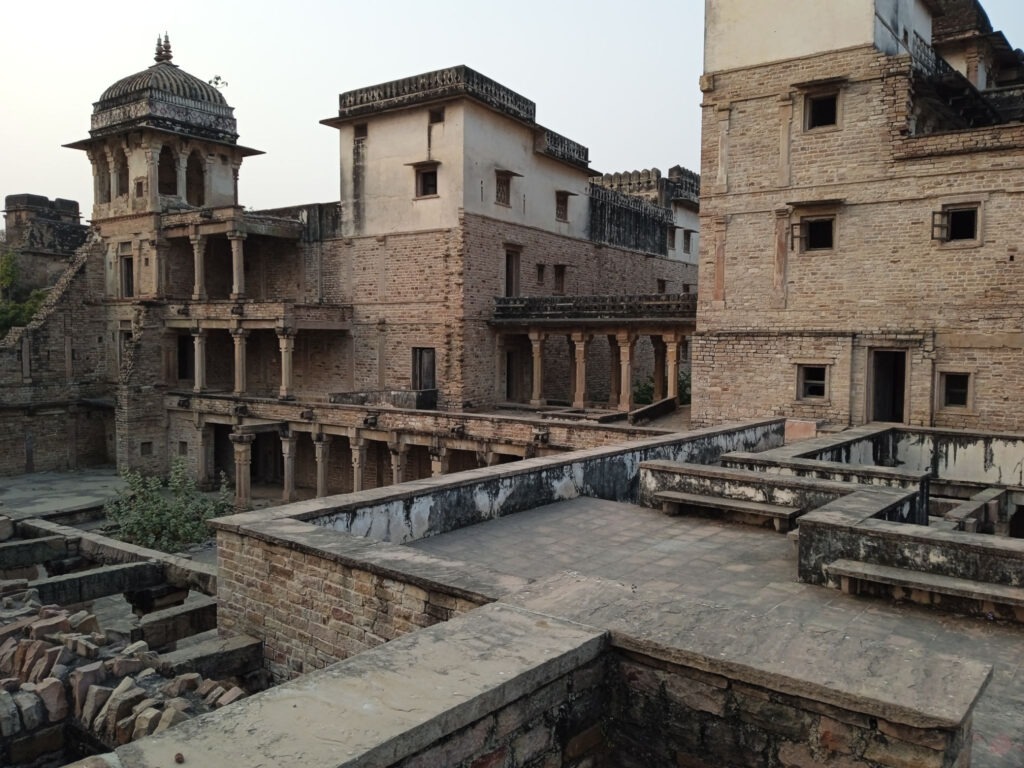
Battis Baoli is considered the largest stepwell in Chanderi and is admired for its striking symmetry and thoughtful design. Built in a square layout measuring approximately 60 feet by 60 feet, the baoli extends downward to a depth equivalent to nearly four storeys. The massive structure demonstrates how medieval engineers skillfully combined utility with aesthetics.
Visitors enter the baoli through two grand gateways located on the southern side. As one descends deeper into the structure, a series of stone steps, corridors, and beautifully crafted ghats unfold layer by layer. Each level offers a unique perspective of the stepwell’s geometry, creating mesmerizing patterns of light and shadow throughout the day.
The platforms on every storey were designed not only for accessing water but also for resting, social interaction, and religious activities. The stone walls, arches, and passageways showcase subtle Islamic architectural influences blended with regional craftsmanship. Even today, the cool atmosphere inside the baoli provides relief from the heat outside, reflecting the intelligent climate-responsive design of traditional Indian architecture.
Cultural and Historical Importance
Stepwells like Battis Baoli played an essential role in the daily life of ancient Indian settlements. In regions where water scarcity was common, such structures served as reliable water sources for drinking, irrigation, and community use. Beyond practicality, they also became centers of trade, conversation, worship, and cultural exchange.
Battis Baoli holds special significance because it reflects the prosperous era of Chanderi under the Malwa Sultanate. During this period, Chanderi flourished as an important center of trade, art, and textile production. The stepwell stands as evidence of the town’s historical importance and sophisticated urban planning.
Today, Battis Baoli attracts history lovers, photographers, architecture enthusiasts, and travelers seeking lesser-known heritage sites. The peaceful surroundings and ancient ambiance make it a memorable destination for anyone exploring Chanderi.
Best Time to Visit Battis Baoli
The ideal time to visit Battis Baoli is between October and March, when the weather remains pleasant and comfortable for sightseeing. During the monsoon season, the surrounding greenery becomes more vibrant, adding extra charm to the historic structure.
Morning and evening hours are particularly suitable for photography, as the sunlight filtering through the arches and stairways creates dramatic visual effects.
How to Reach Battis Baoli
Battis Baoli is easily accessible from Chanderi town in Madhya Pradesh. Local taxis and auto-rickshaws are available from the Chanderi Bus Station. Travelers visiting Chanderi often combine Battis Baoli with nearby attractions such as Chanderi Fort, Koshak Mahal, and the ancient Jain temples scattered across the town.
Nearby Attractions
1. Chanderi Fort
Perched atop a hill, Chanderi Fort offers breathtaking views of the town and surrounding countryside. The fort is one of the most important historical landmarks in Chanderi and showcases centuries of architectural heritage.
2. Koshak Mahal
Built in the 15th century by Sultan Mahmud Shah Khilji, Koshak Mahal is known for its impressive Afghan-style architecture and massive stone structure.
3. Badal Mahal Gate
One of the most photographed monuments in Chanderi, this grand gateway is admired for its elegant design and historical significance.
4. Jama Masjid
A magnificent medieval mosque featuring beautiful domes, arches, and intricate stonework. It remains an important religious and architectural attraction.
5. Kati Ghati Gateway
A unique rock-cut gateway carved through a massive hill, serving as the historic entrance to Chanderi from the Malwa region.
6. Shahzadi Ka Roza
This elegant tomb is associated with a local love legend and is admired for its peaceful setting and beautiful architecture.
7. Parameshwar Tal
A historic water reservoir surrounded by temples and scenic landscapes, making it a popular spot for relaxation and photography.
8. Chanderi Archaeological Museum
The museum houses sculptures, inscriptions, coins, and artifacts that provide insight into the rich cultural and historical heritage of the region.
9. Raja Rani Mahal
A historic palace complex that reflects the royal lifestyle and architectural traditions of medieval Chanderi.
10. Jageshwari Mata Temple
A revered Hindu temple visited by devotees throughout the year, especially during Navratri celebrations.
Interesting Facts About Battis Baoli
- Battis Baoli is the largest stepwell in Chanderi.
- The structure dates back to the 15th century during the Malwa Sultanate period.
- The baoli has 32 ghats or platforms, which inspired its name.
- The water level inside the stepwell reportedly remains stable throughout the year.
- The site once included a mosque and garden complex.
- Its design combines functionality, spirituality, and aesthetics in a single structure.
- The underground architecture helps maintain naturally cool temperatures inside the baoli.
How to Reach
There is no proper road but a picturesque 2 km walk one must embark to this enchanting oasis. The surrounding natural beauty offers an idyllic path to visit this remarkable historical site and experience the architectural splendor of this ancient stepwell.

By Car:
From nearby cities:
From Bhopal: Begin your journey on NH146 and continue for approximately 223 km to reach Chanderi. Follow the signage directing you to Battisi Baoli.
From Gwalior: Take the AH47 and continue for around 220 km until you arrive at Chanderi. From there, follow the directions to Battisi Baoli.

By Train:
For those preferring a convenient train journey, Chanderi is well-connected to major railway stations in India. Follow these steps to reach Battisi Baoli by train:
FAQs
Why is it called Battis Baoli?
The name “Battis Baoli” comes from the Hindi word “Battis,” meaning thirty-two. The stepwell contains 32 ghats or stepped platforms.
Who built Battis Baoli?
Battis Baoli was commissioned by a nobleman named Taghi during the reign of Sultan Ghiyasuddin Khilji in 1484 AD.
What makes Battis Baoli unique?
Its constant water level, massive multi-storey structure, and blend of Islamic and regional architecture make it unique.
Is Battis Baoli suitable for photography?
Yes, the symmetrical stairways, arches, and dramatic lighting conditions make it an excellent destination for photography enthusiasts.
What is the best time to visit Battis Baoli?
Winter months from October to March are considered the best time to visit due to pleasant weather.
Are there other attractions near Battis Baoli?
Yes, visitors can also explore Chanderi Fort, Koshak Mahal, ancient temples, and the traditional weaving centers of Chanderi.