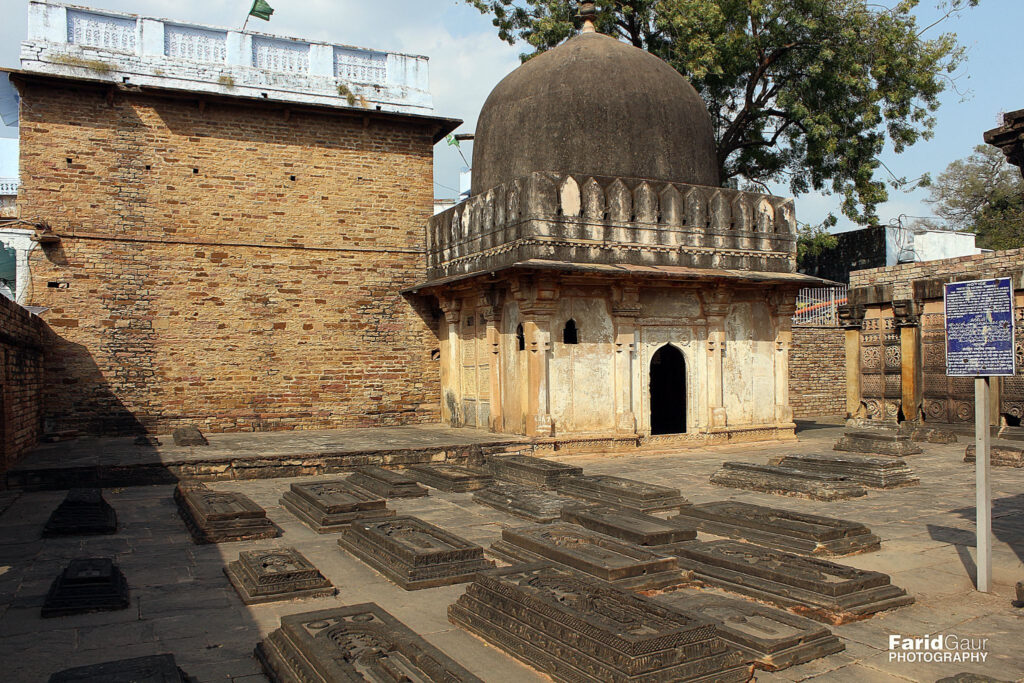
Image Source:Farid Gaur
Introduction
Hidden within the historic lanes of Chanderi’s old city, the Nizamuddin Tomb and Graveyard is one of the town’s lesser-known yet fascinating heritage sites. Surrounded by centuries-old monuments and located near the famous Jama Masjid, this peaceful complex reflects the rich cultural and spiritual legacy of medieval Chanderi. The site attracts history enthusiasts, architecture lovers, and travelers looking to explore the quieter corners of the town’s remarkable past.
History and Significance
Situated about 1.5 kilometers from the Chanderi Bus Station in the Andar Shehar (Inner City) area, the Nizamuddin Tomb and Graveyard was built in 1425 during the reign of Malwa Sultan Hoshang Shah. The monument is considered an important example of the architectural and cultural influences that shaped Chanderi during the Malwa Sultanate period.
According to the Archaeological Survey of India (ASI), the tomb complex is believed to contain the graves of members of the family of Hazrat Nizamuddin Auliya, the revered Sufi saint of Delhi. Some historical accounts suggest that members of his family later settled in Chanderi. However, historians have noted that the Nizami family of Delhi has no documented records confirming such a migration. Another theory proposes that the graves may belong to the descendants of Nizam-ud-din Ahmad Bakshi, a notable figure who lived in the region during the 16th century.
Although the exact identities of those buried here remain a subject of historical debate, the site continues to hold immense cultural and archaeological importance.
Architecture and Highlights
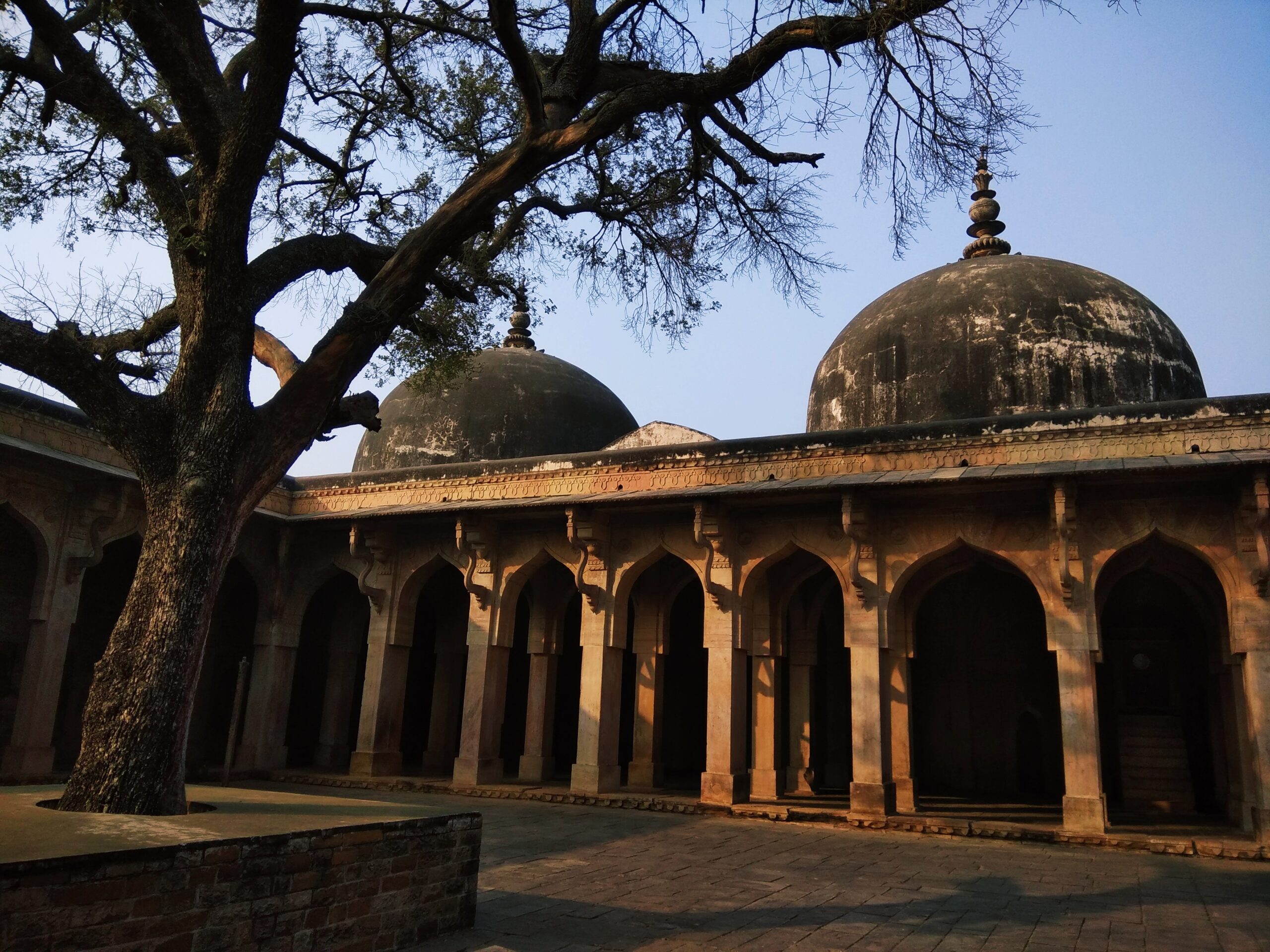
The Nizamuddin Tomb Complex is known for its beautifully crafted cenotaphs and graves, many of which are enclosed within stone structures while others rest under the open sky. The tombs are primarily carved from dark stone and showcase intricate floral patterns, geometric motifs, and decorative details that reflect the artistic excellence of the period.
One of the most striking features of the complex is the delicate lattice work that adorns parts of the structure, creating beautiful patterns of light and shadow. The surrounding enclosure walls are decorated with mihrabs and elegant ogee arches, blending Islamic architectural elements with local craftsmanship. The peaceful atmosphere of the graveyard, combined with its historical charm, makes it a rewarding stop for visitors exploring Chanderi’s heritage trail.
Today, the Archaeological Survey of India maintains and protects the site, helping preserve this valuable piece of Chanderi’s history for future generations.
Best Time to Visit
The ideal time to visit the Nizamuddin Tomb and Graveyard is between October and March, when the weather is pleasant and comfortable for sightseeing. Early mornings and late afternoons offer the best experience, especially for photography and exploring nearby monuments.
How to Reach
The Nizamuddin Tomb and Graveyard is located approximately 1.5 km from the Chanderi Bus Station and can be reached easily by auto-rickshaw, taxi, or even on foot if you are exploring the old city area.
By Road: Chanderi is well connected by road to Ashoknagar, Guna, Lalitpur, Jhansi, and Bhopal. Regular buses and private vehicles operate to the town.
By Rail: The nearest major railway stations are Lalitpur (Uttar Pradesh) and Ashoknagar (Madhya Pradesh), both of which provide connectivity to major cities.
By Air: The nearest airports are in Gwalior and Bhopal. From there, visitors can continue their journey by road or rail to Chanderi.
Since the tomb lies within the historic inner city, visitors can conveniently combine their visit with several nearby heritage attractions.
Visitor Information
- Location: Andar Shehar (Inner City), Chanderi, Madhya Pradesh.
- Distance from Bus Station: Approximately 1.5 km.
- Timings: 6:00 AM to 6:00 PM.
- Entry Fee: Generally free (subject to current ASI regulations).
- Photography: Allowed for personal use.
Nearby Attractions
Jama Masjid
Located just a short walk away, this magnificent 13th-century mosque is one of Chanderi’s most important Islamic monuments and a masterpiece of medieval architecture.
Chanderi Fort
Perched atop a hill overlooking the town, the fort offers panoramic views and a glimpse into Chanderi’s strategic importance through the centuries.
Koshak Mahal
A grand palace commissioned by Mahmud Shah Khilji, known for its impressive arches and unique architectural style.
Badal Mahal Gate
One of the most recognizable landmarks in Chanderi, famous for its towering gateway and elegant design.
Chanderi Archaeological Museum
An excellent place to learn about the region’s rich history through sculptures, inscriptions, and artifacts collected from nearby sites.
Maps
FAQs
What is the historical significance of the Nizamuddin Tomb and Graveyard?
The complex dates back to 1425 and is associated with prominent Islamic figures connected to Chanderi’s medieval history. It is considered an important archaeological and cultural site.
Who is believed to be buried in the tomb complex?
Some historians believe the graves belong to relatives of the Sufi saint Hazrat Nizamuddin Auliya, while others suggest they may belong to descendants of Nizam-ud-din Ahmad Bakshi.
What are the visiting hours?
The site is generally open daily from 6:00 AM to 6:00 PM.
Is there an entry fee?
The monument is usually open to visitors without an entry charge, though travelers should check current ASI guidelines before visiting.
How much time is needed to explore the site?
Most visitors spend around 30 to 45 minutes exploring the tomb complex and appreciating its architecture.
Can the site be visited along with other attractions?
Yes. The Nizamuddin Tomb and Graveyard is located in Chanderi’s historic core and can easily be combined with visits to Jama Masjid, Chanderi Fort, Koshak Mahal, and Badal Mahal Gate.
Is photography allowed?
Yes, photography is generally permitted for personal use, making it a great spot for capturing historical architecture and intricate stonework.