
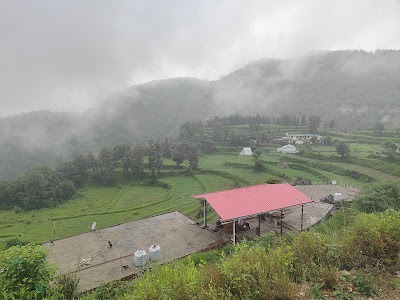
Image Source: NISHANT CHHETRI
About Kipling Trail
If you’ve ever dreamed of walking back in time—wandering through Himalayan foothills on a path that once echoed with colonial boots, the soft pad of ponies, and the whisper of British sahibs and sahibas escaping the plains—then the Kipling Trail Trek is your gateway.
Where History Breathes Through the Pines
Known as the Kipling Trail or the Bridle Path, this 9 km trail was once the main lifeline connecting Dehradun with Mussoorie, the ‘Queen of the Hills.’ The name pays homage to Rudyard Kipling, who is said to have walked this serpentine track in the 1880s, inspired by its beauty to craft the timeless pages of Kim. The trail’s echoes can also be found in the nostalgic tales of Ruskin Bond, who has described it lovingly in his works.
Back then, this wasn’t just a trail for walkers— mini trucks called ‘Gattus’ hauled quarried limestone up its bends, while British officers, missionaries, and locals alike relied on this winding forest road to reach Mussoorie’s cooler climes.
Geography & Setting
The Kipling Trail begins at the Shahanshahi Ashram , also known as the Christian Retreat, tucked in Rajpur village on Dehradun’s fringe. From here, the trail weaves uphill along the Himalayan foothills, unveiling postcard views of the vast Doon Valley at every turn. The forested route splits the hills from the plains, a constant companion to trekkers who crave both quiet solitude and nature’s raw charm.
Breaking Down the Route: A Two-Part Journey
Shahanshahi Ashram to Jharipani Village
Distance: 3.5 km | Duration: 2 hours
This section is a trekker’s delight—an unmetalled path winding through dense forests rich with Bakain, Kachnar, Pipal, and wild rose creepers. The trail here includes the infamous ‘paanch kainchi’ , five steep, winding bends that test your stamina while rewarding you with panoramic glimpses of the valley.
Keep an eye out for markers of the past: an old British Toll Barrier , a humble Kali Devi Temple, and a forest fork where one path leads to the peaceful Shikhar Fall . Prayer flags fluttering near tea stalls signal that you’re close to Jharipani.
The forest path ends as it merges with the metalled road at Jharipani village , where you’re greeted by colonial charm and local hospitality.
Jharipani Village to Mussoorie via Barlowgunj
Distance: 5 km | Duration: 2 hours
From here, the trek shifts onto a metalled road, still draped in history. Along the way, you’ll spot the old Half Way House, once an essential stopover for weary British travelers. Just across lies Oak Grove School, an iconic boarding school set up by the East India Railway Company in 1888.
The quaint village of Barlowgunj surprises trekkers with remnants of its once-thriving bakery and brewery—now transformed into an SBI branch and a relic of the past. The stretch is peppered with landmarks like St. George’s College and Sikander Hall, the summer abode of the Skinner family.
The trail culminates in the bustle of Library Chowk in Mussoorie, where you step out of the past and into the vibrant hum of hill station life.
Why It’s Special for Travelers
Jaw-dropping Vistas: Within minutes of starting the climb, the Dehradun valley sprawls beneath you—its views crisp and clear in winter and post-monsoon.
Colonial Footprints: Stone milestones, abandoned relics, and charming rest houses transport you to the days when the British Raj carved paths through these hills.
Wildlife & Birding: Bird enthusiasts will be thrilled by over 500 bird species , from the Common Hill Partridge to the Black-rumped Flameback. Keep your eyes open for curious monkeys or the elusive Kakad (Barking Deer).
Monsoon Magic: Small waterfalls and gurgling streams appear along the route during the rainy season, turning the trail into a lush corridor alive with natural music.
Trek Difficulty & Preparation
Although rated easy to moderate, don’t underestimate its challenges. The trail maintains a 30-35 degree incline , ascending more than 1,000 feet in a single day. Good cardiovascular fitness—like jogging 5 km in 35-40 minutes —and strength training for glutes, calves, and knees will keep you steady on the path’s uneven, debris-strewn inclines. Flexibility training helps, too, especially for the steep, slippery descents.
Best Time to Visit
This trail is accessible all year round , but the golden window stretches from late September to February, when the air is clear and the forest vibrant.
Avoid the trail on heavy monsoon days (July-August) due to landslide and slip risks.
Early morning starts are best—cooler air, better bird watching, and fewer people on the trail.
Practical Tips & Essentials
How to Reach the Base:
Drive: Head north from Dehradun Clock Tower to Rajpur, follow signboards to Shahanshahi Ashram (parking available).
Bus: Hop on city buses from Parade Ground to Shahanshahi Ashram for around Rs. 15–20.
Nearest Airport: Jolly Grant Airport (38 km)
Railway Station: Dehradun Railway Station (13 km)
Pack Smart: Must-haves: 3 liters of water, electrolytes, snacks, quick-dry clothes, sun protection, a light warm layer, a first aid kit, an ID card, and a trekking pole.
Monsoon Trekkers: Carry a poncho and waterproof bags for electronics.
Food: Limited tea stalls exist at the trailhead and near Jharipani; for a hearty meal, wait until Mussoorie.
Stay: Choose from hotels in Dehradun, charming stays in Jharipani/Barlowgunj, or colonial resorts in Mussoorie.
Descent
Returning via the same path takes about two hours . Be cautious: the forest stretch can be slippery due to loose stones and debris.
Navigation & Safety
Download a GPX file or use Google Maps. Save local contacts: Sakya Hospital (4 km from the base) and Rajpur Police Station (1.2 km away).
Connectivity
ATMs are available in Rajpur, Barlowgunj, and Mussoorie. Mobile networks (BSNL, Airtel, Vodafone) generally hold up, except for occasional forest dead zones.
Nearby Attractions
If you have more time, unwind at Sahasradhara, a natural sulphur spring 11 km away, or explore Robber’s Cave (Guchhipani)—a river that disappears mysteriously into a cave.
In the End: A Walk to Remember
For modern travelers, the Kipling Trail Trek is not just an uphill walk; it’s a living story—a bridge between colonial history and Himalayan serenity. Each milestone, bend, and echoing birdcall reminds you that here, the past and present walk side by side. Lace up your shoes, carry your curiosity, and lose yourself in this heritage trail that has quietly withstood centuries of change.