
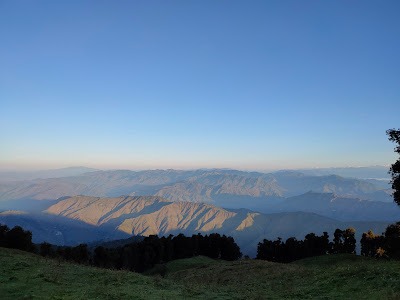
Image Source: Vishal Sachan
About Nag Tibba
Nag Tibba, literally translating to Serpent’s Peak, is tucked away in the lower Garhwal Himalayas. Rising to an altitude of 3,022 meters (9,915 feet), Nag Tibba Trek is a trekking gem that draws weekend adventurers, beginners, and seasoned hikers alike.
The highest peak in the Nag Tibba range and offers sweeping views of Swargarohini, Bandarpoonch, Kala Nag, Kedarkantha, and even Gangotri on a clear day.
Unlike other treks that demand a week-long commitment, Nag Tibba’s beauty lies in its flexibility and multiple approach routes, each weaving through quaint Garhwali villages, dense forests, and open meadows.
Pantwari Route: The Classic and Most Popular Trail
Start Point: Pantwari Village
Distance: 8–10 km one way
Duration: 2 days / 1 night
Difficulty: Easy to moderate
The Pantwari route is the most popular and well-trodden trail to Nag Tibba. For trekkers short on time, this is the go-to option thanks to its proximity to Dehradun (about 85 km) and easy accessibility by road.
The trail begins from Pantwari, a humble village bustling with local homestays and tea stalls. The ascent starts on a well-defined shepherd trail zig-zagging through terraced fields and sparse oak forests. After about 4–5 km, you reach the Nag Tibba Base Camp , a vast clearing perfect for pitching tents under a starry sky.
Most trekkers spend the night here, soaking in the forest calm, before pushing towards the Nag Tibba Temple the next morning. The final stretch from the temple to the summit is steeper but rewards you with panoramic 360-degree Himalayan views.
Why choose Pantwari?
Shortest route, easy logistics
Multiple campsites with water sources
Ideal for first-time trekkers and groups
Devalsari Route: The Untamed Forest Trail
Start Point: Devalsari Village
Distance: 13–15 km one way
Duration: 2–3 days
Difficulty: Easy to moderate
For those who prefer solitude and bird calls over busy campsites, the Devalsari route is the hidden gem. This trail begins from Devalsari, about 55 km from Mussoorie, and meanders through dense oak and rhododendron forests alive with Himalayan flora and birds like the Himalayan woodpecker, warblers, and barbets.
The trail from Devalsari is gentler than Pantwari but longer. Trekkers usually halt for the night at a forest clearing near the Nag Tibba base, setting up camp amidst thick woods.
A highlight of this route is its peaceful atmosphere—you’re more likely to encounter mountain goats than fellow trekkers. The forest here is protected, making it a haven for nature lovers and birdwatchers.
Why choose Devalsari?
Dense forests and rich birdlife
Secluded trail, fewer crowds
Longer walk for a more immersive forest experience
Aunter Route: The Offbeat and Rustic Approach
Start Point: Aunter Village (near Thatyur)
Distance: 11–12 km one way
Duration: 2 days
Difficulty: Easy to moderate
Another lesser-known trail, the Aunter route , offers an authentic rural trekking experience. Aunter is a quiet village near Thatyur — which itself is connected by road from Mussoorie or Dehradun.
Starting here, the trail gradually climbs through pine forests, open grazing lands, and seasonal streams. Unlike Pantwari, which has a well-marked trail, the Aunter route can be a bit trickier to navigate and is best done with a local guide.
This trail merges near the Nag Tibba Temple and follows the same final push to the summit. The biggest draw here is the rustic Garhwali hospitality — trekkers often stay with local families or camp near tiny settlements en route.
Why choose Aunter?
Offbeat path with rustic charm
Lesser-known, quiet route
Chance to interact with local villagers and shepherds
Goat Village / Jhanjheli Route: The Eco-Tourism Trail
Start Point: Goat Village or Jhanjheli
Distance: Around 10 km one way
Duration: 2–3 days
Difficulty: Easy to moderate
For travelers who want to mix trekking with sustainable tourism, the Goat Village trail is a perfect blend of nature and community experience. The Goat Village, an eco-tourism initiative near Pantwari, offers traditional Garhwali mud cottages, farm-to-table food, and guided treks to Nag Tibba.
The trail from here overlaps partly with the Pantwari route but starts from the village settlement itself. You can explore organic farms, learn about local farming, and taste authentic Garhwali dishes before you trek.
This route encourages mindful travel — you contribute directly to local communities and sustainable practices.
Why choose Goat Village?
Stay in eco-friendly huts
Organic local cuisine and village life
Guided treks with sustainability focus
Best Time to Trek Nag Tibba
October to March: Winter wonderland with snow-capped trails and clear skies.
April to June: Pleasant weather with blooming rhododendrons.
July to September: Monsoon brings slippery trails and leeches — avoid if possible.
How to Reach the Trailheads
Nearest Railhead / Airport: Dehradun (Jolly Grant Airport, Dehradun Railway Station)
Road Connections: From Dehradun or Mussoorie, local taxis or buses run towards Pantwari, Thatyur, Devalsari, and Goat Village. Shared jeeps may also be available during peak season.
Why Nag Tibba Should Be on Your List
With its short duration , breathtaking views , and flexible trails , Nag Tibba is the perfect escape into the Himalayas for anyone—solo trekkers, families, beginners, or groups. Whether you pick the classic Pantwari route, the bird-rich Devalsari forest, the rustic Aunter village path, or the mindful Goat Village trail, the journey promises starry nights, forest whispers, and snow-capped peaks just a stone’s throw from city life.