Image Source: Tripti Roy
About Bharat Sevashram Sangha Temple
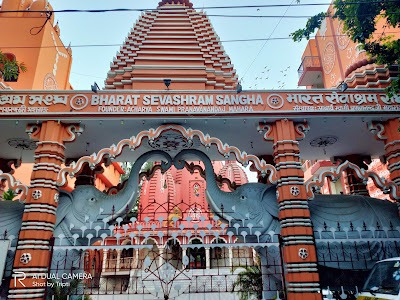
Bharat Sevashram Sangha Temple in Sriniwaspuri, Southeast Delhi, is not only a place of worship but also a prominent center of spiritual discipline, humanitarian service, and cultural preservation. Established by the Bharat Sevashram Sangha, a renowned spiritual and service-oriented organization rooted in the ideals of Swami Pranavananda Maharaj, the temple reflects a unique blend of devotion (bhakti), selfless service (seva), and national upliftment.
Historical Background and Foundation
The Bharat Sevashram Sangha was founded in 1917 by Swami Pranavananda Maharaj, a visionary monk who believed that spiritual awakening must go hand in hand with service to humanity. The Sangha expanded across India with the mission of promoting Sanatana Dharma, social service, disaster relief, education, and moral upliftment.
The Sriniwaspuri center was established to serve the spiritual and social needs of Delhi’s growing population, particularly in South and South-East Delhi. Over the years, the temple has become a vital spiritual hub for devotees from Sriniwaspuri, Lajpat Nagar, Kalkaji, and surrounding localities, while also functioning as a base for large-scale humanitarian activities in the capital.
Spiritual and Religious Significance
The temple follows the Sanatana Hindu tradition, with daily worship, Vedic chanting, and devotional practices forming the core of its spiritual life. The principal deity worshipped is Lord Shiva, along with reverence for Sri Ramakrishna Paramahamsa, Swami Vivekananda, and Swami Pranavananda Maharaj, whose teachings emphasize inner purity, discipline, and service to society.
Devotees visit the temple seeking mental peace, spiritual strength, and guidance, believing that sincere prayer combined with selfless service leads to true liberation. The temple regularly conducts bhajans, kirtans, meditation sessions, and spiritual discourses, fostering an atmosphere of calm devotion amid Delhi’s urban pace.
Architecture of Bharat Sevashram Sangha Temple
Architecturally, the Bharat Sevashram Sangha Temple in Sriniwaspuri is simple, functional, and spiritually focused, reflecting the organization’s philosophy of austerity and service over grandeur. The temple structure avoids excessive ornamentation, emphasizing clean lines, open spaces, and a serene layout conducive to meditation and collective worship.
The sanctum houses the main shrine, while adjoining halls are used for satsangs, prayers, and community gatherings. Natural light, minimalistic interiors, and disciplined spatial organization create an environment that encourages contemplation and spiritual discipline. The overall design mirrors the Sangha’s emphasis on practical spirituality, where the temple serves as both a sacred space and a base for social action.
Role in Social Service and Humanitarian Work
What truly distinguishes the Bharat Sevashram Sangha Temple is its unwavering commitment to seva (selfless service). From the Sriniwaspuri center, the Sangha actively engages in:
Free medical camps and health awareness programs
Relief work during natural disasters and emergencies
Distribution of food, clothing, and essentials to the needy
Educational support and moral training for youth
The temple thus functions as a spiritual headquarters for service initiatives, reinforcing the belief that serving humanity is serving God.
Festivals and Observances
Major Hindu festivals such as Mahashivratri, Ram Navami, Durga Puja, and Guru Purnima are observed with devotion and simplicity. Special prayers and discourses mark the birth anniversaries of Swami Pranavananda Maharaj and other revered spiritual leaders associated with the Sangha. These occasions attract devotees from across Delhi and strengthen the sense of community and shared spiritual purpose.
How to Reach
The temple is easily accessible from various parts of Delhi.
By Metro:
The nearest metro stations are Kailash Colony and Lajpat Nagar (Violet Line), from where the temple can be reached by auto-rickshaw or a short walk.
By Road:
Well connected via Lajpat Nagar, Kalkaji, and Ashram Chowk, with regular bus and auto services.
By Bus:
Several DTC buses stop near Sriniwaspuri, making public transport convenient.
Best Time to Visit
Early mornings and evenings are ideal for prayer and meditation. Festival days draw larger gatherings, while weekdays offer a quieter, more contemplative atmosphere for spiritual seekers.
Nearby Attractions
Visitors may also explore:
Lajpat Nagar Central Market.
ISKCON Temple, East of Kailash.
Nehru Place.