
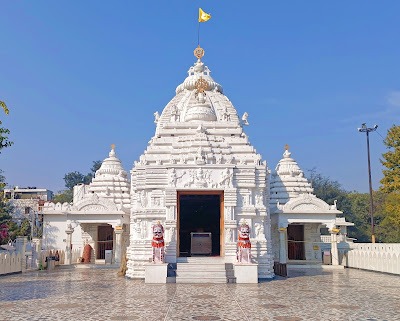
Image Source: Barun Ghosh
About Jagannath Temple
The Jagannath Temple in Hauz Khas is a renowned Hindu shrine in South Delhi dedicated to Lord Jagannath, Lord Balabhadra, Goddess Subhadra, and Sudarshan Chakra. It is recognized as the oldest Jagannath temple in Delhi, built and maintained by the Odia (Odisha) community to recreate the spiritual ethos of the famous Jagannath Temple of Puri and to preserve their cultural and devotional traditions far from home.
Situated in a serene part of Hauz Khas Village near Deer Park and Green Park, the temple is not just a place of worship but also a cultural hub where festivals, rituals, art, and community events bring devotees together.
History and Founding
The temple’s origin dates back to 1967, when the Sree Neelachala Seva Sangha was established with the mission of creating a Jagannath shrine in Delhi. The idea was brought to life by devotees including Durjyodhan Pradhan and Bhramarabar Pradhan, with help from political figures such as Member of Parliament R.N. Singh Deo and Delhi’s then Lt. Governor L.N. Jha, who helped secure land in Hauz Khas.
Construction began in the same year, and the ground floor dedicated to Mausi Maa was completed first. The first floor—consisting of the main temple housing Lord Jagannath, Balabhadra, Subhadra, and Sudarshan—was completed later, making it fully operational by around 1978. This makes it Delhi’s first Jagannath temple and one of the oldest places outside Odisha where Jagannath devotion thrives.
Spiritual and Cultural Significance
The temple provides a spiritual home for the Pravasi Odia community living in Delhi, acting as a center of Odisha’s cultural, religious, and artistic traditions. While the temple follows Jagannath worship rituals inspired by the Puri Srimandir, it also reflects North Indian devotional culture, blending art, music, and community participation.
Inside the sanctum, devotees offer prayers to Lord Jagannath (a form of Krishna), his elder brother Balabhadra, and their sister Subhadra, along with Sudarshan Chakra—consistent with the trio worship tradition of Puri. The temple also respects the presence of Mausi Maa (the maternal aunt of Jagannath), whose shrine is located on the ground floor.
Architecture and Temple Layout
Built mainly with white marble, the Jagannath Temple exhibits a calm and tranquil architectural ambience inspired by the Kalinga style of temple architecture seen in Odisha. The two-storey structure features:
A ground floor dedicated to Mausi Maa, the guardian figure in Jagannath traditions.
A first-floor sanctum housing the main deities—Jagannath, Balabhadra, Subhadra, and Sudarshan.
A pushp vatika (flower garden) and paak shala (temple kitchen) where prasad is prepared with devotion.
The temple’s Neela Chakra and traditional Dhwaja (flagstaff) complement the spiritual structure, while its setting near greenery and lakes adds to the serene devotional experience.
Festivals and Major Events
The temple is especially known for hosting:
Ratha Yatra (Chariot Festival)
The annual Rath Yatra is the temple’s most popular and vibrant festival. Devotees from across Delhi and neighbouring states gather in thousands to watch or participate in the procession of Lord Jagannath’s chariot, pulled through the streets in a grand celebration that closely follows the traditional rituals of Puri’s Jagannath Rath Yatra.
Daily Aarti and Bhajans
Morning and evening aarti, bhajans, and mantra chanting resonate within the temple compound, allowing devotees to experience devotional rituals throughout the day.
Other celebrations related to the Jagannath tradition — such as Snana Yatra, Chandan Yatra, and Nabakalebara rites — are also observed in accordance with Puri’s calendar.
Daily Rituals and Worship Schedule
While timings can vary seasonally, the Jagannath Temple typically opens early morning and closes late evening:
Morning: Around 5:00–6:00 AM to 12:00–1:00 PM
Evening: 4:00–10:00 PM
Devotional activities include Mangal Aarti, Vishnu Sahasranama paath, bhajan–kirtan sessions, and bhoga (offering) distribution, reflecting a disciplined temple worship pattern.
Location and How to Reach
The temple is located in Block-C, Safdarjung Development Area, Bhagwan Jagannath Marg, Hauz Khas Village, New Delhi-110016.
By Metro:
The Hauz Khas Metro Station (Yellow and Magenta Lines) is about 1–2 km away, making the temple easily accessible by foot, auto-rickshaw, or e-rickshaw.
By Road:
Well connected via Deer Park Road, Aurobindo Marg, and Inner Ring Road; taxis and autos are available throughout South Delhi.
Community and Social Role
Beyond spiritual functions, the temple actively fosters Oriya culture and community life, hosting classical dance performances, Odissi music events, talks on spiritual literature, and communal meals (Mahaprasad) that promote unity and cultural heritage among devotees of all ages.