Image Source: Ramkaran
Introduction
Jamali Kamali Mosque and Tomb form one of the most intriguing heritage complexes in Mehrauli, South Delhi, combining architectural elegance with literary and spiritual significance. Located within the Mehrauli Archaeological Park, this early Mughal-era site stands apart from typical funerary monuments because it commemorates not only a revered Sufi saint and poet, Shaikh Fazlullah—popularly known as Jamali—but also his disciple Kamali. The complex offers visitors a rare glimpse into the cultural, intellectual, and artistic currents of early Mughal India, set against Mehrauli’s richly layered historical landscape.
Geographical Setting
The Jamali Kamali complex is situated in the northern section of the Mehrauli Archaeological Park, close to other prominent monuments such as Balban’s Tomb, Quli Khan’s Tomb, and the Qutub Minar complex. Mehrauli lies along the Aravalli ridge, an area historically favored for settlement due to its natural defenses, water systems, and strategic elevation.
This part of South Delhi has remained a significant cultural zone for over a millennium, serving as the site of Delhi’s earliest cities and later evolving into a retreat for Sultanate and Mughal elites. The complex’s location within wooded surroundings and ancient ruins enhances its contemplative atmosphere, making it one of the most evocative heritage spots in Mehrauli.
History
Jamali Kamali Mosque and Tomb date back to the early 16th century, during the reign of Mughal Emperor Babur and later Humayun. Shaikh Fazlullah, known by his pen name Jamali, was a renowned Sufi saint, scholar, and Persian poet who enjoyed royal patronage. His writings and spiritual teachings earned him wide respect, making him an influential cultural figure of his time.
The mosque was constructed first, followed by the tomb that houses the graves of Jamali and his disciple Kamali. The complex reflects the Mughal tradition of honoring spiritual leaders through architecture that balanced devotion, artistry, and serenity. Over centuries, the site has also become associated with folklore and legends, adding to its mystique.
Architecture
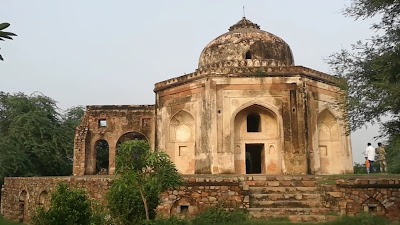
Architecturally, Jamali Kamali Mosque is a fine example of early Mughal architecture, blending Delhi Sultanate structural forms with emerging Mughal decorative sensibilities. Built primarily of red sandstone with marble inlay, the mosque features a single-aisled prayer hall crowned by a central dome and flanked by smaller domes.
The façade is richly ornamented with geometric patterns, calligraphic inscriptions, and marble detailing, showcasing craftsmanship rarely seen in smaller religious complexes. The interior is equally refined, with carved mihrab niches and elegant proportions that emphasize symmetry and harmony.
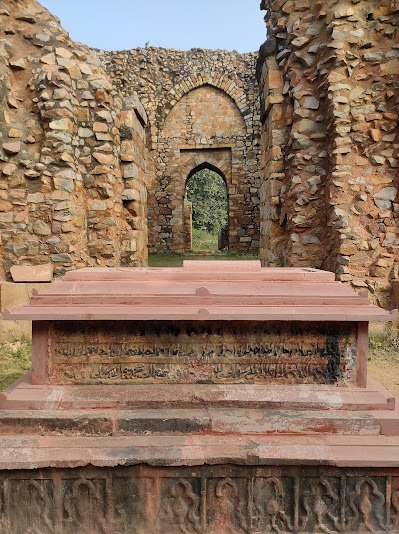
Adjacent to the mosque, the Jamali Kamali Tomb is a rectangular structure containing two graves placed side by side. The interior walls and ceiling are adorned with intricate painted plasterwork, floral motifs, and Quranic calligraphy—elements that make this tomb one of the most artistically decorated in Mehrauli. The craftsmanship reflects the Mughal emphasis on aesthetics and spiritual symbolism.
Cultural and Spiritual Significance
Jamali Kamali holds immense cultural value as a site that merges Sufism, poetry, and architecture. It represents the Mughal court’s patronage of intellectual and spiritual figures, highlighting Mehrauli’s role as a center of learning and mysticism.
The complex is a key stop on Mehrauli heritage walks, attracting historians, art lovers, and cultural travelers. Its association with Sufi traditions and literary heritage adds a unique dimension to Delhi’s historical narrative, complementing the region’s more militaristic Sultanate monuments.
How to Reach
- By Metro:
The nearest metro station is Qutub Minar Metro Station (Yellow Line). From there, visitors can take an auto-rickshaw or taxi to Mehrauli Archaeological Park. - By Road:
Easily accessible via Mehrauli–Gurgaon Road, the site can be reached from Saket, Chhatarpur, Vasant Kunj, and Andheria Bagh. Parking is available near the park entrances. - By Bus:
Multiple DTC bus routes serve Mehrauli village and the Qutub complex area.
Visitor Information
- Entry Fee: Free
- Best Time to Visit: October to March; mornings and late afternoons are ideal
- Photography: Allowed
- Ideal For: History enthusiasts, architecture lovers, spiritual travelers, heritage walk participants