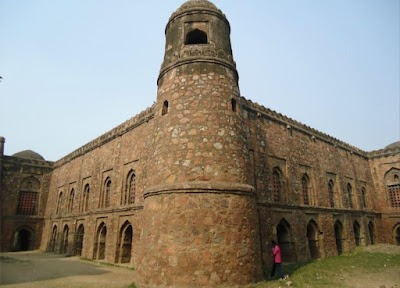
Image Source: Arun
About Khirki Masjid
Hidden within the bustling lanes of Khirki Village near Malviya Nagar in South Delhi, Khirki Masjid is one of the most unusual and fascinating mosques built during the Delhi Sultanate period. Unlike the grand open-courtyard mosques commonly seen in medieval India, this mosque was designed as a largely enclosed structure with a unique system of domes, pillars, and stone windows. Its architecture reflects the creativity and experimentation of the Tughlaq era and offers visitors a rare glimpse into the evolution of Indo-Islamic architecture in medieval Delhi.
Even today, despite being surrounded by a dense urban settlement, the mosque retains a mysterious and timeless atmosphere. The dimly lit interiors, stone corridors, and fortress-like appearance make it very different from other monuments in the city.
History of Khirki Masjid
Khirki Masjid was built around 1375 CE during the reign of Firoz Shah Tughlaq, one of the most active builders among the rulers of the Delhi Sultanate. The mosque was commissioned by Khan-i-Jahan Junan Shah, who served as the wazir, or prime minister, in the Tughlaq court and played an important role in many architectural projects of that period.
The word “Khirki” means “window” in Hindi, and the mosque derives its name from the numerous perforated stone windows and lattice openings built into its walls. These windows allowed sunlight and air to enter the enclosed structure, creating a naturally ventilated and illuminated interior space.
At a time when most mosques featured large open courtyards, Khirki Masjid represented a major architectural departure. Historians believe the enclosed design may have been inspired by Central Asian architectural traditions or adapted to suit Delhi’s intense climate, offering shade and cooler interiors during hot summers.
Over the centuries, the area surrounding the mosque gradually transformed into a crowded urban village. Yet the monument itself has survived remarkably well and is now protected by the Archaeological Survey of India.
Architectural Significance
Khirki Masjid is widely regarded as one of the most innovative structures of the Tughlaq period. Constructed mainly from grey quartzite stone, the mosque reflects the typical Tughlaq architectural style—massive, simple, practical, and fortress-like.
Unique Layout and Design
The mosque has a near-square plan and is divided into four sections by two intersecting corridors that form a cross-shaped or cruciform layout. Instead of one large open courtyard, the structure contains four smaller courtyards, each placed at the center of a quadrant.
Most of the mosque is covered by a roof supported by rows of thick stone pillars. This enclosed arrangement creates an entirely different spatial experience compared to traditional Sultanate mosques.
The Famous Domes
One of the most striking features of the mosque is its roof, which is crowned by 81 small domes arranged in a grid-like pattern. These low domes rest on square bays supported by heavy stone columns, creating a rhythmic and symmetrical appearance throughout the interior.
The domed roofing system not only added structural strength but also helped regulate indoor temperatures, making the mosque cooler during Delhi’s harsh summers.
Stone Windows and Natural Light
True to its name, the mosque includes numerous stone lattice windows, openings, and perforated screens. These “khirkis” allow filtered sunlight and ventilation to enter the otherwise enclosed prayer hall.
As a result, the interiors remain surprisingly airy and softly illuminated, producing a calm and contemplative atmosphere. The play of light and shadow inside the mosque is one of its most memorable architectural qualities.
Mihrab and Qibla Wall
The western wall contains the mihrab, a niche indicating the direction of Mecca. Like most Tughlaq structures, the decoration is restrained and minimal. Instead of elaborate carvings or ornamentation, the focus remains on geometry, symmetry, and structural strength.
Fortress-Like Appearance
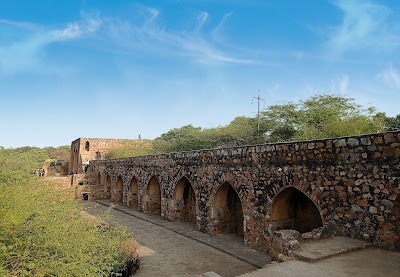
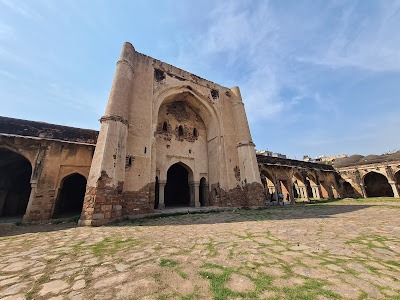
From the outside, Khirki Masjid almost resembles a military fort rather than a religious monument. Thick stone walls, elevated platforms, narrow entrances, and minimal exterior decoration give it a defensive appearance.
This design reflected the political uncertainty of the 14th century, when rulers often preferred buildings that could serve both practical and protective purposes.
Atmosphere and Visitor Experience
Walking through Khirki Masjid feels very different from visiting many other monuments in Delhi. The covered halls, stone pillars, and filtered sunlight create an almost maze-like atmosphere. The silence inside the structure contrasts sharply with the busy streets outside.
The monument is especially appealing for architecture enthusiasts, photographers, historians, and travelers interested in lesser-known heritage sites. Since it is not as crowded as major tourist attractions, visitors can explore the monument peacefully.
Early mornings and late afternoons are considered the best times to visit, especially during winter months when the weather is pleasant.
Nearby Attractions
A visit to Khirki Masjid can easily be combined with several nearby medieval monuments in South Delhi. Some notable places include:
Satpula.
Hauz Khas Complex.
Siri Fort.
Together, these sites offer a deeper understanding of Delhi’s medieval urban landscape and Tughlaq-era architecture.
How to Reach Khirki Masjid
By Metro
The nearest metro station is Delhi Metro’s Malviya Nagar Metro Station on the Yellow Line. The mosque is located around 1.5 kilometers from the station. From there, visitors can take an auto-rickshaw, e-rickshaw, or simply walk through the lively lanes of Khirki Village.
By Bus
Several DTC buses operate along Press Enclave Road and Aurobindo Marg. Buses stopping near Malviya Nagar, Saket, or Khirki Extension provide easy access to the monument, followed by a short walk.
By Car or Taxi
The mosque is well connected by road and can be reached via Outer Ring Road and Aurobindo Marg. However, parking near the monument can be difficult because of the narrow village streets. It is usually better to park a little farther away and continue on foot.
On Foot Through a Heritage Walk
Travelers exploring nearby historical sites such as Hauz Khas Complex or Satpula often include Khirki Masjid as part of a heritage walk through South Delhi’s medieval monuments.
Best Time to Visit
The ideal time to visit Khirki Masjid is between October and March, when Delhi experiences cooler and more comfortable weather. Summers can be extremely hot, especially during the afternoon.
Morning visits are recommended for photography and peaceful exploration, while evenings provide softer lighting and a pleasant atmosphere.
Google Maps
FAQs
Why is Khirki Masjid famous?
Khirki Masjid is famous for its unusual enclosed design, stone lattice windows, and grid of 81 domes. It is considered one of the most experimental mosques of the Tughlaq era.
Who built Khirki Masjid?
The mosque was commissioned by Khan-i-Jahan Junan Shah, the prime minister of Firoz Shah Tughlaq, around 1375 CE.
What does the name “Khirki” mean?
The word “Khirki” means “window” in Hindi. The mosque gets its name from the many stone windows and perforated openings built into its walls.
Is Khirki Masjid protected?
Yes, the monument is protected and maintained by the Archaeological Survey of India.
What is special about the architecture of Khirki Masjid?
Its enclosed prayer halls, multiple small courtyards, heavy stone pillars, and 81 domes make it architecturally unique among Delhi Sultanate mosques.
How much time is needed to explore Khirki Masjid?
Most visitors spend around 30 minutes to 1 hour exploring the mosque and its surroundings.
Is photography allowed inside the mosque?
Yes, photography is generally allowed, and the monument is especially popular among architecture and heritage photographers.
Are there entry fees for visiting Khirki Masjid?
The monument is usually open to visitors free of charge, though it is always advisable to check current ASI guidelines before visiting.