
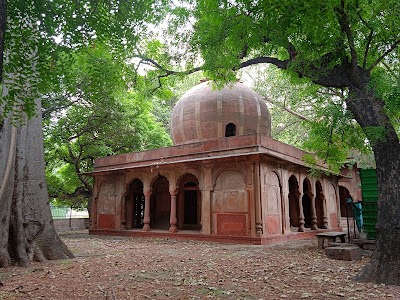
Image Source: Tushar Suradkar
Forgotten Mughal-era Mausoleums near Nizamuddin
The Lal Bangla Tombs are a pair of lesser-known yet architecturally striking Mughal-period monuments located in Nizamuddin East, New Delhi, close to the Humayun’s Tomb complex. Built in the mid-17th century, these tombs are notable for their red sandstone construction, octagonal form, and refined Mughal design. Despite their historical and architectural merit, the Lal Bangla Tombs remain overshadowed by nearby grander monuments, making them one of Delhi’s hidden heritage sites.
History
The Lal Bangla Tombs date back to the reign of Mughal Emperor Shah Jahan, a period marked by architectural refinement and experimentation. The tombs are traditionally believed to be the burial places of Mirza Aziz Kokaltash, a foster brother (milk-brother) of Shah Jahan, and Fateh Khan, his son. Mirza Aziz Kokaltash was a high-ranking noble and held significant influence in the Mughal court.
The term “Lal Bangla” literally means “Red Pavilion”, derived from the extensive use of red sandstone in the structure. Unlike imperial tombs built for emperors and their immediate family, Lal Bangla represents elite noble funerary architecture, reflecting how Mughal nobles adopted royal design elements on a slightly reduced scale.
Over time, urban expansion around Nizamuddin led to the neglect of these monuments. However, their proximity to Humayun’s Tomb has renewed interest among historians and heritage enthusiasts studying Mughal-era funerary practices.
Architecture of Lal Bangla Tombs
Architecturally, Lal Bangla Tombs exemplify late Mughal elegance and symmetry, combining Persian influences with Indian craftsmanship.
Key Architectural Features
- Octagonal Plan:
Both tombs are built on an octagonal base, a common Mughal funerary design symbolizing balance and eternity. - Red Sandstone Construction:
The extensive use of red sandstone gives the monument its name and visual identity, echoing Shah Jahan-era preferences seen in structures like the Red Fort. - White Marble Accents:
Decorative marble inlays and borders contrast with the red sandstone, adding refinement without excessive ornamentation. - Central Dome:
Each tomb is crowned with a low-profile dome, proportionate and restrained, unlike the massive domes of imperial mausoleums. - Arched Openings:
Arches on all sides ensure ventilation and visual symmetry, blending functionality with aesthetics.
The interiors are relatively simple, reflecting the Islamic emphasis on humility in death. The focus remains on architectural proportion rather than interior decoration.
Cultural and Historical Significance
Lal Bangla Tombs offer valuable insight into Mughal noble life and death, illustrating how high-ranking courtiers commemorated status without rivaling imperial grandeur. They also contribute to understanding the evolution of Mughal tomb architecture, bridging the gap between early Mughal tombs and the more elaborate late Mughal monuments.
Their location near Nizamuddin—a sacred and cultural hub—further enhances their importance, as the area historically attracted scholars, saints, nobles, and artists.
How to Reach Lal Bangla Tombs
By Metro:
The nearest metro station is JLN Stadium (Violet Line). From there, the tombs are about 1.5 km away and can be reached by auto-rickshaw or on foot.
By Road:
Nizamuddin East is well connected to central and south Delhi. Taxis and app-based cabs can drop visitors near the entrance.
By Train:
Hazrat Nizamuddin Railway Station is located close by. From the station, local transport is easily available.
Nearby Attractions
Lal Bangla Tombs are ideally located for a heritage walk in the Nizamuddin area:
- Humayun’s Tomb (UNESCO World Heritage Site)
- Isa Khan’s Tomb and Mosque
- Sunder Nursery
- Nizamuddin Dargah
- Arab Serai
- Barber’s Tomb
- Bu Halima’s Garden
Visiting Information
- Entry Fee: Free
- Timings: Open during daylight hours
- Best Time to Visit: Morning or late afternoon, especially during winter months