| Location | Lotus temple is located in Kalkaji, New Delhi, India |
| Built In | It was built in 1986 |
| Architect | The architect of Lotus temple was Fariborz Sahba |
| Architectural Style | Expressionist (Inspired by the Lotus Flower) |
| Material Used | It is made of White Marble |
| Significance | Bahá’í House of Worship promotes unity and openness to all religions |
| Opening Hours | 9:00 AM – 5:30 PM (Winters) 9:00 AM – 7:00 PM (Summers) |
| Closed On | Its closed on Monday |
| Entry Fee | Free |
| Best Time to Visit | October to March (Pleasant weather) |
| Nearest Metro Station | Kalkaji Mandir (Violet Line) |
| Visitor Rules | Maintain silence, No photography inside, No religious rituals allowed |
| Number of Petals | 27 Marble Petals arranged in Clusters of Three |
| Seating Capacity | Around 2,500 People |
| Surrounding Landscape | 26-acre gardens, ponds, and greenery |
| Annual Visitors | Over 10 million (One of the most visited sites in the world) |
The Lotus Temple, also known as the Bahá’í House of Worship, stands as one of the most celebrated examples of modern sacred architecture in India. Located in Kalkaji, South Delhi, this architectural masterpiece is instantly recognizable for its striking lotus-shaped design, which has made it a defining landmark of New Delhi’s urban and cultural landscape. Beyond its visual appeal, the Lotus Temple represents a powerful message of unity, peace, and inclusiveness, welcoming people of all religions, beliefs, and nationalities.
Spread across a vast landscaped complex, the temple is not only a place of prayer and meditation but also a symbol of how contemporary architecture can express timeless spiritual ideals.
Historical Background of the Lotus Temple
Origins and Religious Context
The Lotus Temple belongs to the Bahá’í Faith, a global religion founded in the 19th century that emphasizes the oneness of humanity and harmony among all religions. According to Bahá’í principles, Houses of Worship must be open to everyone and designed without religious imagery, idols, or rituals specific to one faith. This universal philosophy deeply influenced both the planning and architectural form of the Lotus Temple.
The vision for a Bahá’í House of Worship in India took shape in the 1970s, when the need arose for a structure that could resonate with India’s spiritual traditions while expressing a modern, global outlook. Iranian-Canadian architect Fariborz Sahba was entrusted with this responsibility, marking the beginning of one of India’s most ambitious architectural projects.
Construction and Inauguration
- Planning and foundation work began in 1977
- Major construction took place between 1980 and 1986
- The temple was officially opened to the public on 24 December 1986
The project was realized through international collaboration. Structural engineering expertise came from the British firm Flint & Neill, while construction was carried out by Larsen & Toubro, one of India’s leading engineering companies. Funding for the temple was largely supported by donations, including a significant contribution from Ardishír Rustampúr, reflecting the collective spirit behind its creation.
Architectural Design and Symbolism
The Lotus Form and Its Meaning
The most defining feature of the Lotus Temple is its flower-like structure, inspired by the lotus, a symbol deeply embedded in Indian culture, philosophy, and religion. Across Hinduism, Buddhism, Jainism, and other traditions, the lotus represents purity, enlightenment, rebirth, and spiritual awakening. By adopting this form, the temple establishes an immediate cultural connection with India while conveying a universal spiritual message.
The building consists of 27 marble-clad petals, arranged in groups of three to create nine symmetrical sides. The number nine holds special importance in the Bahá’í Faith, symbolizing completeness and unity, and this numerical symbolism governs the entire architectural layout.
Spatial Planning and Layout
The petals are organized into three layers:
- Entrance petals, forming shaded portals for visitors
- Outer petals, which cover the outer halls and corridors
- Inner petals, rising inward to enclose the central prayer hall
Nine entrances lead visitors into a vast circular sanctuary, reinforcing the idea of equality and openness from every direction. At the crown of the structure, a glass and steel skylight allows soft natural light to filter into the interior, enhancing the meditative atmosphere.
Materials, Engineering, and Construction Innovation
The Lotus Temple is a landmark achievement in concrete shell architecture. Its complex curved geometry required advanced engineering solutions rarely attempted at the time of construction.
- The primary structure is made of reinforced concrete
- The exterior is clad in white Pentelic marble from Greece, the same stone used in classical monuments like the Parthenon
- Thousands of uniquely shaped marble panels were precision-cut and assembled on site
Surrounding the temple are nine reflecting pools, which not only symbolize purity and tranquility but also help cool the structure naturally. The water bodies enhance the illusion that the temple is floating, adding to its serene visual impact.
Interior Experience and Spiritual Atmosphere
In contrast to its dramatic exterior, the interior of the Lotus Temple is intentionally minimal and शांत. In keeping with Bahá’í teachings, the prayer hall contains no idols, images, pulpits, or altars. The emphasis is on silence, reflection, and personal prayer.
The central hall rises to a height of over 34 meters and can accommodate approximately 2,500 people at a time. Natural light, polished marble floors, and uncluttered spaces create an atmosphere of calm that appeals equally to spiritual seekers, architecture enthusiasts, and casual visitors.
Guided tour
A short film, “An Outline of the Baháʼí Faith,” in English is showcased. Its show occurs every 20 minutes between 10:30 a.m. and 5:00 p.m.
Timing
9:00 am to 5:30 am
Closed on Monday
Photography is prohibited inside the temple.
How to reach Lotus temple

Kalkaji Mandir Metro Station falls on the junction of the violet and magenta lines and is 300 meters away from the temple.
Nearby Attractions of Lotus Temple, Delhi
The Lotus Temple is one of Delhi’s most iconic landmarks, admired for its unique lotus-shaped architecture and serene atmosphere. Located in South Delhi, the temple is surrounded by several historical monuments, religious sites, parks, and cultural attractions that can easily be explored during the same trip.
1. ISKCON Temple Delhi
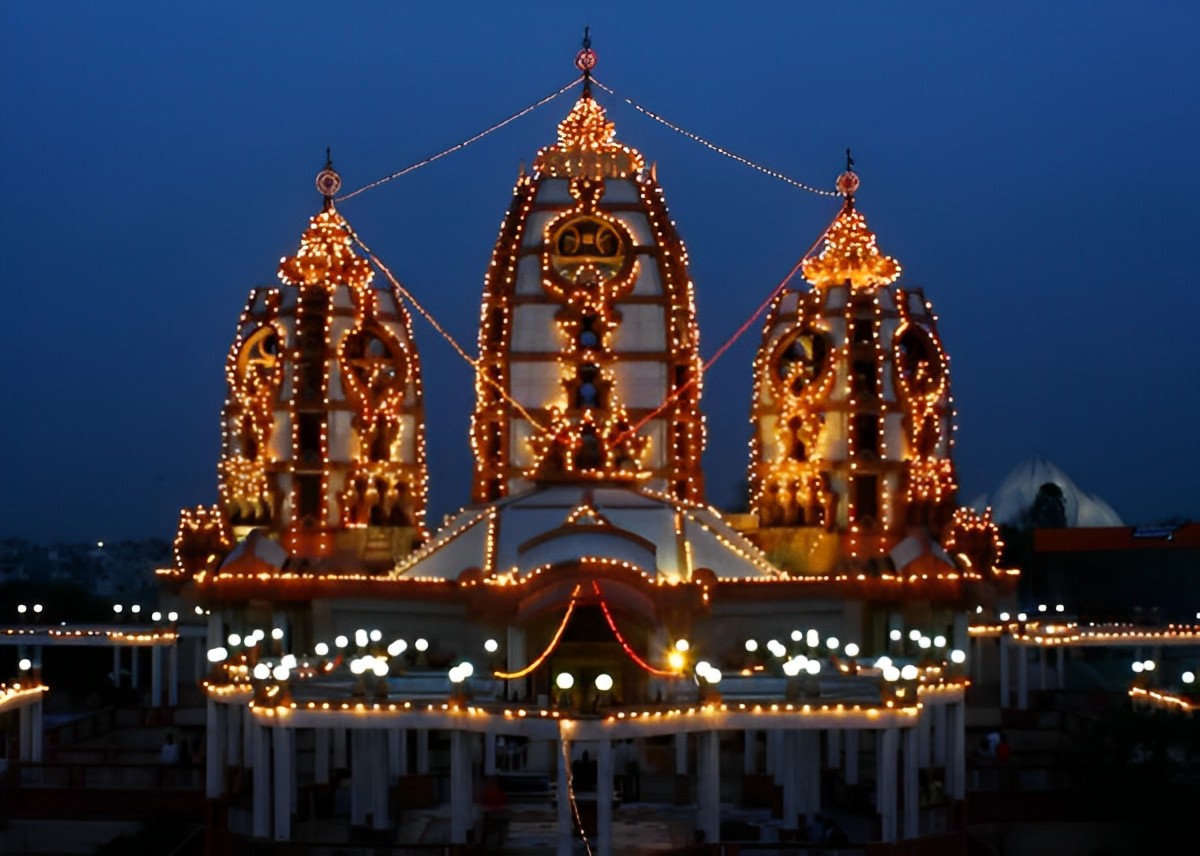
Located just a few kilometers from the Lotus Temple, ISKCON Temple is one of Delhi’s largest Hindu temples dedicated to Lord Krishna. The temple is known for its beautiful architecture, devotional music, spiritual programs, and multimedia exhibits on Hindu philosophy. Visitors can attend evening aartis and explore the temple museum.
2. Kalkaji Mandir
Situated adjacent to the Lotus Temple, Kalkaji Mandir is one of Delhi’s oldest and most revered Hindu temples. Dedicated to Goddess Kali, it attracts thousands of devotees, especially during the Navratri festival. The temple’s vibrant atmosphere offers a stark contrast to the peaceful environment of the Lotus Temple.
3. Nehru Place
Known as one of Asia’s largest IT and electronics markets, Nehru Place is a bustling commercial hub near the Lotus Temple. Visitors can shop for electronics, enjoy local eateries, and experience a different side of Delhi’s urban life.
4. Tughlaqabad Fort
Built in the 14th century by Sultan Ghiyas-ud-din Tughlaq, this massive fort complex showcases impressive medieval architecture. The ruins, stone walls, and panoramic views make it a fascinating destination for history enthusiasts.
5. Humayun’s Tomb
A UNESCO World Heritage Site, Humayun’s Tomb is considered the architectural precursor to the Taj Mahal. Its magnificent Mughal gardens, red sandstone structures, and historical significance make it one of Delhi’s must-visit monuments.
6. Sunder Nursery
This beautifully restored heritage park combines landscaped gardens, historical monuments, and biodiversity zones. It is an excellent place for nature walks, photography, and family outings.
7. Purana Qila
One of Delhi’s oldest forts, Purana Qila offers a glimpse into the city’s ancient history. Visitors can explore its grand gates, archaeological remains, and boating facilities at the nearby lake.
8. National Zoological Park
Located near Purana Qila, the National Zoological Park houses a diverse range of wildlife species. It is a popular destination for families, students, and wildlife enthusiasts.
9. Qutub Minar
One of Delhi’s most famous UNESCO World Heritage Sites, Qutub Minar stands at 73 meters tall and is surrounded by several historical monuments dating back to the Delhi Sultanate period.
10. India Gate
A prominent war memorial and one of Delhi’s most recognizable landmarks, India Gate is particularly beautiful in the evening when illuminated. The surrounding lawns are ideal for leisurely walks and picnics.
Suggested Itinerary
A half-day trip can include the Lotus Temple, Kalkaji Mandir, and ISKCON Temple. For a full-day excursion, combine these with Humayun’s Tomb and Sunder Nursery, offering a perfect blend of spirituality, history, architecture, and nature.
FAQs
- Q: Why is silence strictly maintained inside the Lotus Temple?
Silence is maintained to preserve the temple’s purpose as a space for individual prayer, meditation, and reflection. Since the Lotus Temple welcomes people from all faiths, silence allows visitors to connect spiritually in their own way without prescribed rituals, sermons, or collective worship practices.
- Q: Can religious ceremonies or events be held inside the Lotus Temple?
No formal religious ceremonies, sermons, or rituals are conducted inside the Lotus Temple. The Bahá’í House of Worship is intended solely for reading sacred texts from different religions and silent prayer, ensuring that no single belief system dominates the space.
- Q: Is the Lotus Temple suitable for non-religious visitors and architecture enthusiasts?
Yes, the Lotus Temple is equally appealing to non-religious visitors, architects, and students of design. Its innovative structural system, symbolic geometry, use of natural light, and integration with landscape architecture make it a significant case study in modern Indian architecture and sustainable design.
- Q: What is the best time of day to visit the Lotus Temple for a peaceful experience?
Early morning hours on weekdays are considered ideal for visiting the Lotus Temple, as crowds are relatively smaller.