
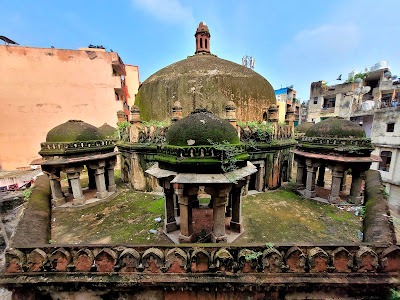
The Earliest Surviving Royal Tomb of the Sayyid Dynasty
Mubarak Shah’s Tomb, located within the Kotla Mubarakpur area of South Delhi, is one of the most historically significant yet often overlooked medieval monuments of Delhi. Built in the early 15th century, the tomb is the final resting place of Sultan Mubarak Shah Sayyid, the second ruler of the Sayyid dynasty, which governed Delhi after the decline of the Tughlaqs. Unlike later Mughal mausoleums known for their grandeur, this tomb reflects a transitional phase in Indo-Islamic funerary architecture, combining austerity with royal symbolism.
History
Sultan Mubarak Shah Sayyid ruled Delhi from 1421 to 1434 AD, during a politically fragile period following Timur’s invasion of Delhi in 1398. The Sayyid rulers claimed legitimacy as governors and representatives of Timur’s authority, though in practice their power was limited and frequently challenged by regional chiefs and rival nobles.
Mubarak Shah attempted to consolidate control over the Delhi Sultanate by strengthening administrative structures and suppressing rebellions. However, court conspiracies plagued his reign. In 1434 AD, he was assassinated by his own nobles, marking one of the many violent successions that characterized Delhi’s medieval history.
Unlike earlier rulers whose tombs were built posthumously, Mubarak Shah commissioned his own tomb during his lifetime, making it one of the earliest examples in Delhi of a royal tomb planned by the ruler himself. The area around the tomb later developed into the settlement now known as Kotla Mubarakpur, named after the Sultan.
Architecture of Mubarak Shah’s Tomb
Architecturally, Mubarak Shah’s Tomb represents an important link between Tughlaq-era simplicity and later Mughal refinement.
Key Architectural Features
- Octagonal Plan:
The tomb follows an octagonal layout, a design associated with royal authority and cosmic balance, later perfected in Mughal tomb architecture. - High Drum and Dome:
A prominent dome rises from a high drum, giving the structure a commanding presence despite its modest size. - Red Sandstone and Rubble Masonry:
The monument is constructed using red sandstone and stone rubble, reflecting the limited resources of the Sayyid period. - Chhatris and Corner Kiosks:
Small chhatris (domed kiosks) at the corners add an Indian architectural influence, foreshadowing later Indo-Islamic synthesis. - Calligraphic Inscriptions:
Quranic inscriptions and historical details once adorned the walls, though many have weathered with time.
Inside, the tomb houses the cenotaph of Mubarak Shah, placed centrally beneath the dome. The interior decoration is restrained, emphasizing solemnity over ornamentation.
Cultural and Historical Significance
Mubarak Shah’s Tomb holds exceptional importance as:
- The earliest surviving royal tomb of Delhi built by a Sultan for himself
- A rare architectural example from the Sayyid dynasty
- A monument marking Delhi’s political transition between the Tughlaq and Lodi periods
The tomb also reflects the instability of the era—its fortified appearance and enclosed design mirror the insecurity faced by rulers of the time.
How to Reach
By Metro:
The nearest metro stations are Jor Bagh (Yellow Line) and INA (Yellow & Pink Lines). From either station, the tomb can be reached by auto-rickshaw or taxi.
By Road:
Kotla Mubarakpur is well connected to major roads of South Delhi. App-based cabs and local taxis can drop visitors close to the monument.
By Train:
Hazrat Nizamuddin Railway Station is about 6 km away and provides easy access via road transport.
Nearby Attractions
Mubarak Shah’s Tomb can be included in a South Delhi heritage circuit:
- Dadi-Poti Tombs (Lodi-era monuments)
- Safdarjung Tomb
- Lodhi Garden
- Barapullah Bridge area heritage sites
- INA Market (for local food exploration)
Visiting Information
- Entry Fee: Free
- Timings: Open during daylight hours
- Best Time to Visit: Early morning or late afternoon, especially during winter