
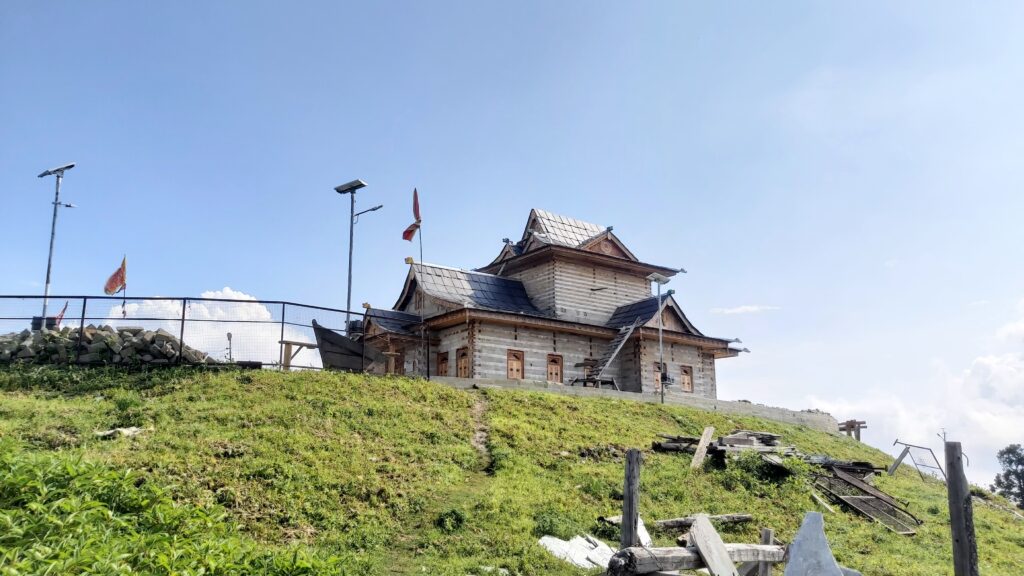
Image Source: Nishant Barul
About Shrai Koti Temple
| Location | Rampur Bushahr, Shimla, Himachal Pradesh |
| Deity Worshipped | Goddess Durga |
| Best Time to Visit | March to June, September to November |
| Temple Timings | 6:00 AM – 7:00 PM |
| Trek Distance | Short trek from the main road |
| Accessibility | Located 55 km from Shimla |
Shrai Koti Temple is located in the Nirmand subdivision of the Shimla district, about 57 km from Rampur Bushahr town. Perched at an altitude of around 11,000 feet above sea level, it’s one of Himachal Pradesh’s most enigmatic yet devoutly visited pilgrimage sites. The temple’s position atop a high ridge gives it a dramatic panoramic backdrop of snow-tipped peaks in winter and lush green slopes in summer.
Positioned near Rampur Bushahr and nestled amid dense devdar (देवदार) and pine forests, the temple is a center of local lore, mythology, and Himalayan cultural traditions. Locals call the surrounding region ‘Shrai Koti ki Dhaar,’ which indicates a ridge that has divine energy. The atmosphere around rustling cedar trees, whispering winds, and mountain silence adds to the aura.
The Deity: Shrai Koti Mata—A Form of Goddess Durga
The temple is dedicated to Goddess Durga, worshipped locally as Shrai Koti Mata—a powerful feminine force (Devi Shakti) deeply revered in local folk religion. Unlike mainstream Durga temples, here the goddess is associated with ascetic purity, divine energy, and protective power, drawing devotees from surrounding Himachali villages and distant pilgrims alike.
According to local tradition, Shrai Koti represents the virgin energy (Kumari Shakti) of the goddess, a form that symbolizes unbroken spiritual potency and inner resolve. It is this sacred purity that gives the temple its unique customs and strict observances.
The Unique Tradition: Why Married Couples Don’t Worship Together
Shrai Koti Temple has a distinctive custom where husband and wife cannot enter for darshan together. Unlike most Hindu temples, where couples pray together and seek marital blessings. Here in the temple, devotees follow the tradition where one partner waits outside while the other offers prayers inside.
Local Mythological Interpretation
The belief stems from a popular Puranic (mythological) story involving Lord Shiva’s sons—Lord Ganesha and Lord Kartikeya:
Shiva once asked both sons to circumambulate the universe.
Kartikeya, riding his peacock (mor), set off on a cosmic journey.
Ganesha chose a more symbolic path—he circumambulated his parents, declaring, “My parents are my universe.”
By the time Kartikeya returned, Ganesha had returned first and had also been married, which infuriated Kartikeya.
In his anger, Kartikeya vowed never to marry, a decision that greatly upset Goddess Parvati, who then cursed that any married couple offering joint worship at this temple would face separation or discord in life.
Architecture
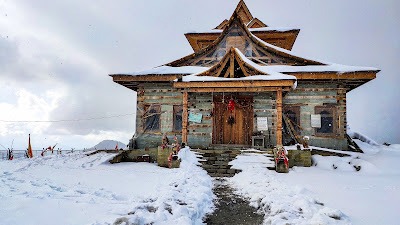
Image Source: Kartik Thakur
The temple’s architecture follows traditional Himalayan design principles. Use of stone and wood in the construction blends beautifully with the environment. Sloping roofs carry heavy snowfall during winter months.
Inside the sanctum (garbhagriha), the idol of Shrai Koti Mata is adorned with garlands, vermilion, and mountain flowers brought by devotees. Bells ring softly in the wind, and oil lamps flicker against cedar wood pillars, creating an atmosphere of reverent sanctity.
Locals also speak of seven sacred wells (saat kuan) around the temple grounds. These hidden springs believed to fulfill wishes when found and honored with prayer.
Festivals, Devotion, and Local Customs
Navratri and Local Celebrations
During Navratri, the temple becomes a vibrant center of devotion. Alongside regular rituals, there are:
Special tantric chants and Havan
Traditional devotional folk songs (bhajans)
Community gatherings where elders narrate the temple’s origin tales
Local youth performing ritual dances in the name of the Goddess
Young unmarried girls (kumaris) are often honored during these festivities as symbols of Shrai Koti Mata’s virgin energy, which integrates local cultural practices with broader worship traditions.
How To Reach
By Road
Shrai Koti Temple is well-connected by road.
| Shimla | 172 km |
| Solan | 214 km |
| Chandigarh | 280 km |
| Delhi | 587 km |
| Dehradun | 392 km |
By Train
Nearest Railway Station: Shimla Railway Station, 55 km
By Air
Nearest Airport: Shimla Airport (Jubberhatti) – 65 km
Maps and Location
FAQS
- Q: Where exactly is Shrai Koti Temple located?
It is located near Rampur Bushahr in the Shimla district of Himachal Pradesh, atop a scenic ridge at around 11,000 feet elevation.
- Q: Why can’t husband and wife worship together here?
According to local myth tied to Lord Shiva’s sons, Goddess Parvati cursed that couples worshipping together here may face separation — a belief deeply respected in the community.
- Q: What deity is worshipped at Shrai Koti Temple?
The temple is dedicated to Shrai Koti Mata, a powerful local form of Goddess Durga representing purity and divine feminine energy.
- Q: When is the best time to visit?
Spring (March–June) and post-monsoon autumn (September–November) are ideal for pleasant weather and safer travel. Winter brings snow and may make access difficult.
- Q: Are there specific rituals unique to this temple?
Yes — apart from standard pujas, special practices include honoring kumaris during Navratri, and devotion tied to wish fulfillment and purity rituals.