Image Source: Ravimgpm
About Bhutanatha Temple Complex
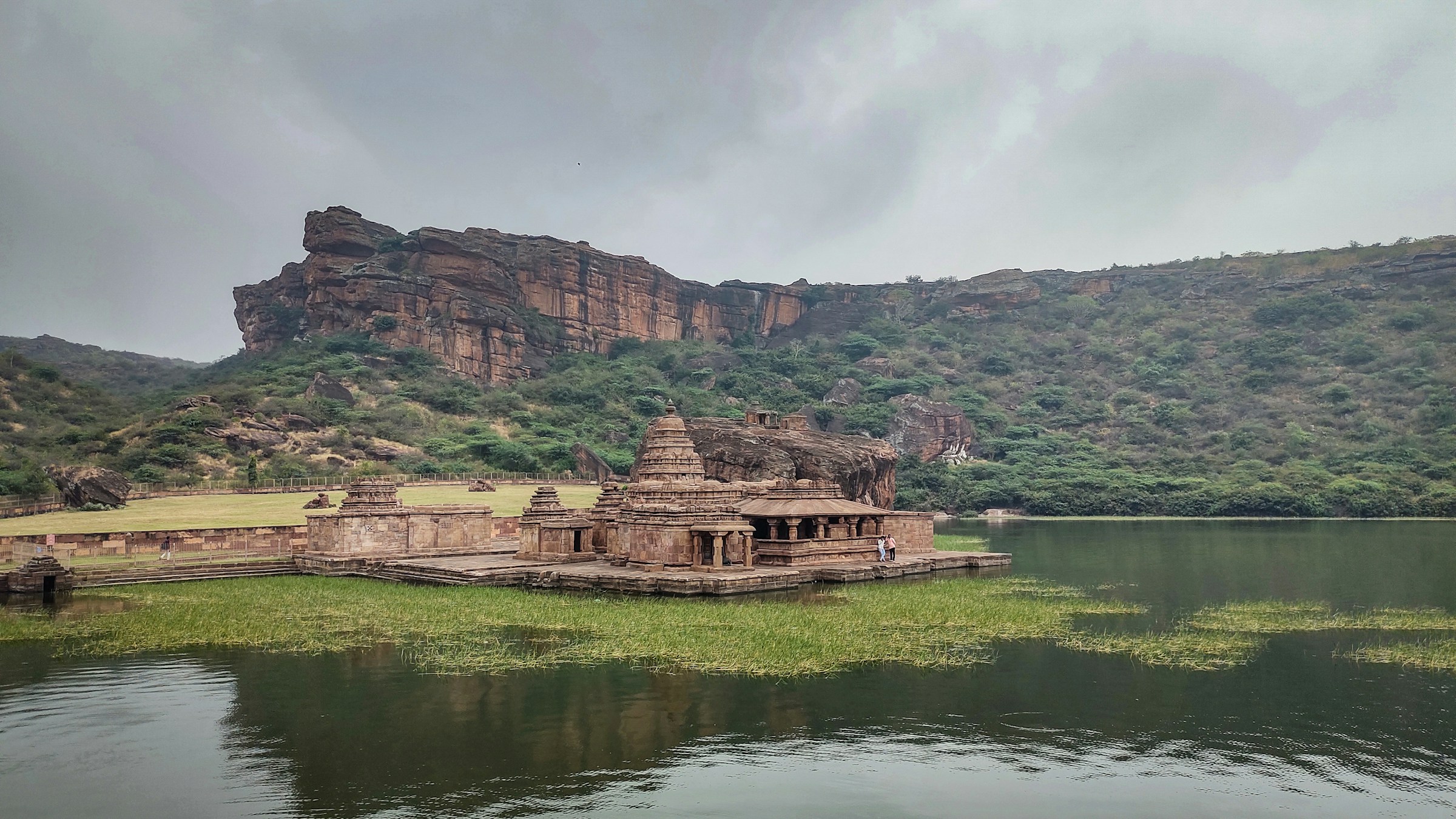
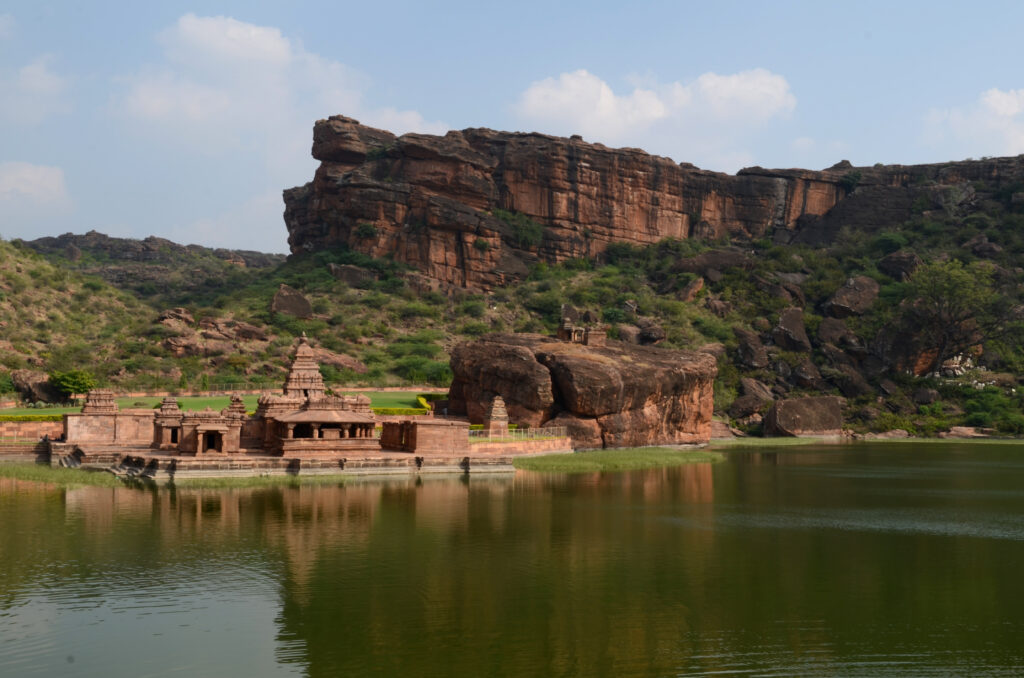
Nestled along the peaceful eastern shores of Agastya Lake in Badami, the Bhutanatha Temple Complex is one of Karnataka’s most atmospheric historical sites. Surrounded by rugged red sandstone cliffs and reflected beautifully in the still waters of the lake, the temple complex captures the essence of ancient Badami’s architectural and spiritual heritage. Dedicated mainly to Lord Shiva, these temples stand as a remarkable reminder of the artistic brilliance of the Chalukya dynasty and the religious traditions that flourished in the Deccan centuries ago.
Unlike many crowded temple sites, Bhutanatha has a calm and almost meditative charm. The setting becomes especially magical during sunrise and sunset when the golden light falls on the sandstone structures and the cliffs behind them. For visitors exploring Badami, the temple complex is not just a monument but an experience that blends history, spirituality, architecture, and natural beauty into one unforgettable landscape.
Historical Background and Religious Importance
The Bhutanatha Temple Complex evolved gradually over several centuries, beginning during the reign of the Early Chalukyas in the 7th century and later expanding under the Kalyani Chalukyas between the 11th and 12th centuries. This long period of construction explains why the complex displays different architectural influences and stylistic transitions within the same sacred space.
From the beginning, the site was associated with Shaivism and dedicated to Lord Shiva, worshipped here in the form of a Shiva linga. Over time, however, the complex also absorbed Vaishnavite elements, reflecting the religious harmony and fluidity that characterized medieval South India. Several sculptures and later additions indicate that different communities and rulers contributed to the temple’s growth.
Historical inscriptions discovered around the site reveal that wealthy families and local patrons donated resources for temple maintenance and rituals. One inscription from the late 9th century mentions contributions made by the Paingara family, suggesting that the temple remained an active center of worship for generations.
Even today, local devotees continue to visit the temple, especially during festivals connected with Lord Shiva. The spiritual connection between the lake, the temples, and the surrounding hills still gives the area a sacred atmosphere.
Architectural Beauty of the Bhutanatha Main Group
The main Bhutanatha group, located close to the lake’s edge, dates primarily to the 7th and 8th centuries and represents the classic architectural style of the Badami Chalukyas. Built in the Dravida style, the temple showcases the refined craftsmanship for which Chalukyan architecture is famous.
The main shrine contains a square sanctum housing a Shiva linga, connected to a covered hall or mandapa supported by elegantly carved pillars. Above the sanctum rises a three-tiered vimana, which forms the temple’s towering superstructure. Though relatively modest in size compared to later South Indian temples, the proportions and detailing give the shrine a graceful appearance.
The sculptural work across the complex is particularly impressive. Visitors can notice beautifully carved figures of celestial beings such as gandharvas and kinnaras, along with depictions of Hindu deities including Ganesha and Mahishasuramardini. At the temple entrance, carvings of river goddesses Ganga and Yamuna symbolize purity and auspiciousness, welcoming devotees into the sacred space.
One of the most striking features of the complex is the stone ghat that descends directly into Agastya Lake. In ancient times, pilgrims would bathe in the lake before entering the temple for worship. Even now, the steps and the surrounding waters add to the serene atmosphere of the site.
Scattered around the main shrine are smaller subsidiary temples and partially ruined structures that hint at the once-expansive sacred complex that existed here centuries ago.
The Mallikarjuna Group and Later Additions
On the northern side of Agastya Lake lies another important section known as the Mallikarjuna Group. These temples were mainly built during the 11th and 12th centuries under the Kalyani Chalukyas and differ noticeably from the earlier Bhutanatha shrines.
Unlike the Dravida-style structures of the main group, these temples display Nagara architectural influences, particularly in their pyramidal superstructures. The layout includes an open mandapa with pillars, connected to an inner hall, vestibule, and sanctum.
What makes this subgroup especially interesting is its blend of Shaivite and Vaishnavite imagery. Historians believe that the largest shrine may originally have been dedicated to Vishnu before later being rededicated to Shiva. This transition reflects the adaptability of temple traditions in medieval India, where shrines often evolved with changing dynasties and devotional practices.
The Mallikarjuna group may be slightly separated from the main cluster, but together the temples create a harmonious visual composition around Agastya Lake.
Local Landscape and Cultural Atmosphere
The Bhutanatha temples are deeply connected to the landscape of Badami. The dramatic sandstone cliffs surrounding the lake once housed cave temples, monasteries, and royal structures during the Chalukyan period. From the temple complex, visitors can also view parts of the famous Badami cave temples carved directly into the cliffs.
Agastya Lake itself holds religious significance in local tradition. According to legends, the lake is associated with Sage Agastya, one of the revered sages in Hindu mythology. The calm waters of the lake not only enhance the beauty of the temples but also create an atmosphere of spiritual tranquility.
During local festivals and cultural events in Badami, the Bhutanatha complex often becomes a focal point for visitors, photographers, and pilgrims. The site is particularly popular among heritage enthusiasts because it offers a rare combination of architecture, mythology, landscape, and living tradition.
The temple complex also serves as one of the most photographed heritage locations in Karnataka due to its picturesque setting against the cliffs and water.
Preservation and Conservation
Today, the Bhutanatha Temple Complex is protected and maintained by the Archaeological Survey of India (ASI). Conservation work focuses on preserving the temple structures, sculptures, and surrounding ghats from natural weathering and water-related damage.
Although some sections of the complex are partially ruined, the site continues to retain its historic charm and cultural significance. Efforts by conservation authorities have helped ensure that future generations can continue to appreciate this important example of Chalukyan architecture.
The temples remain a living heritage space rather than simply an archaeological monument. Occasional rituals and local devotional activities still take place here, keeping alive traditions that have existed for more than a thousand years.
How to Reach Bhutanatha Temple Complex
The Bhutanatha Temple Complex is located on the eastern bank of Agastya Lake in Badami, Karnataka. The temple is one of the finest examples of Early Chalukyan architecture and dates back to the 7th century.
By Air
The nearest airport is Hubballi Airport, located about 100 km from Badami. Other convenient airports include Kalaburagi Airport and Kempegowda International Airport, Bengaluru. From the airport, visitors can hire a taxi or take a bus to Badami.
By Train
Badami Railway Station (BDM) is the nearest railhead and lies about 5 km from the temple complex. The station is connected to major cities such as Bengaluru, Hubballi, Vijayapura, and other parts of Karnataka. Auto-rickshaws and taxis are readily available from the station.
By Road
Badami enjoys good road connectivity with Bengaluru, Hubballi, Bagalkot, Vijayapura, and Belagavi. The Bhutanatha Temple Complex is approximately 2 km from the Badami bus stand and can be reached within a few minutes by auto-rickshaw or private vehicle.
Nearby Attractions
1. Agastya Lake
Located directly beside the Bhutanatha Temple Complex, Agastya Lake is a scenic artificial lake surrounded by sandstone cliffs, ancient temples, and historic monuments. The lake offers beautiful reflections of the temple and is one of the most photographed spots in Badami.
2. Badami Cave Temples
Situated about 1 km from the temple complex, the Badami Cave Temples are among Karnataka’s most celebrated rock-cut monuments. Carved into red sandstone cliffs during the 6th and 7th centuries, the caves feature magnificent sculptures dedicated to Hindu and Jain traditions.
3. Badami Fort
Overlooking the town from a hilltop, Badami Fort offers panoramic views of Agastya Lake, the cave temples, and the surrounding landscape. Visitors can explore ancient gateways, watchtowers, and historic ruins associated with the Chalukya rulers.
4. Archaeological Museum, Badami
Located near the cave temples, the museum houses an impressive collection of sculptures, inscriptions, ancient coins, and artifacts discovered from Badami and nearby Chalukyan sites.
5. Banashankari Temple
About 5 km from Badami, this famous temple is dedicated to Goddess Banashankari, a form of Parvati. The temple is known for its sacred Haridra Tirtha tank and the annual Banashankari Jatre festival that attracts thousands of devotees.
6. Mahakuta Temple Complex
Approximately 14 km from Badami, Mahakuta is an ancient temple complex dedicated to Lord Shiva. It is famous for its serene atmosphere, historic shrines, and a natural spring-fed sacred tank.
7. Pattadakal
Located around 22 km from Badami, Pattadakal is a UNESCO World Heritage Site renowned for its magnificent Chalukyan temples. The site showcases a remarkable blend of North and South Indian architectural styles.
8. Aihole
About 35 km from Badami, Aihole is often referred to as the “Cradle of Indian Temple Architecture.” The historic settlement contains more than 100 ancient temples and monuments dating back to the Chalukya period.
9. Malegitti Shivalaya Temple
Perched on a rocky hill near Badami Fort, this ancient temple offers spectacular views of Agastya Lake and the surrounding landscape. It is one of the oldest surviving temples in the region.
10. Lower Shivalaya and Upper Shivalaya Temples
These hilltop temples near Badami Fort provide excellent viewpoints and showcase early Chalukyan architecture. The climb to the temples rewards visitors with breathtaking vistas of Badami’s red sandstone cliffs and monuments.
Google Maps
FAQs
1. Where is the Bhutanatha Temple Complex located?
The Bhutanatha Temple Complex is located in Badami, in the Bagalkot district of Karnataka, on the eastern bank of Agastya Lake.
2. Which deity is worshipped in the Bhutanatha temples?
The temples are primarily dedicated to Lord Shiva and contain Shiva lingas within the sanctums.
3. Which dynasty built the Bhutanatha temples?
The earliest temples were constructed by the Badami Chalukyas during the 7th and 8th centuries, while later additions were made by the Kalyani Chalukyas.
4. What is special about the architecture of the complex?
The complex is known for combining both Dravida and Nagara architectural styles, showcasing the evolution of temple architecture in medieval Karnataka.
5. Why is Agastya Lake important to the temple complex?
Agastya Lake adds religious and scenic importance to the site. Pilgrims traditionally performed ritual bathing in the lake before entering the temple.
6. Is the Bhutanatha Temple Complex protected?
Yes, the site is maintained and protected by the Archaeological Survey of India (ASI).
7. What is the best time to visit the Bhutanatha Temple Complex?
The best time to visit is between October and February when the weather is pleasant. Early mornings and sunsets offer especially beautiful views of the temples and lake.
8. Are the Bhutanatha temples still active places of worship?
Yes, although the site is primarily a protected monument, occasional rituals and religious activities are still conducted by local devotees.