
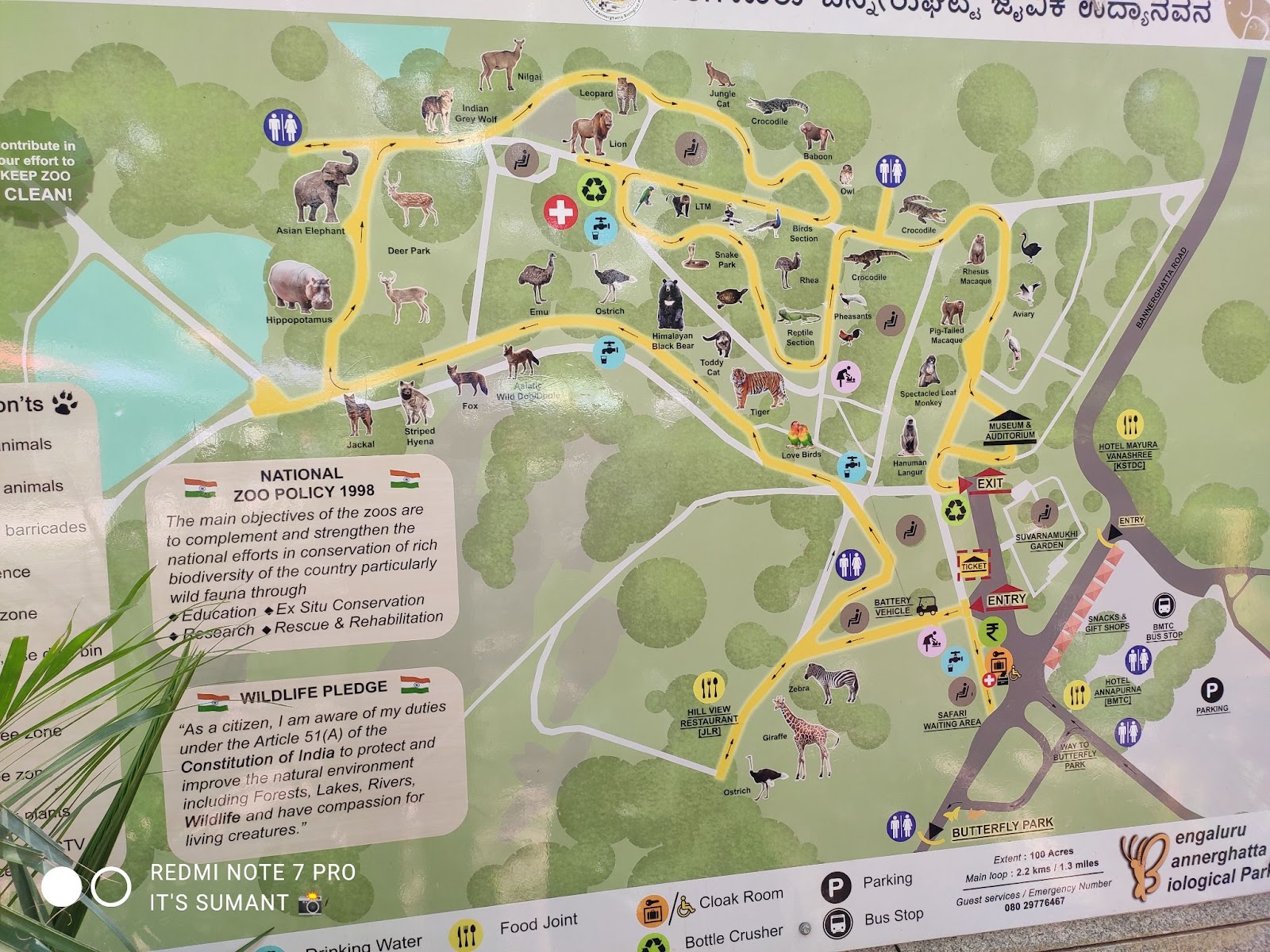
Image Source: Sumant Kumar
Bannerghatta Biological Park, Bengaluru
The Bannerghatta Biological Park (BBP), popularly known as the Bannerghatta Zoo, is one of Bengaluru’s most prominent wildlife and ecological destinations. Officially renamed Bengaluru Bannerghatta Biological Park (BBBP) for ease of recognition, the park plays a dual role as a conservation hub and a recreation space. Spread across 731.88 hectares (1,808.5 acres) in the Anekal Taluk of Bangalore Urban District, it lies just 25 km from Vidhana Soudha, making it an easily accessible weekend retreat.
History
The roots of the park trace back to 1971, when a picnic corner was created by Shri Y.M.L Sharma, then Chief Conservator of Forests. By 1974, the region was formally declared as Bannerghatta National Park, aimed at conserving flora and fauna.
Key milestones in its growth include:
1979: Launch of the Lion Safari.
1987: Establishment of the Tiger Safari.
2000: Creation of the Wildlife Rescue and Rehabilitation Centre with support from the Central Zoo Authority.
2002: Formal bifurcation of the National Park and Biological Park, bringing the zoo, safari units, and rescue facilities under the Zoo Authority of Karnataka (ZAK). It provide a more organised framework for wildlife care and visitor engagement. Today, BBP serves as a major destination for nature lovers, researchers, and families seeking to experience biodiversity up close.
2007: Inauguration of India’s first Butterfly Park within the campus.
Key Sections and Attractions
The Zoo
Established in 1971 on 16 hectares, later expanded to cover 44 hectares.
Home to 1,941 individual animals representing 94 species, including Himalayan black bear, Thamin deer, King Cobra, panthers, crocodiles, and hog deer.
Also features a museum and an auditorium for educational exhibits.
The Safari Experience
Among the most popular features of BBP, the safari allows visitors to explore open enclosures in secure vehicles. It is jointly managed by the Karnataka State Tourism Development Corporation (KSTDC) and the BBP.
Herbivore Safari: Opened in 2002, featuring gaur, blackbuck, sambar, and chital, supported by waterbodies and natural barriers.
Bear Safari: Houses nearly 100 rescued sloth bears, many saved from captivity with Kalandars.
Lion Safari: Launched in 1979, covering 5 hectares, with 11 holding rooms and protected enclosures.
Tiger Safari: Introduced in 1987, featuring Royal Bengal Tigers and white tigers in well-designed complexes.
(Note: The safari was briefly closed in 2013 due to an outbreak of foot-and-mouth disease among herbivores.
Rescue and Rehabilitation Centre
Established in 2000, covering 17.5 hectares.
Functions as a rescue home for orphaned, injured, or confiscated wild animals in compliance with the National Zoo Policy 1998.
This facility is strictly off-limits to visitors to ensure animal welfare.
The Butterfly Park
Opened in 2006, it is India’s first butterfly enclosure.
Spread across 7.5 acres, with a 10,000 sq ft conservatory featuring an artificial waterfall and tropical plants.
Designed to house more than 20 species of butterflies, along with a museum and an audiovisual centre.
Animal Adoption Program
The Animal Adoption Scheme allows individuals and organizations to contribute towards feeding and caring for animals. Categories are divided based on annual expenses:
Diamond Class: Elephant (₹3,00,000), Tiger (₹2,00,000), Hippopotamus (₹1,50,000).
Gold Class: Leopard, Sloth Bear, Gaur (₹50,000–₹20,000).
Silver Class: Deer, Jungle Cat, Hornbill (₹15,000–₹10,000).
This initiative, along with CSR support, meets 5–10% of the zoo’s annual feed cost, generating about ₹2.5 million annually.
Coping with Challenges
The pandemic had a major impact, reducing visitors from 1.64 million in 2019–20 to just 0.55 million in 2020–21. To adapt, the park:
Closed on weekends (in addition to its usual Tuesday holiday).
Grew local fodder and fruits, carried out sustainable fishing, and engaged veterinary interns.
These measures saved approximately ₹2 crore in expenses.
Visitor Experience
In normal years, the park attracts over 1.6 million visitors annually. With its combination of zoos, safaris, butterfly park, and educational facilities, BBP offers a rare chance to experience wildlife and biodiversity within city limits. Its location close to Bengaluru makes it a must-visit for families, students, and eco-tourists alike.
Additional Information:
Butterfly Park Entry Fee: Adults: Rs. 80, Children: Rs. 40; Senior . Citizens: Rs. 40
Safari and Park Timings: 9 AM to 5 PM (Closed on Tuesdays)
Grand Safari Fee: Rs. 260 for Adults, Rs. 130 for Children, and Rs. 400 for foreigners
Boating Fee: Rs. 60 per head
Maps and Location
Location: Approximately 23 km from Bangalore City Railway Station, Bannerghatta National Park sprawls across the Anekal Range in Karnataka.