
Image Source: Hithesh Mahi
Revana Siddeshwara Betta, popularly known as SRS Hill, is one of the most significant Shaiva pilgrimage hills on the northern outskirts of Bengaluru. Located near Yelahanka and Doddaballapura Road, this rocky hill rises abruptly from the surrounding plains. For centuries, the hill has been associated with Shaiva ascetic traditions, folk belief systems, and intense personal devotion. Unlike formal temple complexes, SRS Hill retains the atmosphere of a tapasya-sthala—a place of penance, solitude, and spiritual struggle—deeply embedded in Karnataka’s religious landscape.
Geographical Setting and Hill Landscape
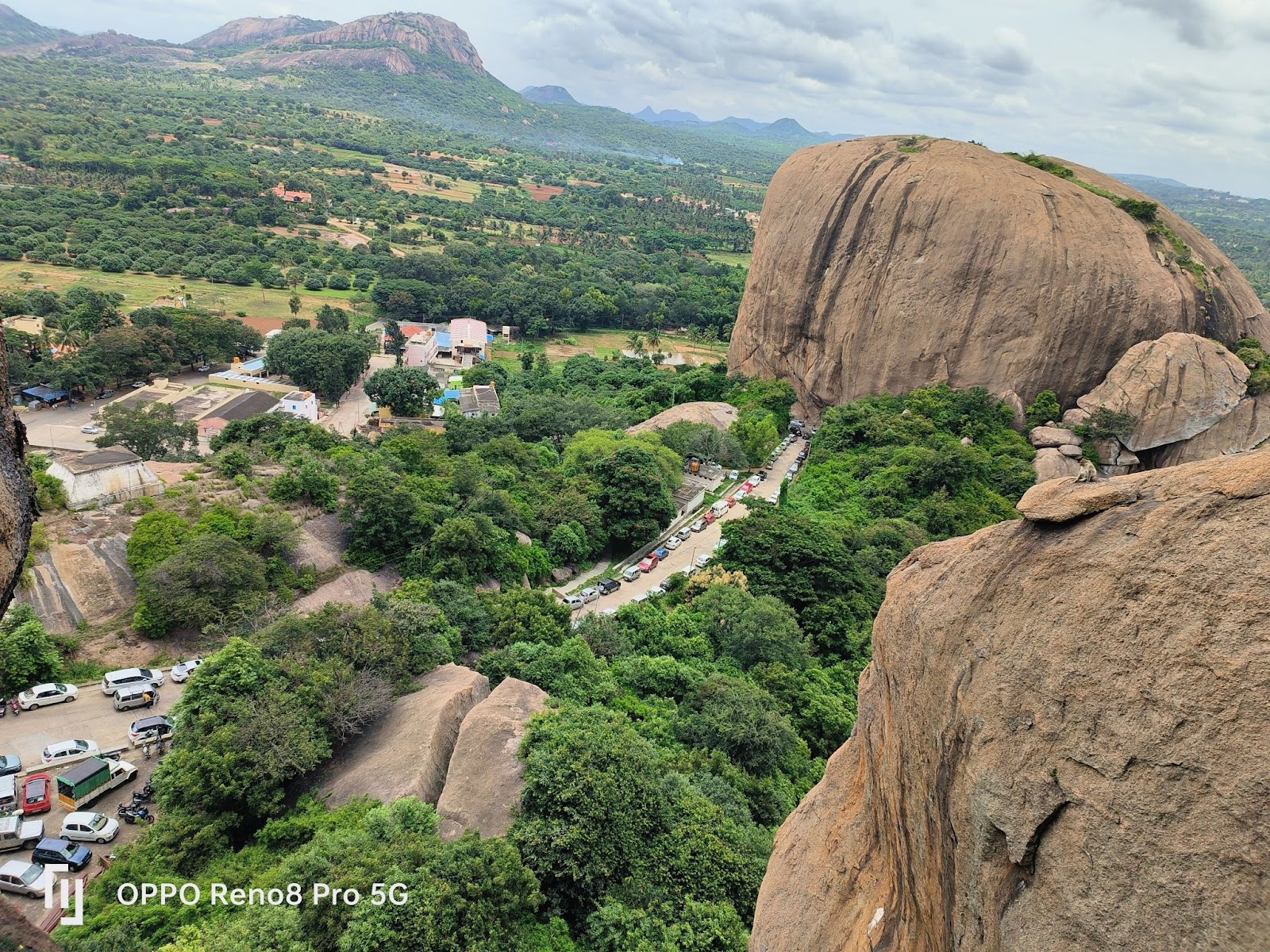
Revana Siddeshwara Betta stands on the northern edge of the Bengaluru plateau, characterized by exposed granite rock formations, sparse vegetation, and wide panoramic views of the surrounding countryside. The hill’s elevation provides a commanding presence, visible from several kilometers away, especially from villages around Bagalur, Yelahanka, and Doddaballapura. The terrain is rugged, with steep rocky paths and wind-swept slopes, reinforcing the hill’s identity as a place meant for effort, endurance, and reflection rather than casual visitation.
Presiding Deity and Shaiva Identity
The hill is dedicated to Sri Revana Siddeshwara, a powerful Shaiva saint-deity believed to be a manifestation of Lord Shiva’s ascetic energy. Local traditions associate Revana Siddeshwara with the Veerashaiva and pre-Veerashaiva Shaiva currents, where devotion emphasized renunciation, discipline, and direct spiritual experience over ritual formalism. The deity is worshipped as both a siddha (accomplished yogi) and a protective force, especially invoked by devotees seeking relief from prolonged difficulties, mental distress, or unfulfilled vows.
Mythological and Folk Narratives
Local legends narrate that Revana Siddeshwara performed intense penance on this hill, transforming it into a spiritually charged landscape. Stories passed down through generations describe the hill as a site where divine energy is concentrated due to prolonged meditation. Many devotees believe that sincere prayer here brings swift results, but only if approached with humility and discipline. The hill is also associated with beliefs that it tests the devotee’s resolve, reinforcing the idea that spiritual merit is earned through effort.
Temple Structure and Sacred Spaces
The temple at the summit of SRS Hill is modest and functional, reflecting the ascetic character of the site. Built with stone and minimal ornamentation, it houses the linga of Revana Siddeshwara, which is worshipped with simple offerings such as vibhuti, bilva leaves, and water. Around the main shrine are smaller sacred spots, including meditation corners, stone platforms, and shaded areas where pilgrims rest or pray silently. The lack of elaborate architecture reinforces the hill’s focus on inward devotion rather than outward display.
Pilgrimage Practices and Climb Rituals
One of the defining aspects of Revana Siddeshwara Betta is the physical climb to the summit, which forms an integral part of the pilgrimage. Devotees often climb the hill barefoot, especially on Mondays, Shivaratri, and Amavasya days, considering the ascent itself an act of penance. The steep path, exposed to sun and wind, is believed to purify intention and test devotion. For many, reaching the summit is less about darshan and more about the transformation experienced during the climb.
Festivals and Ritual Observances
Maha Shivaratri is the most important festival celebrated at SRS Hill, drawing thousands of devotees from Bengaluru and nearby districts. The night-long vigil, chanting, and continuous abhisheka reflect deep Shaiva devotion. Mondays of the Shravan month and special lunar days also see increased pilgrim activity. During these times, the hill becomes a collective space of faith, yet retains its austere spiritual tone.
Cultural Role and Popular Beliefs
Revana Siddeshwara Betta holds a special place in the lives of people facing prolonged obstacles, delayed marriages, health issues, or career stagnation. Many devotees believe that the deity responds particularly to those who approach without arrogance or transactional expectation. The hill is often spoken of as a place where ego dissolves, aligning with Shaiva philosophy that liberation arises through surrender rather than accumulation.
Relationship with the Surrounding Landscape
The hill functions as a spiritual anchor within an otherwise rapidly urbanizing zone north of Bengaluru. While development has reached nearby villages and highways, the hill remains a stark reminder of the region’s pre-urban spiritual geography. Its rocky ecology, sparse trees, and open sky maintain a sense of timelessness, making it a rare space of silence close to the city.
Responsible Pilgrimage and Respectful Conduct
Visitors to SRS Hill are expected to maintain decorum befitting a tapasya-sthala. Loud music, littering, and casual behavior are discouraged, both by temple authorities and local devotees. The spiritual potency of the hill is believed to be sustained by collective restraint and respect, rather than regulation alone.
How to Reach Revana Siddeshwara Betta
- By Air: The nearest airport is Kempegowda International Airport, Bengaluru, around 75 km away.
- By Train: Ramanagara Railway Station is the closest, located approximately 15 km from the hill.
- By Road: The site is well-connected via the Bangalore-Mysore Highway and is about 60 km from Bengaluru. Buses and taxis are readily available.
Maps and Location
Location: SRS Betta village, 15 km from Ramanagara, Karnataka
FAQS
- Q: Where is Revana Siddeshwara Betta located?
It is located on the northern outskirts of Bengaluru, near Yelahanka and Doddaballapura Road.
- Q: Who is Revana Siddeshwara?
He is a revered Shaiva saint-deity associated with asceticism, penance, and spiritual discipline.
- Q: Why do devotees climb the hill barefoot?
The barefoot climb is considered an act of penance and devotion, integral to the pilgrimage.
- Q: Which festival is most important at SRS Hill?
Maha Shivaratri is the most significant festival celebrated here.
- Q: Is SRS Hill suitable for casual tourism?
No, it is primarily a pilgrimage and spiritual site, approached with seriousness and respect.