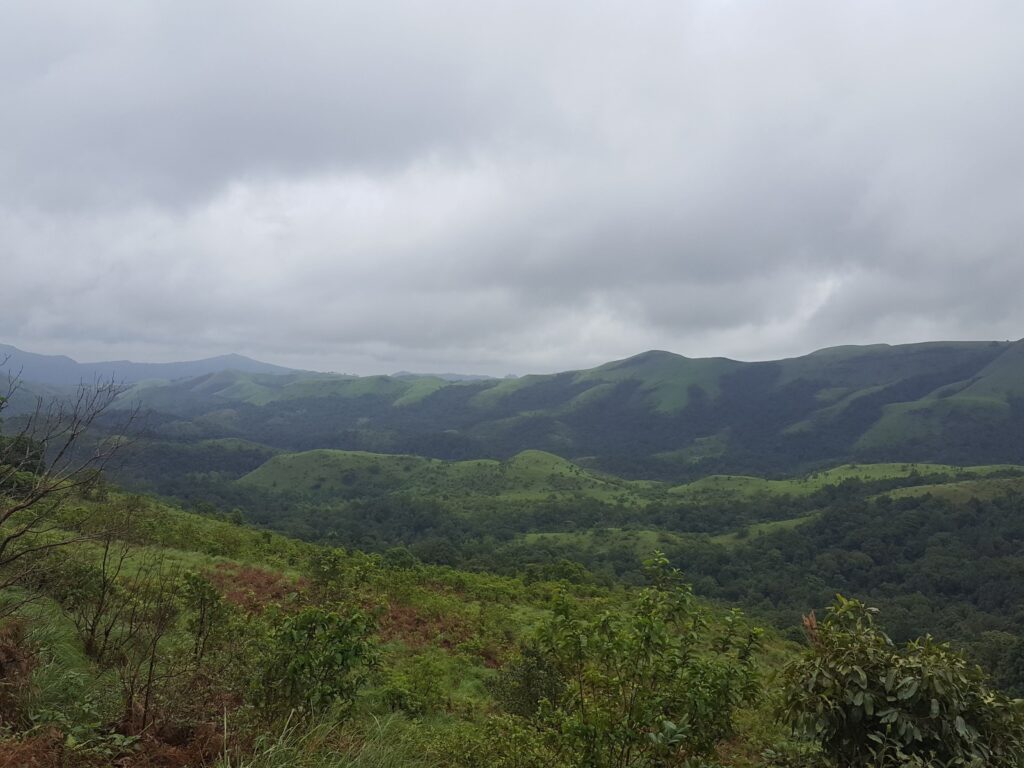
Image Source: Gopi Krishna VR
About Gangamoola
Nestled deep within the lush forests of the Western Ghats, Gangamoola is one of Karnataka’s most fascinating natural and spiritual landmarks. Located inside the picturesque Kudremukh National Park in Chikkamagaluru district, this serene hilltop is famous as the birthplace of three important rivers of South India—the Tunga, Bhadra, and Netravathi.
Surrounded by dense evergreen forests, rolling hills, and mist-covered valleys, Gangamoola offers a unique blend of natural beauty, ecological importance, and religious significance. The rivers that originate here sustain countless villages, farms, forests, and towns across Karnataka before continuing their journeys in different directions.
Situated at an elevation of approximately 1,450 meters (4,760 feet) above sea level, Gangamoola is a paradise for nature lovers, trekkers, birdwatchers, and those seeking a peaceful retreat away from crowded tourist destinations. The cool mountain climate and rich biodiversity make every visit memorable.
A Biodiversity Treasure of the Western Ghats
Gangamoola lies within the protected boundaries of Kudremukh National Park, one of the most important wildlife habitats in southern India. The region forms part of the Western Ghats, a UNESCO-recognized biodiversity hotspot known for its extraordinary variety of flora and fauna.
The forests around Gangamoola are home to numerous species of birds, butterflies, reptiles, and mammals. Wildlife enthusiasts may spot animals such as elephants, gaurs, deer, leopards, and, on rare occasions, tigers. The area is also rich in medicinal plants, endemic tree species, and colorful flowering plants that thrive in the high-rainfall environment of the Ghats.
During the monsoon and post-monsoon seasons, the landscape transforms into a vibrant green paradise filled with streams, waterfalls, and clouds drifting across the hills.
The Sacred Cave of Goddess Bhagavathi
Apart from its ecological significance, Gangamoola holds great spiritual importance among local communities. Near the river source is a small cave shrine dedicated to Goddess Bhagavathi. Devotees believe the site possesses divine energy and visit throughout the year to seek blessings.
The shrine is simple yet deeply revered. Surrounded by untouched wilderness, the cave creates a peaceful atmosphere that encourages reflection and prayer. Many visitors find the combination of spirituality and natural beauty particularly captivating.
The Journey of the Three Rivers
Tunga River
The Tunga River begins its journey from Gangamoola and flows northward through scenic towns such as Sringeri, Thirthahalli, and Shivamogga. Along its course, it nourishes agricultural lands and supports numerous communities. Eventually, it joins the Bhadra River at Koodli near Shivamogga to form the mighty Tungabhadra River.
Bhadra River
The Bhadra River flows eastward from its source, passing through the forested landscapes of Chikkamagaluru and the industrial town of Bhadravati. It eventually meets the Tunga River at Koodli, creating the Tungabhadra, one of the major tributaries of the Krishna River.
Netravathi River
Unlike the Tunga and Bhadra, the Netravathi River flows westward through the Western Ghats. It passes through important pilgrimage and cultural centers such as Dharmasthala before reaching Mangaluru and finally emptying into the Arabian Sea. The river serves as a vital water source for coastal Karnataka.
How to Reach Gangamoola
Gangamoola is located around 80 km from Chikkamagaluru and approximately 20 km from Kudremukh town. The nearest major town is Kudremukh, which is well connected by road to Chikkamagaluru, Mangaluru, Karkala, and Sringeri.
Visitors must first reach the Forest Department check post near Kudremukh National Park. From there, a short trek of about 2 km leads to the source point. The trail is relatively easy and passes through beautiful forests and grasslands, making the walk enjoyable even for beginners.
The nearest railway station is Mangaluru Junction, located about 120 km away. The nearest airport is Mangaluru International Airport. From either location, taxis and buses are available to reach Kudremukh.
Since Gangamoola lies inside a protected national park, visitors should check entry timings and permissions with the Forest Department before planning their trip.
Best Time to Visit
The ideal time to visit Gangamoola is between October and February when the weather is cool, clear, and pleasant for trekking. The monsoon season from June to September turns the region incredibly green and beautiful, but heavy rainfall can make trails slippery and access more challenging.
Nearby Attractions
Kudremukh Peak
One of Karnataka’s most famous trekking destinations, Kudremukh Peak offers breathtaking views of rolling grasslands, valleys, and forests. The trek is a favorite among adventure enthusiasts.
Hanuman Gundi Falls
Located within Kudremukh National Park, this beautiful waterfall cascades down rocky cliffs amidst dense greenery. It is especially spectacular during and after the monsoon season.
Sringeri
Situated on the banks of the Tunga River, Sringeri is renowned for the ancient Sharada Peetham established by Adi Shankaracharya. The town is an important spiritual and cultural center.
Horanadu Annapoorneshwari Temple
Located amidst the Western Ghats, this famous temple dedicated to Goddess Annapoorneshwari attracts thousands of devotees throughout the year.
Kalasa
A charming temple town known for the Kalaseshwara Temple and scenic surroundings, Kalasa serves as a gateway to several trekking routes in the region.
Kudremukh National Park
Apart from Gangamoola, the national park itself is a major attraction offering wildlife sightings, forest trails, mountain viewpoints, and pristine landscapes.
Maps and Location of Ganga Moola
FAQs
1. Why is Gangamoola famous?
Gangamoola is famous as the origin point of three important rivers—the Tunga, Bhadra, and Netravathi—and for its location within the biodiverse Western Ghats.
2. Is trekking required to reach Gangamoola?
Yes. Visitors need to undertake a short trek of approximately 2 km from the designated entry point inside Kudremukh National Park.
3. Do I need permission to visit Gangamoola?
Since it is located inside a protected national park, visitors may need entry permission or tickets issued by the Forest Department.
4. What is the best season to visit Gangamoola?
October to February is considered the best period due to pleasant weather and clear views.
5. Can wildlife be seen around Gangamoola?
Yes. The surrounding forests are home to elephants, deer, gaurs, leopards, numerous bird species, and other wildlife.
6. Is Gangamoola suitable for families?
Yes. The short trek and scenic surroundings make it suitable for families, nature lovers, photographers, and pilgrims.
7. How far is Gangamoola from Kudremukh?
Gangamoola is located about 20 km from Kudremukh town and can be reached via road followed by a short trek.
8. Is the Bhagavathi shrine open throughout the year?
The small cave shrine is generally accessible to visitors, though access may vary during periods of heavy rainfall or forest restrictions.