Image Source: Dineshkannambadi
About Tripurantakesvara Temple
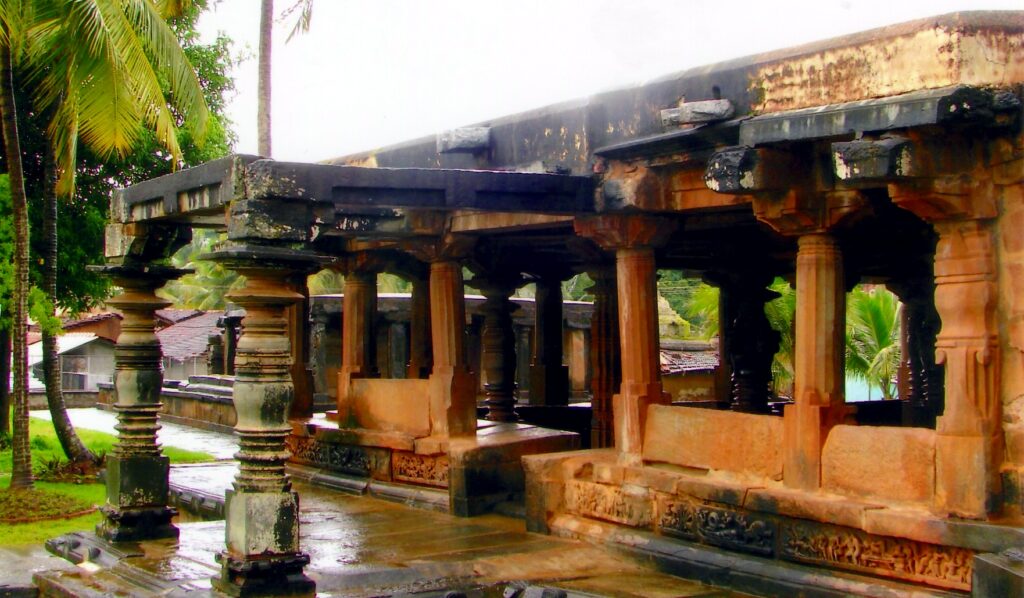
The Tripurantakesvara Temple, also known as Tripurantaka Temple, stands as a testament to the architectural brilliance of the Western Chalukya dynasty.
Located in the historically significant town of Balligavi in Shivamogga district, Karnataka, this temple was constructed around 1070 CE during the reign of King Somesvara II. Balligavi, often referred to as the “Dakshina Kedara” or “Little Kashi of the South,” was a prominent center of learning and religious activity, housing temples dedicated to Shaiva, Vaishnava, Jain, and Buddhist traditions.
Architecture
The Tripurantakesvara Temple exemplifies the Later Chalukya architectural style, characterized by intricate carvings and a harmonious layout. Key architectural elements include:
Trikuta Design: The temple comprises three shrines aligned along the north, south, and west axes, each dedicated to different deities.
Sanctum Layout: The central shrine houses a Shivalinga, while the northern shrine contains a Vishnu image.
Mandapa and Vestibule: Each shrine is preceded by a half-hall (ardhamantapa) and a vestibule (antarala), leading to the sanctum.
Hall Structure: The shrines open into a six-pillared hall (mahamantapa), which is part of a larger staggered square gathering hall (sabhamantapa), enhancing the temple’s spatial dynamics.
Shikhara (Tower): The central shrine features a latina-style (rekhanagara) tower, while the other two shrines have simpler structures.
hindutemples-india.blogspot.com
Perforated Windows: Notably, the temple showcases intricately carved perforated windows, depicting dancers and mythological figures, a rare feature in Chalukya architecture .
Sahasa
Sculptural and Iconographic Highlights
The temple’s exterior is adorned with a rich array of sculptures, reflecting the artistic diversity of the period:
Erotic Sculptures: The friezes on the temple’s outer walls include depictions of erotic themes, which are considered rare in Chalukyan art and offer insights into the cultural milieu of the time .
Wikipedia
Mythological Narratives: Carvings illustrating scenes from the Panchatantra, daily life activities, and divine figures like Gajalakshmi and Naga-Nagini add to the temple’s iconographic richness .
Hoysala Influence: Later additions by the Hoysala dynasty are evident in certain sculptures, such as the depiction of Sala slaying a lion, a motif associated with the Hoysala emblem.
Religious and Cultural Significance
The Tripurantakesvara Temple was a significant center for the Kalamukha sect of Shaivism, attracting devotees and scholars from various regions. The presence of sculptures depicting Brahma and Vishnu alongside Shiva indicates the temple’s inclusive approach to different Hindu traditions. This reflects the religious tolerance prevalent during the Chalukya period.
Visiting the Temple
Location: The Tripurantakesvara Temple is situated approximately 2 km northeast of Balligavi town, near Shiralakoppa, in Shikaripura Taluk, Shivamogga district, Karnataka.
Facebook
Accessibility
By Road: Balligavi is well-connected by road. From Shimoga, it is about 70 km, and from Shiralakoppa, it’s approximately 20 km.
By Rail: The nearest railway station is Shimoga Town, which is about 70 km away.
By Air: The closest airport is Hubballi Airport, approximately 130 km from Balligavi.
Best Time to Visit: The ideal time to visit is during the Shivaratri festival, when the temple comes alive with religious fervor and cultural activities.