Image Source: Nataraj Bhat
Introduction
Tucked away in the serene town of Sringeri, the sacred Sri Sharada Peetham is one of the most important centers of learning and devotion in South India. Surrounded by lush greenery and the calming presence of the Tunga River, this temple is not just a place of worship—it’s a space where spirituality, philosophy, and tradition come together beautifully.
About Sri Sharada Peetham
Sri Sharada Peetham was established by the great 8th-century philosopher and saint Adi Shankaracharya, who founded the Sringeri Sharada Peetham as one of the four major monastic institutions (mathas) in India. The temple is dedicated to Goddess Sharadamba, revered as the embodiment of wisdom, knowledge, and learning.
Located just about 1 km from the Sringeri Bus Stand, the temple is easily accessible and forms the spiritual heart of the town. Students, scholars, and devotees from across the country visit this sacred site seeking blessings for education and intellectual growth.
Historical Background
The temple’s origins trace back several centuries. Initially, the idol of Goddess Sharada was made of sandalwood. In the 14th century, the revered scholar-saint Vidyaranya replaced this with a more permanent idol crafted from stone and adorned with gold.
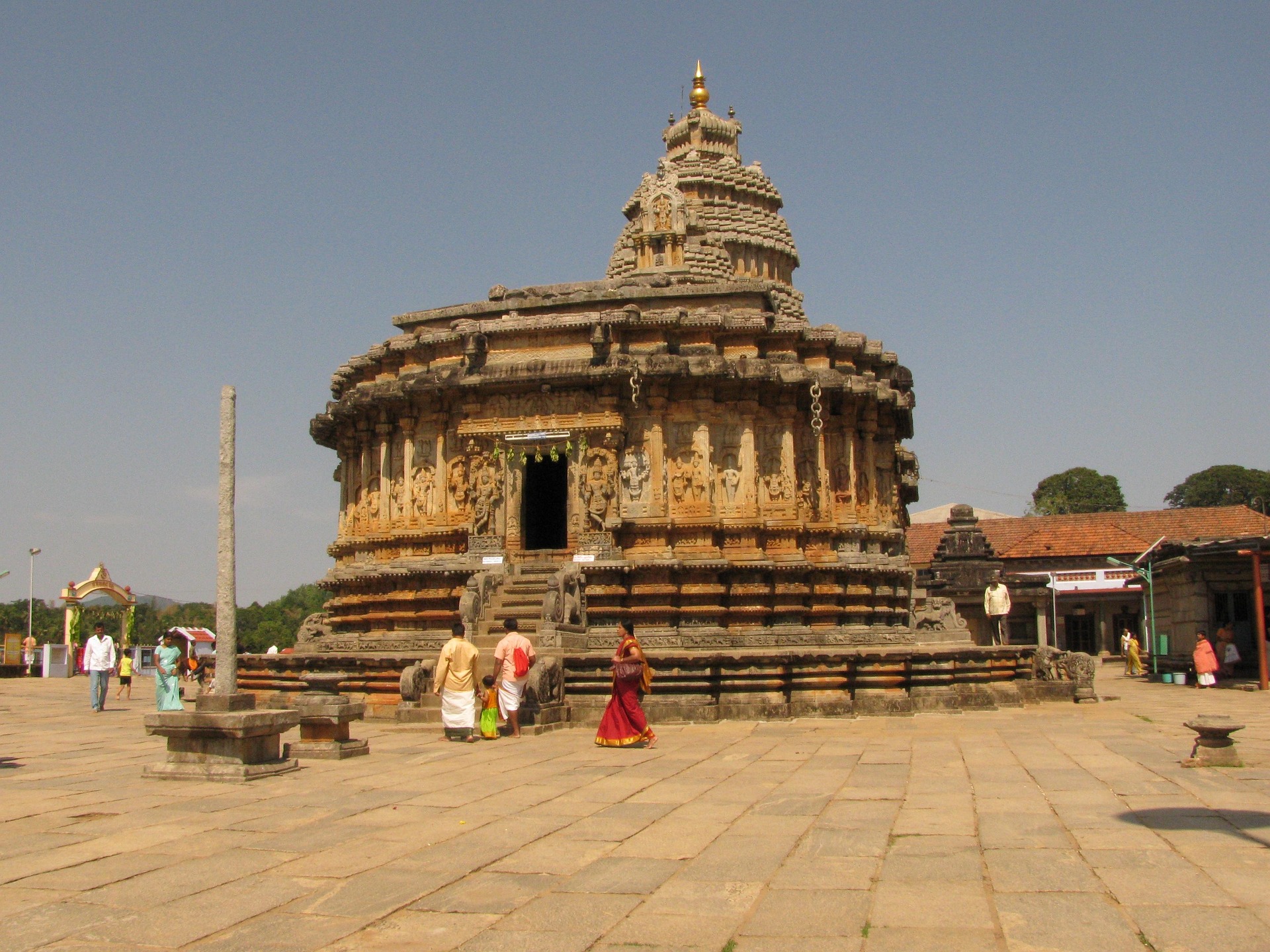
The original temple structure was built using wood and stood for many years. However, after a fire in the early 20th century, the temple was reconstructed in a more durable and traditional South Indian architectural style. Today, the structure reflects both its ancient roots and later refinements.
Architecture & Atmosphere
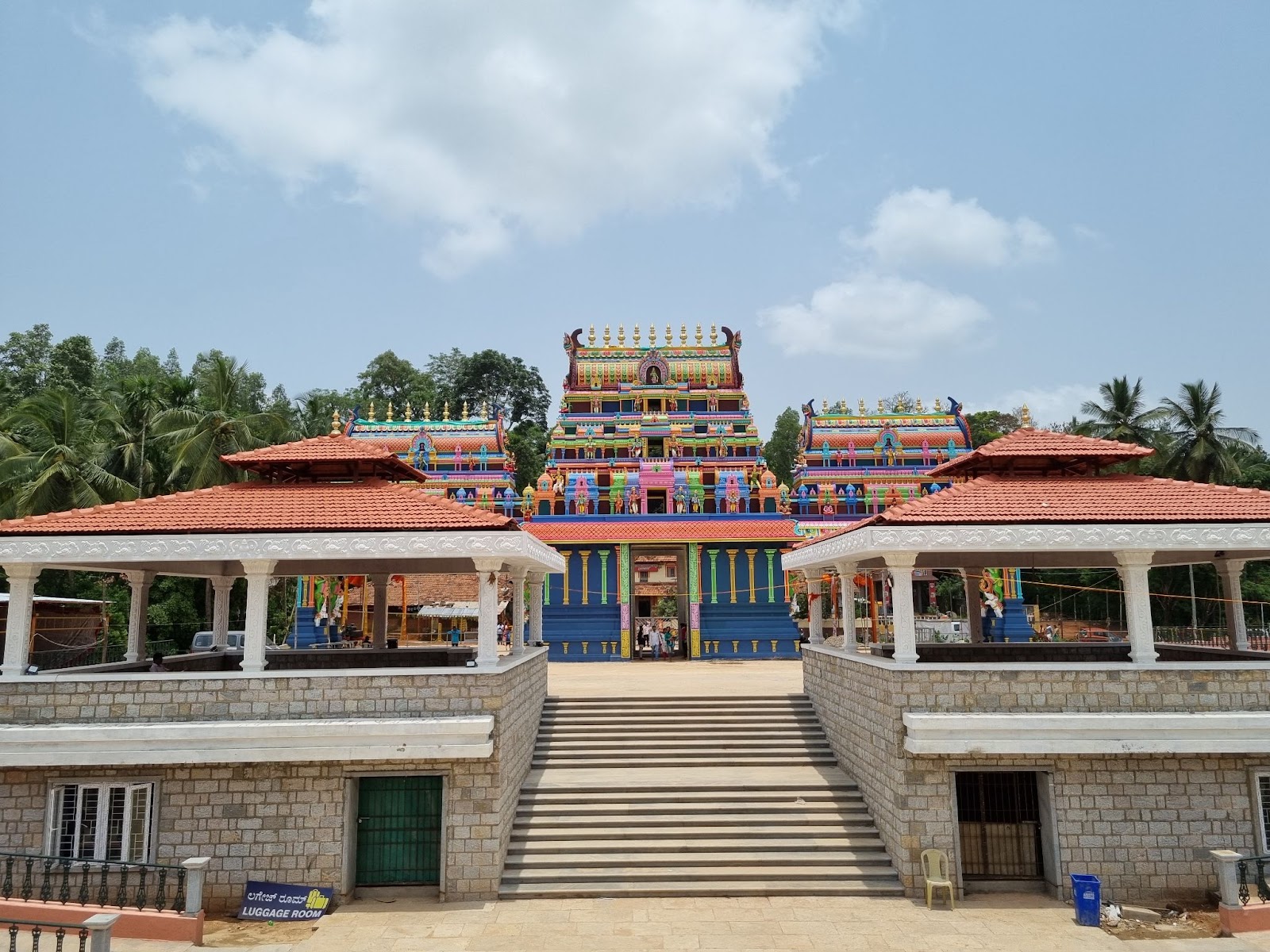
The present-day temple showcases classic South Indian temple architecture, with intricate carvings, a well-defined sanctum, and a peaceful courtyard. The idol of Goddess Sharadamba is beautifully adorned, often decorated with flowers, jewelry, and silk garments.
What truly sets the temple apart is its tranquil ambiance. The rhythmic chants, temple bells, and the surrounding natural beauty create a deeply calming experience for visitors. The nearby Tunga River adds to the spiritual charm, making it a perfect place for quiet reflection.
Festivals and Celebrations
Friday Procession
Every Friday, the temple comes alive with a special celebration. A silver chariot procession carrying the idol of Goddess Sharadamba is taken around the complex , accompanied by devotional music and chanting. It’s a vibrant yet deeply spiritual experience that draws many devotees.
Navaratri Festival
The festival of Navaratri is one of the grandest celebrations at Sri Sharada Peetham. During these nine nights, the goddess is worshipped in different forms, symbolizing her victory over evil. The temple is beautifully decorated, and special rituals, cultural programs, and prayers are happen throughout the festival, attracting devotees from all over India.
Timings
- Morning: 6:00 AM – 2:00 PM
- Evening: 5:00 PM – 9:30 PM
Why You Should Visit
Sri Sharada Peetham is more than just a temple—it’s a place where knowledge meets devotion. Whether you’re seeking spiritual peace, cultural insight, or simply a quiet retreat, this sacred site offers a deeply fulfilling experience.
How to Reach Sri Sharada Peetham, Harihar
Sri Sharada Lakshmi Narasimha Peetham is located in the historic town of Harihar in Karnataka, on the banks of the Tungabhadra River. The temple is easily accessible from major cities in central Karnataka and is often visited along with other important religious sites in the region. Harihar itself is well connected by road and rail and lies about 14 km from Davanagere on National Highway 48.
By Road:
Harihar is connected by NH-48, making it convenient to reach from Bengaluru (around 275 km), Hubballi, Shivamogga, and Davanagere. Regular Karnataka State Road Transport Corporation (KSRTC) and private buses operate to Harihar from major cities.
By Rail:
Harihar Railway Station is the nearest railway station and is served by several express and passenger trains connecting Bengaluru, Mysuru, Hubballi, Ballari, and other cities. From the station, the temple can be reached by auto-rickshaw or taxi.
By Air:
The nearest airport is Hubballi Airport, located approximately 120 km away. Another convenient option is Shivamogga Airport. From either airport, visitors can hire a taxi to Harihar.
Nearby Attractions
Harihareshwara Temple
One of the most famous landmarks in Harihar, this 13th-century Hoysala-era temple is dedicated to Harihara, a combined form of Lord Shiva and Lord Vishnu. The temple is renowned for its intricate stone carvings and historical significance.
Tungabhadra River
The sacred river flowing through Harihar offers peaceful surroundings and scenic views. Many devotees visit its banks for spiritual rituals and evening walks.
Davanagere
Located just a short drive away, Davanagere is known for its bustling markets, temples, and the famous Davanagere Benne Dosa.
Kunduvada Kere
A large lake and bird-watching destination near Davanagere, ideal for nature lovers and photographers.
Bagali Kalleshwara Temple
An ancient Chalukyan temple known for its remarkable stone architecture and historical importance.
Uchangi Durga
A hill fort offering panoramic views, trekking opportunities, and a glimpse into Karnataka’s medieval history.
Maps
FAQs
1. Where is Sri Sharada Peetham located?
It is located in Sringeri, Karnataka, about 1 km from the Sringeri Bus Stand.
2. Who established Sri Sharada Peetham?
It was established by Adi Shankaracharya in the 8th century.
3. Which deity is worshipped here?
The temple is dedicated to Goddess Sharadamba, the goddess of knowledge and wisdom.
4. What is the best time to visit the temple?
While the temple is open year-round, visiting during Navaratri offers a more vibrant and festive experience.
5. What is special about Fridays at the temple?
A silver chariot procession of Goddess Sharadamba takes place every Friday, creating a unique spiritual atmosphere.
6. Is photography allowed inside the temple?
Photography is generally restricted inside the sanctum but may be allowed in outer areas—it’s best to follow local guidelines.