
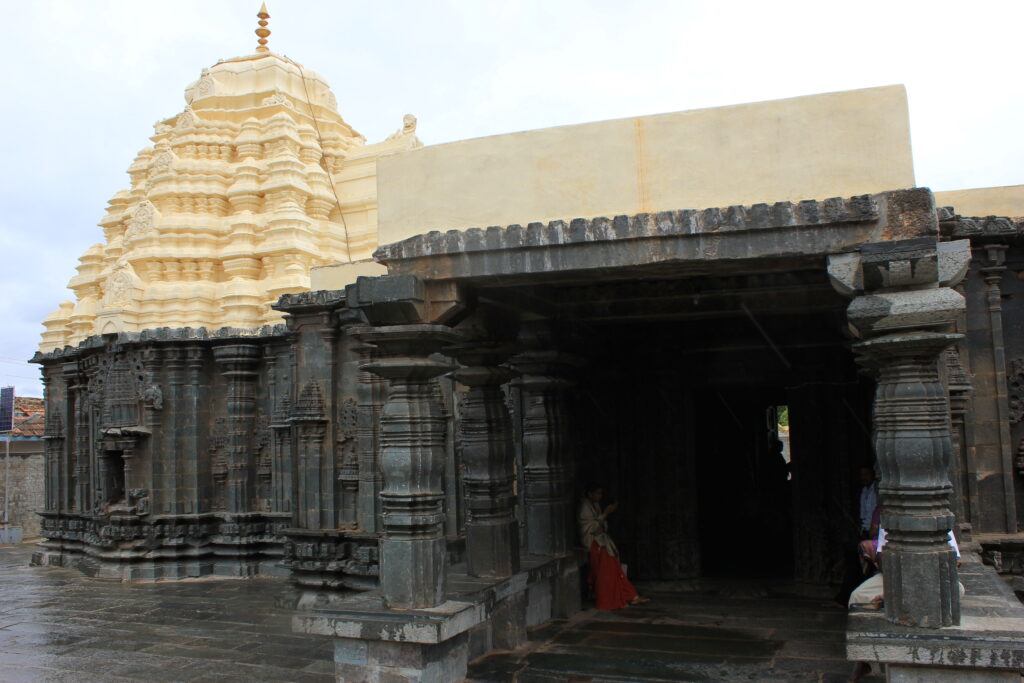
Image Source: Dineshkannambadi
About Mallikarjuna Temple
The Mallikarjuna Temple at Kuruvatti in Hadagali taluk of Vijayanagara district, Karnataka, is one of the most exquisite monuments of the Western Chalukya (Kalyani Chalukya) dynasty. Built in the late 11th century CE, it is celebrated for its refined architecture, elegant proportions, and devotional significance. Dedicated to Lord Shiva, worshipped here as Mallikarjuna, the temple reflects the mature phase of Chalukyan architectural experimentation and artistry.
History
The temple was constructed during the reign of the Kalyani Chalukyas, most likely under King Vikramaditya VI (1076–1126 CE), who is remembered for his patronage of temple architecture across Karnataka. Inscriptions found at Kuruvatti mention grants and donations made to the shrine, suggesting its importance as a spiritual and social center in the region.
The Mallikarjuna Temple is considered one of the three great Chalukyan temples of the era, along with the Mahadeva Temple at Itagi and the Kasivisvesvara Temple at Lakkundi, all of which mark the high point of Western Chalukya craftsmanship.
Architecture
Layout and Plan
The temple follows the typical Chalukyan plan:
Garbhagriha (Sanctum): Houses a Shiva linga, the main deity.
Antarala (Vestibule): Connects the sanctum with the main hall.
Navaranga (Enclosed Hall): A pillared hall for devotees.
Mukhamantapa (Open Hall): Serves as the entrance pavilion.
The temple is constructed in soapstone, allowing for intricate detailing and polished finishes.
Shikhara (Superstructure)
The sanctum is topped with a Dravidian-style vimana, rising in a stepped pyramidal form.
Each tier of the tower is decorated with miniature shrines and carvings, creating a rhythmic vertical progression.
Sculptural Decoration
Doorframes are richly ornamented with makara toranas, floral scrolls, and guardian figures (dvarapalas).
Ceilings of the halls feature finely carved lotus medallions and geometric patterns.
Outer walls are decorated with projections and recesses containing miniature shrines, though the sculptural work is more restrained compared to Hoysalas.
Pillars and Interiors
The lathe-turned pillars of the navaranga display polished, fluted surfaces—hallmarks of Western Chalukya architecture.
The design emphasizes geometry and symmetry, creating a sense of balance and harmony.
Unique Aspects
Part of the Chalukyan Trinity – Along with Itagi and Lakkundi, the Kuruvatti temple showcases the peak of Chalukyan architectural achievement.
Transitional Design – It represents a stage of transition between the Western Chalukya style and the emerging Hoysala idiom, particularly in the use of stellate plans and ornate carving.
Sacred Legacy – The temple has been a continuous place of worship for centuries, preserving its religious vitality.
Elegance over Excess – Unlike heavily ornamented temples, Mallikarjuna at Kuruvatti is admired for its aesthetic restraint and architectural proportion.
Cultural Importance
The Mallikarjuna Temple served as both a spiritual and social hub for Kuruvatti. It reflects the Shaivite devotion that flourished under the Chalukyas while also showcasing their architectural genius. Even today, it is regarded as a monument of national importance, protected by the Archaeological Survey of India (ASI), and continues to draw worshippers and heritage enthusiasts alike.
How to Reach
Location: Kuruvatti is located in Hadagali taluk, Vijayanagara district, Karnataka.
By Road: Well connected by road from Hadagali (10 km), Hospet (50 km), and Ballari (90 km).
By Rail: The nearest railway station is Hospet, about 50 km away.
By Air: The closest airport is Ballari Airport (90 km), while Hubballi Airport (about 160 km) is a better-connected option.