
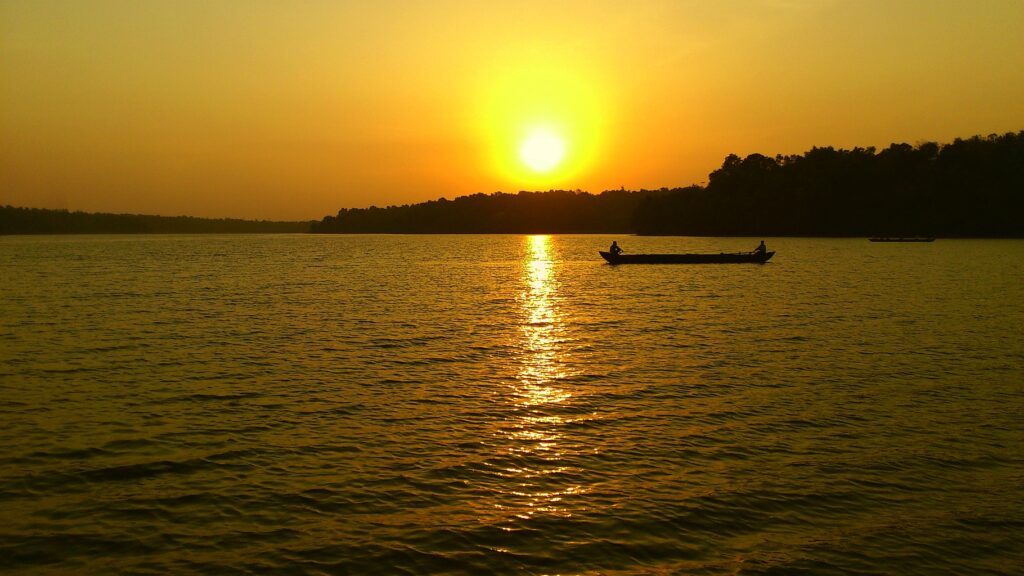
Image Source: Arunelectra
About Sasthamkotta Lake
Sasthamkotta Lake, located in Kollam district of Kerala, is the largest freshwater lake in the state. It is a vital source of drinking water, irrigation, and fisheries, supporting thousands of people in the region. Known for its scenic beauty, lush surroundings, and ecological importance, Sasthamkotta Lake is also a cultural landmark, surrounded by temples and villages that reflect the traditional lifestyle of Kerala’s hinterland.
Geography and Location
The lake is situated approximately 25 kilometers from Kollam town, nestled amidst gentle hills and dense vegetation. Covering an area of about 3.73 square kilometers, Sasthamkotta Lake is a freshwater body without direct connection to the sea. Its maximum depth reaches up to 12 meters, making it an important reservoir in the region. The lake is fed by several small streams and rainfall runoff from the surrounding hills, while its natural drainage maintains the water level throughout the year.
Ecological Significance
Sasthamkotta Lake is a critical ecological hotspot, home to diverse flora and fauna. Its freshwater ecosystem supports:
Aquatic life, including various freshwater fish species that sustain local fisheries.
Birdlife, such as herons, kingfishers, and migratory waterfowl, making it an ideal spot for birdwatchers.
Riparian vegetation, which stabilizes the banks and provides a natural habitat for amphibians and small mammals.
The lake’s clear and unpolluted waters distinguish it from many other lakes in Kerala, and it plays a crucial role in maintaining the region’s groundwater table.
Tourism and Attractions
Sasthamkotta Lake is not just an ecological asset but also a popular tourist destination:
Boating and Leisure Activities – Visitors can enjoy boating and canoe rides to explore the calm waters and scenic surroundings.
Sasthamkotta Temple – The lake derives its name from the Sasthamkotta Mahadevar Temple, a prominent Hindu pilgrimage site on its banks, attracting devotees throughout the year.
Birdwatching and Nature Walks – Early mornings and evenings are ideal for spotting local and migratory birds and enjoying serene walks along the shoreline.
Photography – The lake’s tranquil waters reflecting the surrounding hills and skies make it a favorite for photographers and nature enthusiasts.
Cultural and Local Significance
The lake is closely linked to the local communities, who rely on it for domestic water supply, agriculture, and fisheries. It also plays a cultural role, as the Sasthamkotta Temple and local festivals are closely associated with the lake’s spiritual and social identity. The surrounding villages showcase traditional Kerala architecture, coir-making, and rural lifestyles, offering visitors an authentic glimpse into backwater Kerala beyond the tourist circuits.
Environmental Challenges
Despite its relatively pristine condition, Sasthamkotta Lake faces environmental pressures:
Encroachment and Urbanization – Expansion of nearby settlements threatens the natural shoreline.
Agricultural Runoff – Use of fertilizers and pesticides in surrounding areas affects water quality.
Tourism Pressure – Unregulated tourism could disturb the delicate ecosystem if not managed sustainably.
Conservation efforts focus on preserving water quality, protecting biodiversity, and maintaining the natural flow of streams feeding the lake.
Best Time to Visit
October to March – The most pleasant months for sightseeing, boating, and photography.
Monsoon Season (June–September) – The surrounding hills turn lush green, offering dramatic scenic views, though boating may be limited.