Image Source: Sancia Morris
About Silent Valley National Park
Silent Valley National Park is one of the most significant protected areas in Kerala, located in the Nilgiri Hills of the Western Ghats. Famous for its untouched evergreen forests, rich biodiversity, and ecological significance, it has played a historic role in India’s environmental conservation movement.
The park was declared a reserve forest in 1914 and later inaugurated as a national park on 7 September 1985, under the administration of the Kerala Forest and Wildlife Department. Classified under IUCN Category II (National Park), it covers a core area of 89.52 km², surrounded by a buffer zone. The name “Silent Valley” is often attributed to the absence of noisy cicadas, while another theory links it to the anglicisation of “Sairandhri” or the presence of the lion-tailed macaque (Macaca silenus), a flagship species of the park.
Geography and Topography
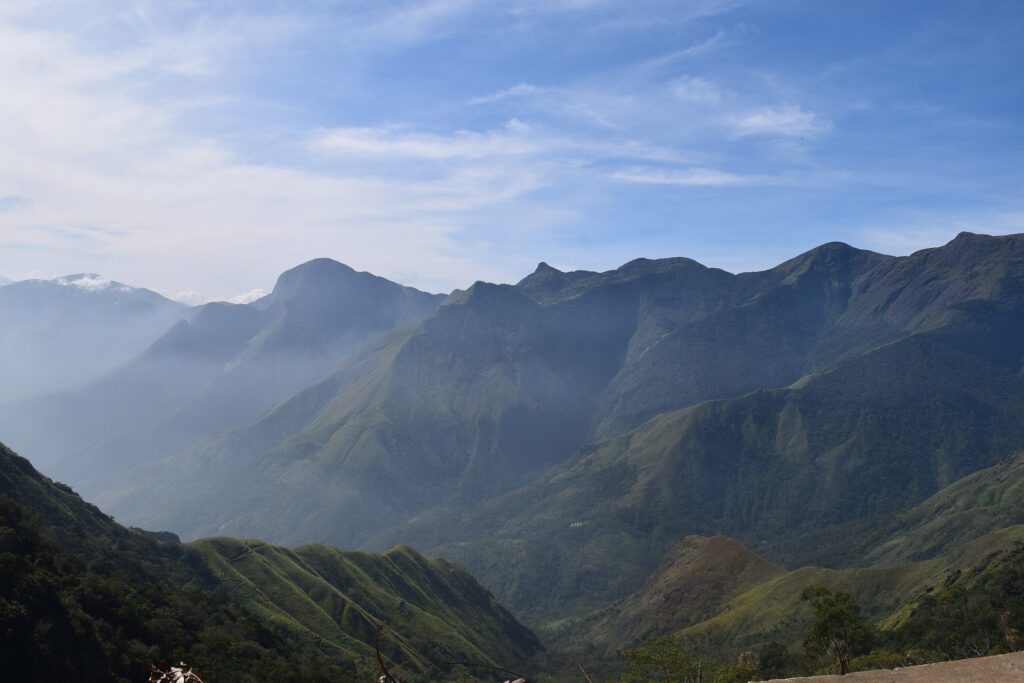
Silent Valley lies on the Palakkad–Malappuram border of Kerala and shares boundaries with the Nilgiris of Tamil Nadu. It forms the core zone of the Nilgiri Biosphere Reserve, which is part of the UNESCO World Heritage Western Ghats site. To its north lies the Karimpuzha Wildlife Sanctuary, and to the northeast, Mukurthi National Park. The park is roughly rectangular in shape (12 km north–south and 7 km east–west) and its altitude ranges from 658 m at the valley floor to 2,328 m at Anginda Peak.
The Kunthipuzha River, a tributary of the Bharathapuzha, flows the length of the park, providing crystal-clear perennial water with a pesticide-free catchment. Other rivers originating here include the Bhavani River (flowing into the Kaveri) and the Kadalundi River.
Soils are rich with organic matter, slightly acidic in evergreen patches, and loamy on granite-derived slopes. The park experiences a unique microclimate, with mean annual temperatures around 20°C, heavy rainfall during the Southwest (June–September) and Northeast (October–November) monsoons, and high humidity exceeding 95% during wet months.
History of Conservation
Silent Valley’s story is deeply tied to India’s environmental activism. In the early 20th century, the area was surveyed for hydroelectric power projects, with a major proposal in 1958 and later in 1973 for the Silent Valley Hydroelectric Project (SVHEP). The plan to build a dam across the Kunthipuzha would have submerged 8.3 km² of virgin rainforest, threatening rare species like the lion-tailed macaque.
This triggered the “Save Silent Valley” movement, one of India’s strongest grassroots conservation campaigns, leading to the cancellation of the project in 1980. The park was officially inaugurated in 1985, with Indira Gandhi’s vision carried forward by Rajiv Gandhi.
In later years, new projects like the Pathrakkadavu Hydroelectric Project (PHEP) were proposed but met with similar opposition. To safeguard the ecosystem, a buffer zone of 147 km² was established in 2007, and in 2020, the Government of India moved towards declaring an eco-sensitive zone around the park.
Ecology and Biodiversity
Silent Valley is one of the last undisturbed tropical rainforests of the Western Ghats, making it a biodiversity hotspot and genetic resource reserve.
Flora: The park hosts over 1,000 flowering plant species, including 108 orchids, 100 ferns, 200 liverworts, 75 lichens, and 200 algae. Economically significant plants like cardamom, black pepper, and wild rice varieties (Oryza nivara and Oryza Pittambi) thrive here, the latter contributing disease-resistance genes to India’s hybrid rice varieties. Medicinal plants, including those used in Ayurveda, are abundant.
Fauna
Mammals: 34 species, including the lion-tailed macaque (largest population here), Nilgiri langur, Malabar giant squirrel, Nilgiri tahr, tiger, leopard, elephant, and gaur.
Birds: Over 200 species, with 16 listed as threatened, such as the Nilgiri wood-pigeon, Malabar parakeet, and great Indian hornbill.
Insects and Amphibians: 730 insect species, including 128 butterflies and 400 moths. The Silent Valley Bush Frog (Raorchestes silentvalley), discovered in 2016, is endemic to this forest.
Ecosystems: The park transitions from moist evergreen forests at lower elevations to montane sholas and grasslands above 1,500 m, creating diverse habitats.
Indigenous Communities
The Mudugar, Irula, and Kurumba tribes are the indigenous people associated with Silent Valley, mainly living in the adjacent Attappady Reserved Forest. Traditionally reliant on shifting cultivation, forest produce, and herbal knowledge, many now work as laborers or porters. However, some areas have historically witnessed illicit cannabis cultivation, driven by poverty and exploitation.
Challenges and Threats
Despite its protected status, Silent Valley faces several challenges:
Forest Fires: Often triggered by grazing, illicit cultivation, or careless tourism during dry months.
Illegal Activities: Large-scale cannabis plantations, sometimes linked to organized crime, have led to deforestation in buffer areas.
Maoist Presence: Sporadic insurgent activity in nearby forests has raised concerns over security and conservation.
Deforestation History: Between 1927 and 1976, forestry operations logged parts of the valley, and selective felling continued until the park’s stricter protection.
Buffer Zone Pressures: Extraction of bamboo, reeds, and other resources in surrounding territorial forests threatens long-term ecological stability.
How to Reach Silent Valley National Park
By Air
The nearest airport is Coimbatore International Airport, located about 75–80 km from the park. Another convenient option is Cochin International Airport, approximately 160 km away. Taxis and buses are available from both airports to Mannarkkad and Mukkali, the gateway to the park.
By Train
The nearest major railhead is Palakkad Junction Railway Station, about 50–55 km from the park entrance. Visitors can hire taxis or take buses to Mannarkkad and Mukkali from the station.
By Road
Silent Valley is well connected by road through Mannarkkad. The usual route is Palakkad → Mannarkkad → Mukkali → Silent Valley. Regular KSRTC and private buses operate from Palakkad to Mannarkkad and Mukkali. Vehicular access is generally permitted up to Mukkali, from where forest department vehicles and guided visits operate.
Nearest Towns
- Mannarkkad – about 40 km.
- Palakkad – about 55 km.
- Coimbatore – about 80 km.
Nearby Attractions
1. Sairandhri Viewpoint
One of the most famous viewpoints in the park, offering spectacular views of the evergreen forest canopy, valleys, and the Kunthipuzha River. It is a highlight of the official safari route.
2. Kunthipuzha River
This pristine river flows through the heart of the rainforest and is known for its exceptionally clean, unpolluted waters.
3. Attappady Hills
A scenic tribal region known for its mountain landscapes, indigenous culture, and beautiful drives through the Western Ghats.
4. Mukkali Forest Check Post
The entry point to Silent Valley where visitors register and board authorized vehicles for guided tours.
5. Siruvani Dam
Located near the Kerala–Tamil Nadu border, the area is famous for its forests, scenic reservoir, and some of the sweetest drinking water in India.
6. Parambikulam Tiger Reserve
A renowned wildlife destination where visitors can spot elephants, gaur, deer, and numerous bird species.
7. Malampuzha Dam
One of Kerala’s most popular dams, featuring gardens, boating facilities, and panoramic views of the Western Ghats.
8. Dhoni Waterfalls
A picturesque waterfall reached through a short trek amidst forests and hills.
Google Maps
FAQs
What is Silent Valley National Park famous for?
The park is famous for its untouched tropical evergreen rainforest, lion-tailed macaques, rare wildlife, and exceptional biodiversity. It is considered one of the last remaining tracts of pristine rainforest in India.
What is the best time to visit?
The best time to visit is from October to April when the weather is pleasant and wildlife sightings are more common.
Is a guide mandatory?
Yes. Entry and movement inside the park are regulated, and visitors generally enter through authorized vehicles and guided tours arranged by the Forest Department.
Can I drive my own vehicle inside the park?
Private vehicles are usually allowed only up to Mukkali. Beyond that, visitors must follow Forest Department regulations and use authorized transport where required.
What wildlife can be seen in the park?
Visitors may spot lion-tailed macaques, Nilgiri langurs, Malabar giant squirrels, elephants, deer, butterflies, and numerous endemic bird species.
How much time is required for a visit?
A typical visit, including the safari route and viewpoints, usually takes 3–5 hours.
Are food facilities available inside the park?
Basic refreshments may be available near Mukkali, but visitors should carry water and light snacks. Littering inside the park is strictly prohibited.
Is Silent Valley suitable for families?
Yes. Families, nature lovers, photographers, birdwatchers, and wildlife enthusiasts can all enjoy the park, provided they follow park regulations and safety guidelines.
Do I need advance booking?
Advance booking is recommended during weekends, holidays, and peak tourist seasons because the number of visitors allowed into the park is limited.