
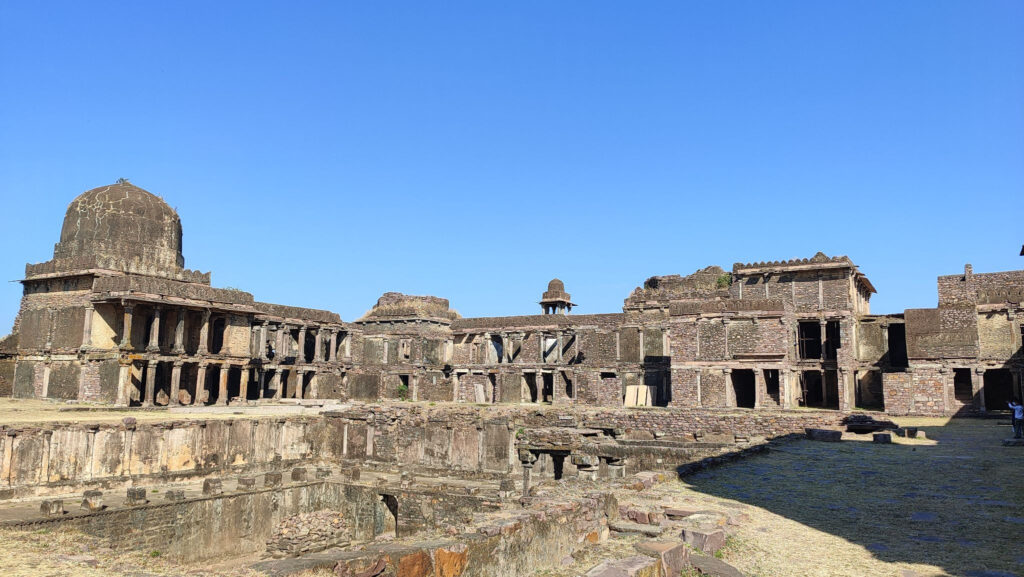
Image Source: Neeraj S. Shinde
Introduction
Rising dramatically above the plains of central Madhya Pradesh, Raisen Fort is a commanding hilltop fortress near Bhopal that encapsulates over a thousand years of political, military, and cultural history. Located in the Raisen district, this sprawling fort complex is one of the most impressive yet underexplored heritage sites of central India. Known for its massive fortifications, ancient temples, mosques, royal palaces, water reservoirs, and panoramic views, Raisen Fort stands as a living chronicle of medieval Malwa, Mughal administration, and the princely state of Bhopal.
Often overshadowed by nearby sites like Sanchi and Bhimbetka, Raisen Fort offers a deeper, rawer encounter with medieval fort architecture in Madhya Pradesh, making it a must-visit destination for travelers interested in history, archaeology, and heritage tourism.
Geographical Setting of Raisen Fort
Raisen Fort is situated atop a steep sandstone hill of the Vindhya range, overlooking the town of Raisen and the surrounding agricultural plains. It lies approximately 45 km northeast of Bhopal, making it easily accessible for a day trip from the state capital.
The fort’s elevated position was a crucial strategic advantage, allowing rulers to monitor trade routes and military movements across eastern Malwa. The rugged hill terrain, natural rock formations, and sheer slopes form an integral part of the fort’s defensive system. From the summit, visitors are rewarded with sweeping views of Raisen town, forest patches, lakes, and rural landscapes, reinforcing why this location was chosen as a royal stronghold.
History of Raisen Fort
Early Foundations and Hindu Rule
The origins of Raisen Fort date back to around the 11th–12th century CE, when it was established by early Hindu rulers as a fortified capital in eastern Malwa. The name “Raisen” is believed to have evolved from ancient terms such as Rajavasini or Rajasayan, meaning “royal residence,” reflecting its early political importance.
Sieges and Medieval Conflicts
During the medieval period, Raisen Fort became a highly contested stronghold. It passed into the hands of the Malwa Sultanate, serving as an important regional center. One of the most dramatic chapters in its history occurred in the 16th century, when Raja Puranmal, a Rajput ruler, defended the fort against repeated attacks by Sher Shah Suri. The prolonged sieges highlight the fort’s formidable defenses and strategic value.
Mughal Administration
Under the Mughal Empire, particularly during the reign of Emperor Akbar, Raisen Fort became the headquarters of a Sarkar (administrative division) within the Ujjain Subah. During this period, the fort transitioned from a purely military outpost to an important administrative and residential center.
Nawabs of Bhopal
In the 18th century, Raisen Fort came under the control of Fiaz Mohammad Khan, the third Nawab of Bhopal. Recognized as the Faujdar of Raisen by the Mughal court, he strengthened the fort’s political role within the Bhopal princely state. From this period onward, Raisen Fort remained closely linked to the history of Bhopal State until British rule.
Architecture of Raisen Fort
Raisen Fort is not a single monument but a vast fortified city spread across nearly 800 acres, showcasing layers of Hindu, Islamic, and regional architectural traditions.
Fortifications and Defensive Design
- The fort is enclosed by massive sandstone ramparts that follow the natural contours of the hill.
- It features nine fortified gateways and thirteen bastions (burj), strategically positioned for surveillance and defense.
- Natural cliffs, caves, and steep slopes were deliberately integrated into the fort’s design, reducing the need for artificial walls in some sections.
Palaces and Royal Structures
Within the fort complex lie the remains of several royal buildings, including:
- Badal Mahal
- Rohini Mahal
- Itradaan Mahal
- Hawa Mahal
These palaces once served as royal residences, administrative halls, and leisure spaces. Some structures display unique acoustic features, where sound travels between distant niches—an architectural curiosity of medieval India.
Religious Structures
Raisen Fort reflects centuries of spiritual coexistence:
- An ancient Shiva temple highlights the fort’s Hindu origins.
- A mosque and dargah of Hazrat Peer Fatehullah Shah Baba, a revered Sufi saint, continue to attract devotees of all communities.
The annual Urs festival held here reinforces the fort’s ongoing religious and cultural relevance.
Water Management System
One of the most remarkable features of Raisen Fort is its advanced water conservation system. The complex contains:
- Over 40 wells
- Large rain-fed reservoirs
- Underground channels and tanks
These ensured a reliable water supply during long sieges and dry seasons, demonstrating exceptional medieval engineering and planning.
Cultural and Heritage Significance
Today, Raisen Fort is recognized as a key heritage monument of Madhya Pradesh. Its blend of military architecture, religious harmony, and hydraulic engineering has made it a subject of archaeological and architectural studies. The fort has also been proposed for inclusion in UNESCO’s Tentative World Heritage List, highlighting its national and global significance.
How to reach Raisen Fort

By Road:
The fort is well connected to Bhopal by road. One can take a taxi or a bus from Bhopal to reach the fort.

By Train:
The nearest railway station to Raisen Fort is Bhopal Junction. Trains from major cities in India stop at this station. From Bhopal Junction, one can hire a taxi or take a bus to reach the fort.

By Air:
The nearest airport to Raisen Fort is Raja Bhoj Airport in Bhopal. The airport is well connected to major cities in India. From the airport, one can hire a taxi or take a bus to reach the fort.
FAQS
- Q: Where is Raisen Fort located and why is it famous?
Raisen Fort is located in Raisen district of Madhya Pradesh, about 45 km from Bhopal. The fort is famous for its massive hilltop structure, medieval fortifications, ancient temples, mosques, and its long association with Rajput rulers, the Malwa Sultanate, the Mughal Empire, and the Nawabs of Bhopal. Its strategic location in the Vindhya range and its advanced water management system make it one of the most historically significant forts in central India.
- Q: What is the historical importance of Raisen Fort?
The history of Raisen Fort dates back to the 11th–12th century, when it served as a royal stronghold in eastern Malwa. It gained prominence during the medieval period due to repeated sieges, especially during conflicts involving Raja Puranmal and Sher Shah Suri. Under the Mughal administration, the fort became a regional headquarters, and later it played a key role in the governance of the Bhopal princely state, making it an important landmark in central Indian history.
- Q: What architectural features make Raisen Fort unique?
Raisen Fort stands out for its extensive fort walls, nine gateways, thirteen bastions, royal palaces, temples, mosques, and reservoirs, all spread across nearly 800 acres. Built using local sandstone, the fort integrates natural cliffs and hill contours into its defenses. Its ancient rainwater harvesting system, comprising wells and tanks, reflects advanced medieval engineering rarely seen in forts of Madhya Pradesh.
- Q: How can tourists reach Raisen Fort from Bhopal?
Travelers can easily reach Raisen Fort from Bhopal by road in 45–60 minutes via NH-46 or NH-86. The nearest railway station is Bhopal Junction, while the closest airport is Raja Bhoj Airport, Bhopal. From Raisen town, visitors can hire local transport or drive up to the fort entrance, making it a convenient destination for a heritage day trip from Bhopal.
- Q: What is the best time to visit Raisen Fort?
The best time to visit Raisen Fort is between October and March, when the weather in Madhya Pradesh is pleasant for exploring hilltop ruins. Winters offer clear skies and comfortable temperatures, ideal for photography and walking tours. Visitors can also experience local culture during the annual Urs festival at the dargah of Peer Fatehullah Shah Baba, which highlights the fort’s spiritual and cultural significance.