Image Source: Vishal Gupta
Sanchi Stupa 2
Located in the historic town of Sanchi, Sanchi Stupa 2 is one of the oldest surviving Buddhist monuments in India and an important landmark for anyone interested in ancient history, Buddhist heritage, and early Indian art. Situated about 500 meters from the Sanchi railway station, this lesser-known yet historically significant stupa forms part of the famous Sanchi Buddhist complex, which attracts travelers, historians, monks, and architecture enthusiasts from around the world.
Although Stupa 1 often receives the most attention because of its grand gateways and massive structure, Stupa 2 holds a unique place in Buddhist history. It offers visitors a deeper understanding of the evolution of Buddhist architecture and sculpture during ancient India’s Shunga period.
Historical Importance of Sanchi Stupa 2
Sanchi Stupa 2 is believed to have been constructed between the 2nd century BCE and the 1st century BCE, making it one of the oldest existing Buddhist stupas in India. Historians consider it extremely important because it contains some of the earliest decorative stone reliefs ever discovered in Indian art history. These carvings predate even the famous reliefs found at the Mahabodhi Temple in Bodh Gaya and the ancient Buddhist site of Bharhut.
The stupa was built during the rule of the Shunga dynasty, a period known for the flourishing of stone architecture and Buddhist symbolism. Unlike many later Buddhist monuments that openly depicted the image of Buddha, the art at Sanchi Stupa 2 follows the early Buddhist tradition of symbolic representation. Instead of statues, scenes from Buddha’s life were represented through symbols such as footprints, trees, wheels, and empty thrones.
Because of these artistic and historical features, Sanchi Stupa 2 has become an important site for scholars studying the origins and development of Buddhist art in India.
Structure and Architectural Design
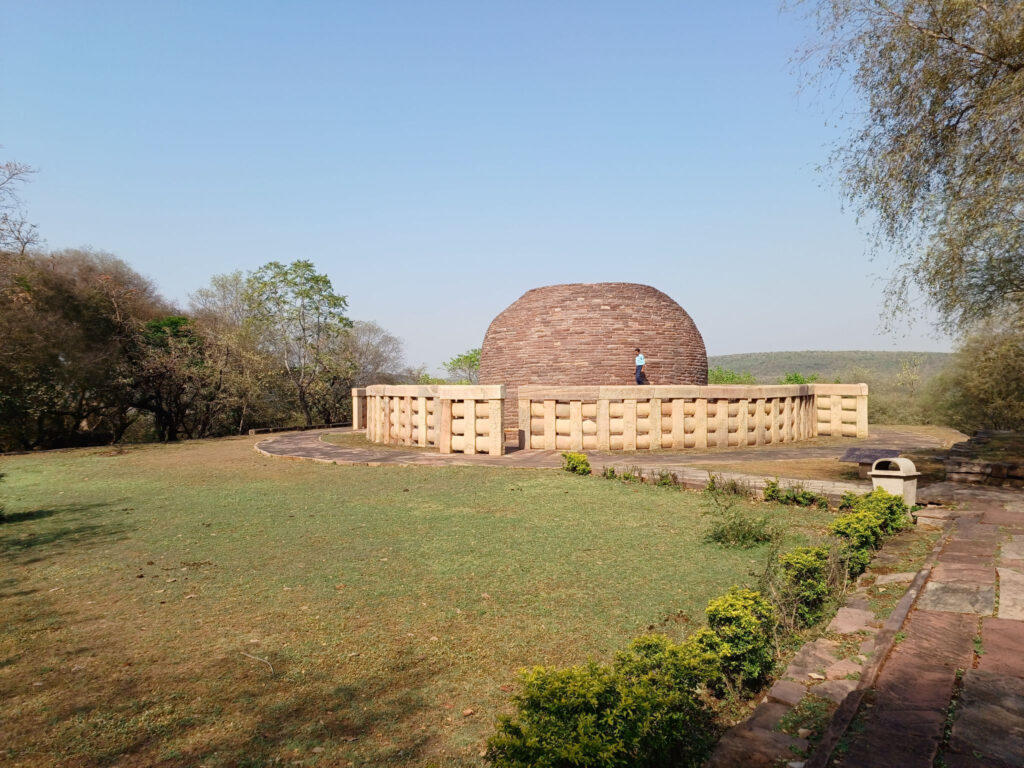
The design of Sanchi Stupa 2 is simpler when compared to the larger and more elaborate Great Stupa nearby, yet its structure remains fascinating. The stupa has a diameter of approximately 14 meters and is uniquely flat at the top. Unlike other Buddhist stupas, it does not have a Harmika or Chhatra — architectural elements commonly seen in Buddhist monuments representing spiritual honor and enlightenment.
Another distinctive feature of the stupa is the absence of Toranas, or ornamental gateways, at the cardinal directions. Instead, the monument is enclosed by a low stone railing known as a Vedika. These railings are decorated with beautifully carved medallions, floral motifs, animals, and scenes connected to Buddhist teachings.
Archaeological excavations at the site revealed four steatite caskets buried within the stupa. These caskets contained the ashes and relics of ten Buddhist monks and senior priests believed to have lived during the time of Emperor Ashoka. The names of these monks were inscribed on the caskets, offering valuable historical evidence about early Buddhism and monastic traditions.
Birthplace of Jataka Illustrations
One of the most remarkable aspects of Sanchi Stupa 2 is its artistic decoration. The stupa is widely regarded as one of the earliest sites featuring Jataka illustrations — stories that describe the previous lives of Buddha before attaining enlightenment.
The carvings portray important events connected to Buddhist philosophy and the life of Buddha, including:
- The Nativity of Buddha.
- Enlightenment under the Bodhi Tree.
- The First Sermon at Sarnath.
- Mahaparinirvana (the passing away of Buddha).
These scenes are represented symbolically rather than through direct human images of Buddha, reflecting the artistic traditions of early Buddhism. The detailed carvings on the railings also include lotus flowers, lions, elephants, devotees, and sacred trees, each carrying spiritual meaning.
For historians and art lovers, these carvings provide a rare glimpse into the earliest narrative art traditions of ancient India.
Location and Cultural Significance
Sanchi Stupa 2 is situated on the western slope of the Sanchi hill complex. Historians believe the location was specifically chosen because the relics preserved inside belonged to important Buddhist dignitaries from the Ashokan era. These monks were considered spiritually significant, although their status was regarded as lower than Buddha himself, whose relics are associated with Stupa 1, and lower than Buddha’s chief disciples connected with Stupa 3.
Today, the entire Sanchi complex stands as a symbol of India’s rich Buddhist heritage and peaceful spiritual traditions. The monuments collectively showcase how Buddhist architecture evolved over centuries and how religion influenced art, culture, and society during ancient times.
The serene surroundings of Sanchi also make it a peaceful destination for meditation, learning, and cultural exploration.
Visiting Timings and Travel Information
If you are planning a visit to Sanchi Stupa 2, it is helpful to know the site timings in advance. The Sanchi historic complex generally remains open from 6:30 AM to 6:30 PM every day, giving visitors enough time to explore the stupas, monasteries, temples, and museums within the area.
The best time to visit is during the winter months from October to March, when the weather remains pleasant for sightseeing. Early mornings and evenings are especially beautiful, as the calm atmosphere enhances the spiritual charm of the site.
Sanchi is well connected by road and rail. The nearest major city is Bhopal, located around 45 kilometers away, making it an easy day trip for travelers exploring central India.
Why You Should Visit Sanchi Stupa 2
While it may not be as grand as the Great Stupa, Sanchi Stupa 2 offers a quieter and more historically layered experience. It is a place where visitors can witness the beginnings of Buddhist storytelling through sculpture and understand the early artistic traditions that later spread across Asia.
For students of history, spiritual seekers, architecture enthusiasts, and travelers looking to explore India’s ancient heritage, Sanchi Stupa 2 remains an unforgettable destination filled with historical depth and cultural beauty.
How To Reach
To reach Sanchi Stupa 2, there are several transportation options available:

By Car:
You can hire a taxi or drive your own car to reach Sanchi Stupa 2. The distance from Bhopal to Sanchi is approximately 50 km, and it takes around 1 hour to reach there by car.

By Train:
The nearest railway station to Sanchi is the Sanchi Railway Station, which is located around 2 km away from the site. You can take a train to Sanchi Railway Station from Bhopal or any other nearby city, and then hire a taxi or take a rickshaw to reach Sanchi Stupa 2.

By Air:
The nearest airport to Sanchi is Raja Bhoj Airport, located in Bhopal, which is approximately 46 km away from the site. From the airport, you can hire a taxi or take a bus to reach Sanchi.
Nearby Attractions to Sanchi Stupa 2
Sanchi Stupa 2 is one of the oldest Buddhist monuments in the Sanchi complex and is particularly famous for its beautifully carved stone medallions and railings depicting early Buddhist symbols and stories. Located on the western slope of the Sanchi hill, the stupa can be easily explored along with several other historical and religious attractions nearby.
1. Great Stupa of Sanchi
The most iconic monument in Sanchi and a UNESCO World Heritage Site. Its magnificent toranas (gateways), massive hemispherical dome, and intricate carvings make it the centerpiece of the entire Buddhist complex.
2. Stupa 3
Located close to the Great Stupa, Stupa 3 is believed to have housed relics of Buddha’s chief disciples, Sariputta and Mahamoggallana. It is known for its elegant architecture and historical significance.
3. Ashoka Pillar
Erected by Emperor Ashoka in the 3rd century BCE, this pillar stands as a symbol of the spread of Buddhism across India and showcases the artistic excellence of the Mauryan period.
4. Sanchi Archaeological Museum
A must-visit museum displaying sculptures, inscriptions, relic caskets, and architectural fragments recovered from the Sanchi monuments and surrounding archaeological sites.
5. Chetiyagiri Vihara
A respected Buddhist monastery that houses sacred relics of Sariputta and Moggallana. It becomes a major pilgrimage center during the annual Chetiyagiri Festival.
6. Great Bowl of Sanchi
A large stone bowl believed to have been used by Buddhist monks for distributing food among the monastic community.
7. Temple 18
One of the earliest temple structures in the Sanchi complex, featuring a simple design that reflects the transition from Buddhist stupas to temple architecture.
8. Temple and Monastery 45
An important archaeological site that provides insight into the daily lives and spiritual practices of Buddhist monks who once lived in Sanchi.
9. Udayagiri Caves
Situated about 13 km from Sanchi, these rock-cut caves are renowned for their Gupta-period carvings, including the famous Varaha sculpture depicting Lord Vishnu.
10. Heliodorus Pillar
An ancient pillar erected by the Greek ambassador Heliodorus in the 2nd century BCE, representing one of India’s earliest inscriptions associated with Vaishnavism.
FAQs
1. Why is Sanchi Stupa 2 famous?
Sanchi Stupa 2 is famous for being one of the oldest Buddhist stupas in India and for containing some of the earliest stone relief carvings and Jataka illustrations in Indian art history.
2. Where is Sanchi Stupa 2 located?
It is located in Sanchi town in Madhya Pradesh, around 500 meters from the Sanchi Railway Station.
3. What is unique about the architecture of Sanchi Stupa 2?
The stupa has a flat top and lacks the Harmika, Chhatra, and Toranas commonly seen in other Buddhist stupas. It is surrounded by a decorated stone railing known as the Vedika.
4. What were discovered during excavations at the stupa?
Archaeologists discovered four steatite caskets containing relics and ashes of ten Buddhist monks from the Ashokan period.
5. What are the visiting hours of Sanchi Stupa 2?
The Sanchi monument complex is generally open daily from 6:30 AM to 6:30 PM.
6. Which is the best time to visit Sanchi?
The ideal time to visit is between October and March when the weather is cool and comfortable for sightseeing.
7. Is Sanchi Stupa 2 part of a UNESCO World Heritage Site?
Yes, the Sanchi Buddhist monuments, including Stupa 2, are part of the UNESCO World Heritage Site at Sanchi.