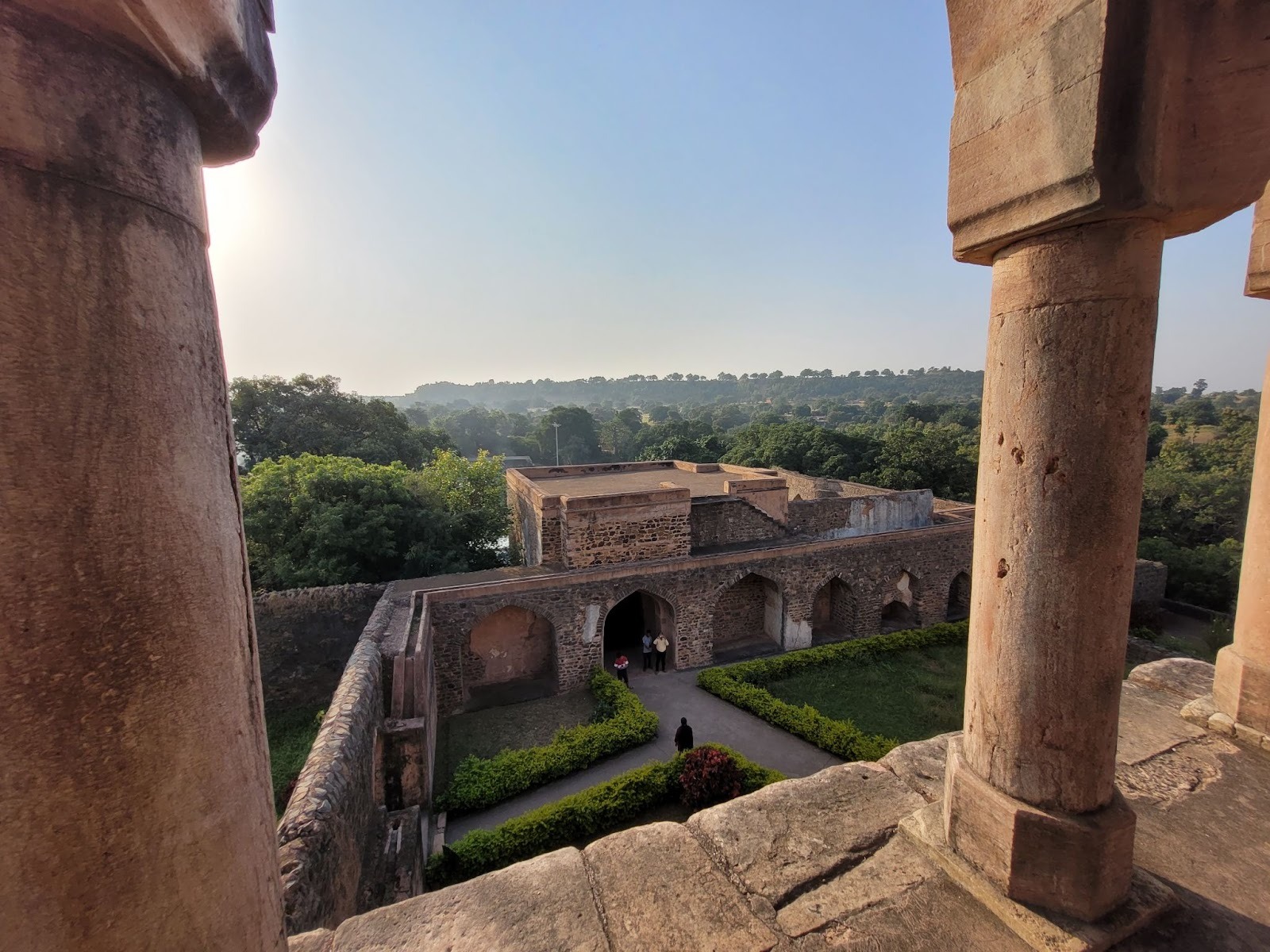
Image Source: himanshu saini
About Champa Baoli
Located in the historic town of Mandu, Champa Baoli is a remarkable example of ancient stepwell architecture. More than just a water source, the Baoli was a social and cultural hub.
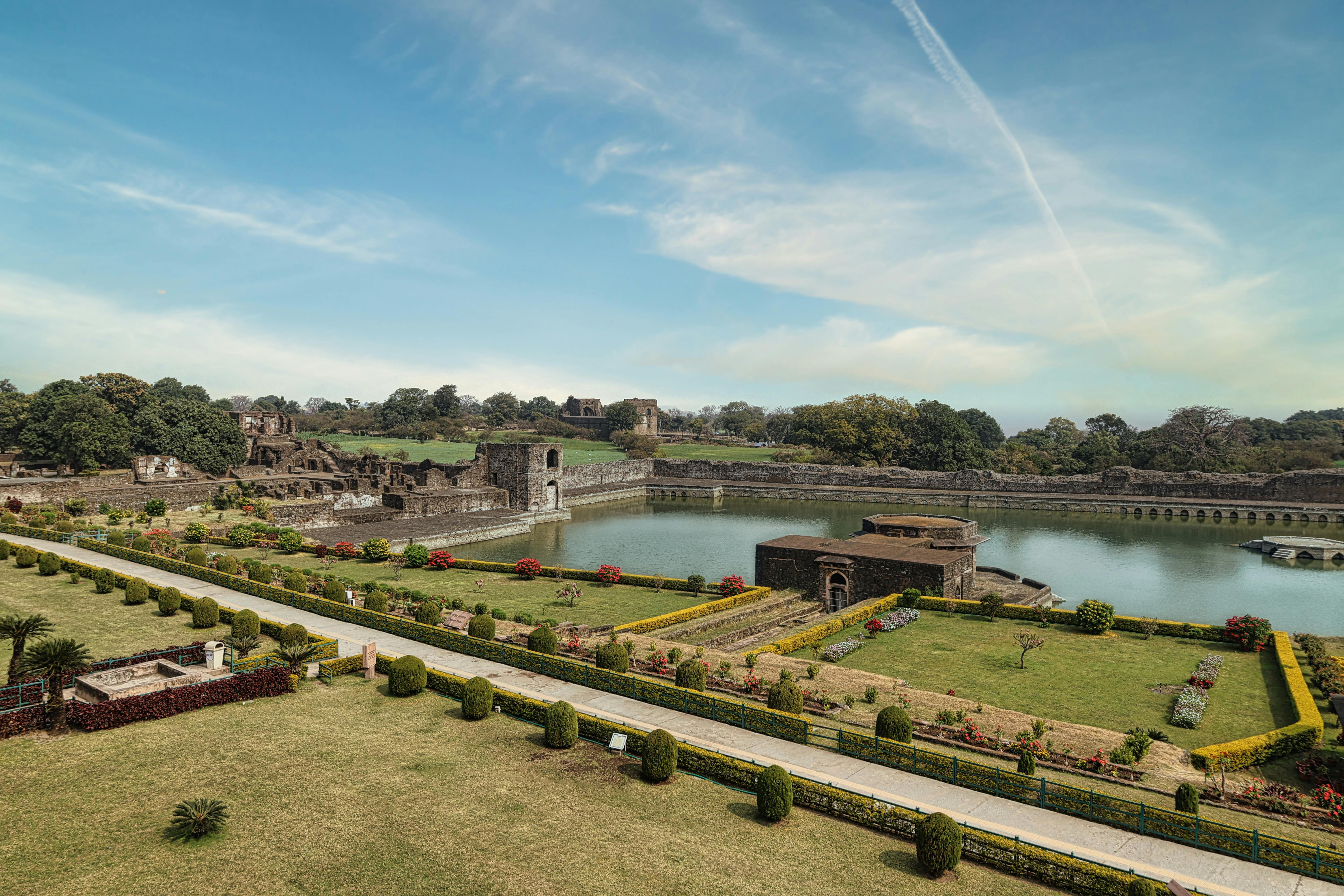
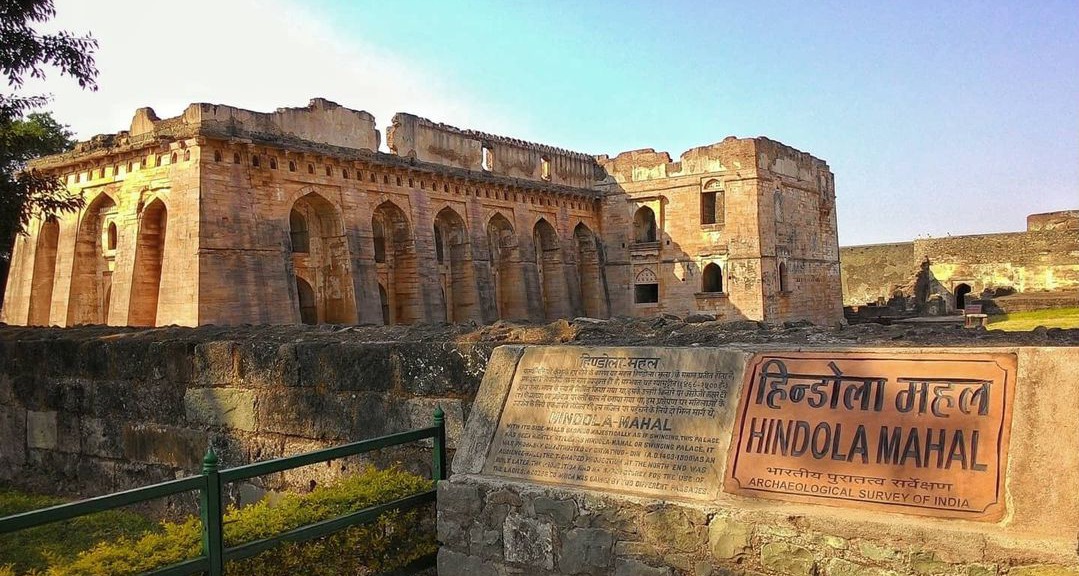
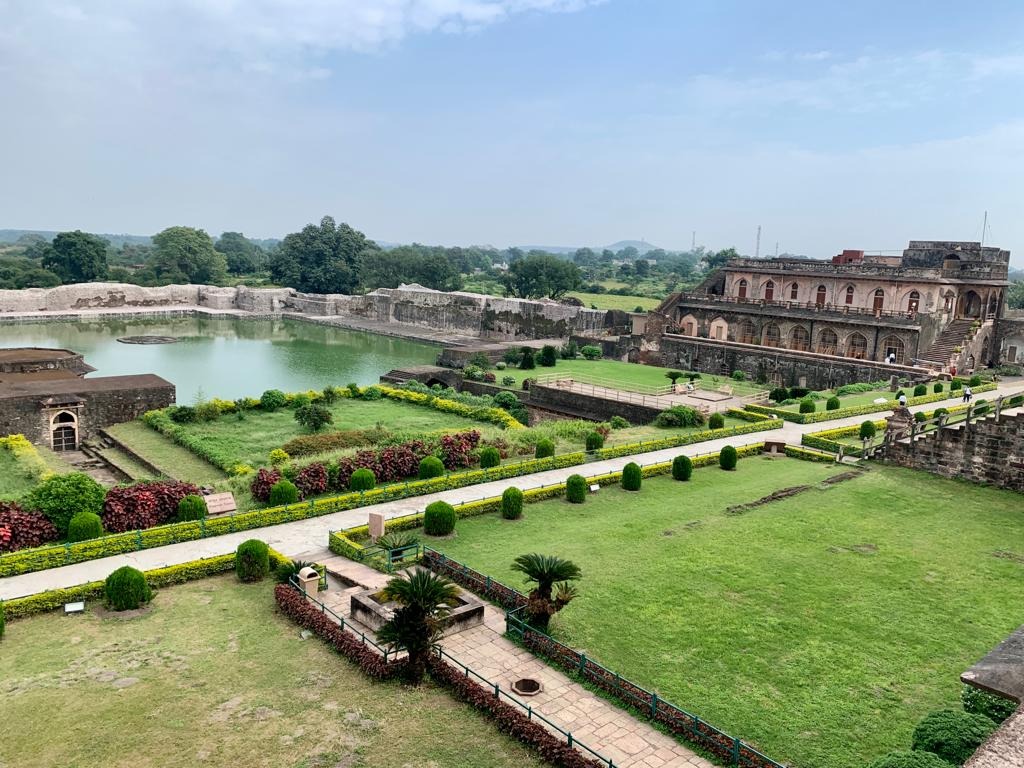
It is said the water in the stepwell resembles the smell of the Champa flower, giving it its name. The stepwell is an integral part of Mandu’s larger heritage landscape, which includes monuments like the Jahaz Mahal, Hindola Mahal, and Rani Roopmati Pavilion.
The stepwell was constructed during the reign of the Malwa Sultanate and is a part of an elaborate system to supply water. The Baoli is designed in a square shape with steps leading down to the water level, surrounded by intricately carved stone walls. Close to the Jahaz Mahal, it made it a crucial resource for the royal family and their guests.
Architecture
From an architectural perspective, Champa Baoli is a masterclass in Indo-Islamic engineering adapted to the Indian climate.
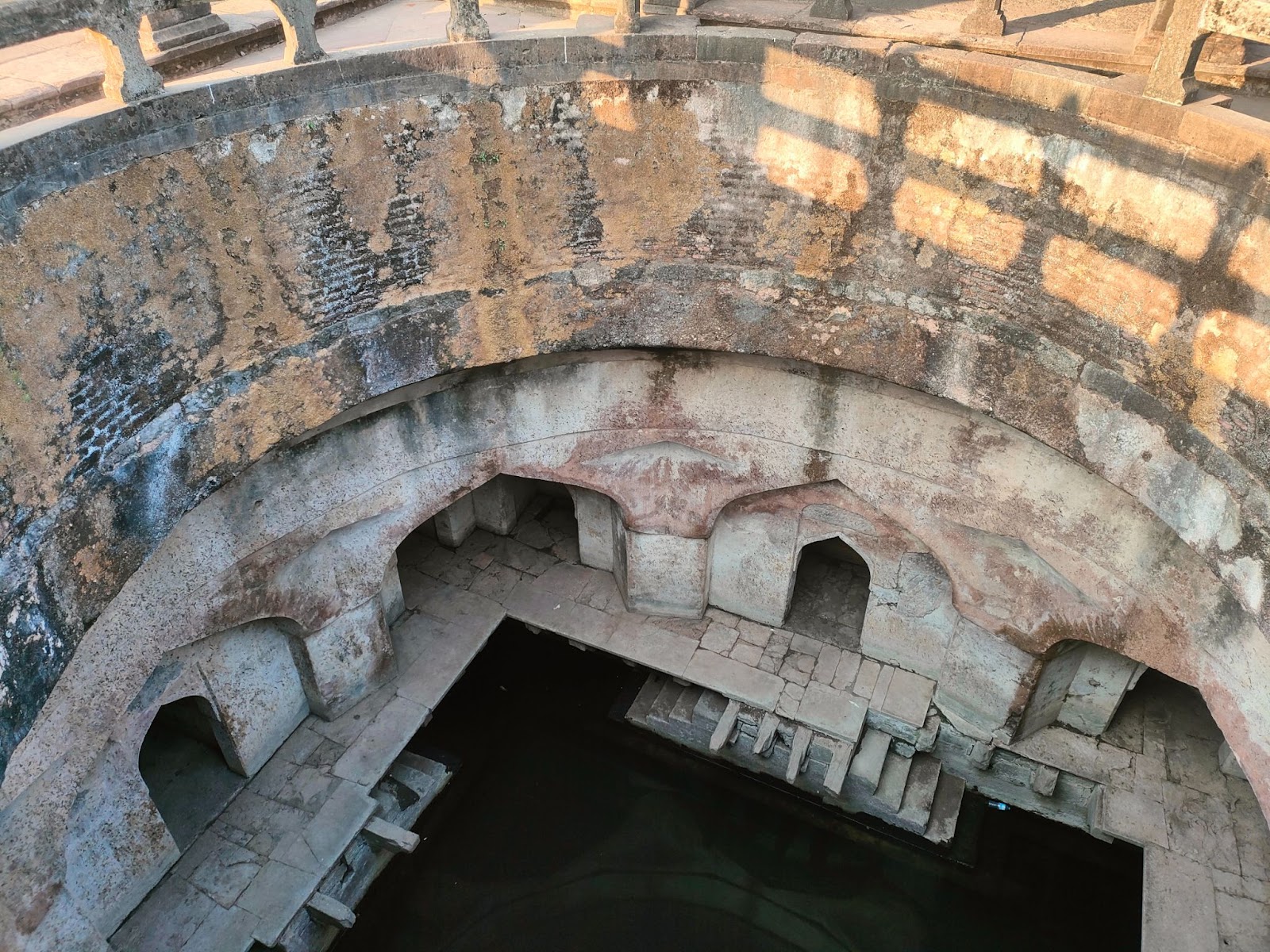
At its core, the structure is a deep circular stepwell, descending gradually through stone steps into the earth. Surrounding the well are arched corridors, vaulted chambers, and subterranean rooms, all carved from stone and arranged with remarkable symmetry.
One of the most striking features for travelers is the cool temperature inside the baoli, even during peak summer. Thick stone walls, limited sunlight, and the presence of water create a naturally air-conditioned environment. This made Champa Baoli an ideal retreat during Mandu’s intense summers long before mechanical cooling existed.
The lower levels of the baoli are believed to be octagonal in form, a design choice that enhanced structural stability while also creating elegant interior spaces. The repetition of arches, niches, and passageways gives the site a rhythmic visual flow, making it both functional and aesthetically pleasing.
Uses of Champa Baoli
The stepwell is a classical example of Mughal architecture that features vaulted rooms, or Taikhanas. During its construction, it ensured light reaches the room, and rooms are interconnected to maintain a cool atmosphere during extreme temperatures. Spiral staircases are designed in such a way as to access water from the stepwell. During the summer, when temperatures soar, an interconnected underground structure provides a chamber as a cooling retreat.
The basement chambers are designed in a labyrinthine manner, with passages leading to lower levels. On the western side of the pavilion, a passage connects to the Munj pond. The walls inside the basement are arched, and stairs in the middle of the stepwell lead to the lower floor.
The Champa Baoli is a remarkable engineering piece that was not only built for water management but also to protect against enemy attacks. During the invasion, women of the royal family jumped into the stepwell through the secret passage built. Champa Baoli has many purposes. It was used for water storage and a cooling retreat for royalty during summer. It must be used for bathing (hamam, royal bath) and other purposes within the royal complex.
One of the highlights is the Turkish-style hamam, or hot bath, which was used exclusively by the royals. It consists of three rooms, of which the third is destroyed. During the night, the ceiling of the Hamam is adorned with stars that have been cut to allow light to filter through. It creates the illusion of twinkling stars in the sky during the daytime.
If you are an avid history lover who appreciates the intricate engineering of the past, you must add Champa Baoli to your itinerary.
Exploring Champa Baoli in Mandu
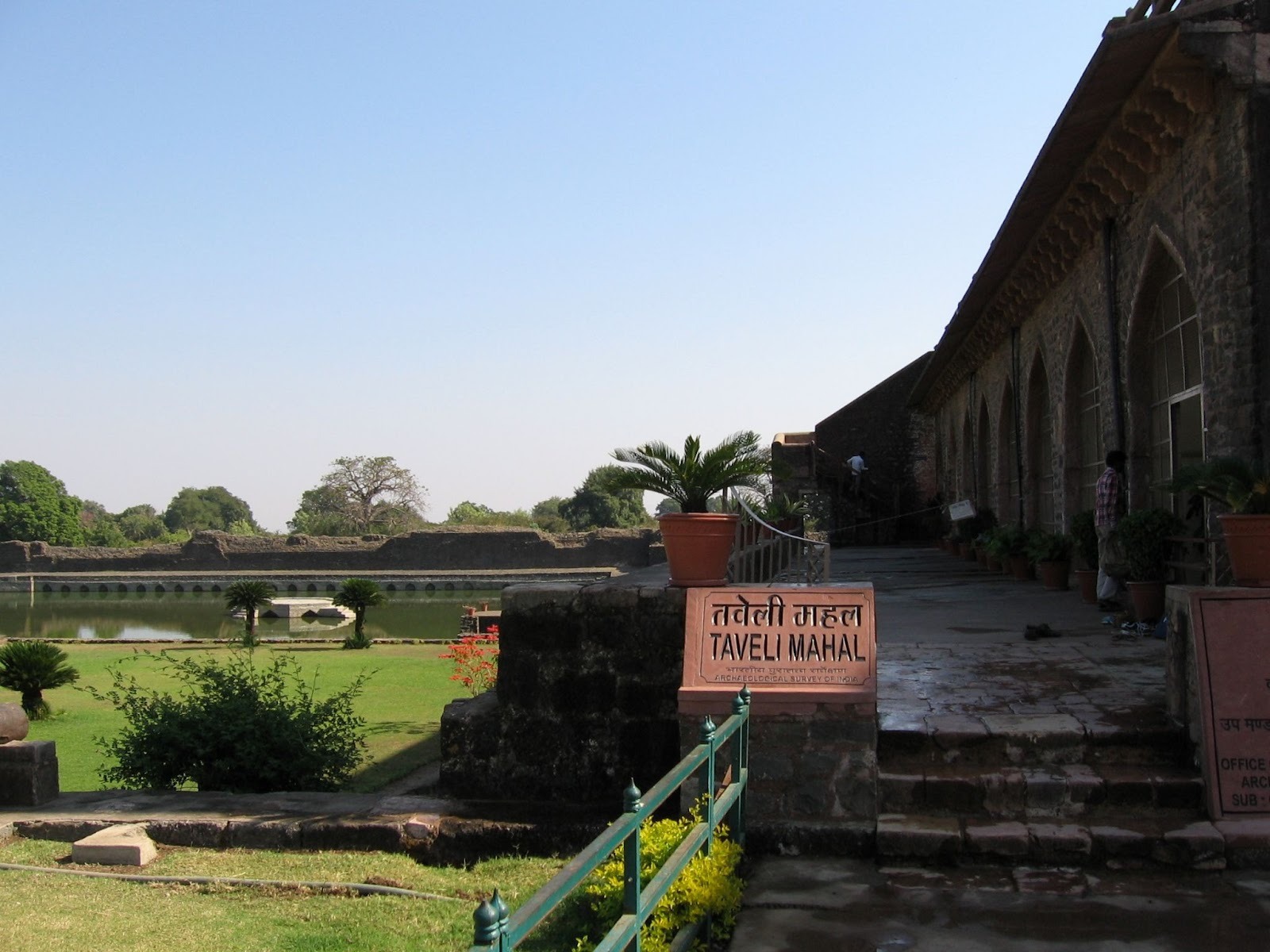
Champa Baoli is best visited as part of a walk through Mandu’s Royal Enclave, alongside Jahaz Mahal, Hindola Mahal, and Taveli Mahal. Early mornings or late afternoons allow travelers to experience the shifting light inside the baoli and avoid the midday heat.
Best Time to Visit
The ideal time to visit Champa Baoli and Mandu is between October and March, as the weather is cooler and more pleasant for exploring outdoor sites.
Location of Champa Baoli
Timing
6 am – 7 pm
Entry fees
Indian – Rs 25
Foreigner – Rs 100
Nearby Attractions
Jahaz Mahal: A ship-like palace situated between two artificial lakes, Munj Talab and Kapur Talab.
Hindola Mahal: A palace with sloping walls, also known as the “Swinging Palace.”
Rupmati Pavilion and Baz Bahadur’s Palace: Scenic spots nearby.
How to Reach Champa Baoli
- By Air: The nearest airport is Devi Ahilyabai Holkar Airport in Indore, approximately 100 km away.
- By Train: The closest railway station is in Indore, well-connected to major cities in India.
- By Road: Mandu is accessible by road from Indore and other nearby towns via buses or private taxis.
Google Maps
FAQS
- Q: Where is Champa Baoli located?
Champa Baoli is located in Mandu, also known as Mandavgarh, in the Dhar district of Madhya Pradesh. It lies within the Royal Enclave area, close to Jahaz Mahal and Hindola Mahal.
- Q: What is Champa Baoli?
Champa Baoli is a historic stepwell built during the fifteenth century to store water and provide a cool underground retreat for the royal residents of Mandu.
- Q: Who built Champa Baoli?
Champa Baoli is important for its advanced water management system, climate-responsive design, and its integration with royal palaces and bath complexes in medieval Mandu.
- Q: Why is it called Champa Baoli?
According to local belief, the water in this stepwell once carried the fragrance of champa flowers, which gave the baoli its name and added to its association with royal luxury.
- Q: Why should travelers visit Champa Baoli?
Travelers should visit Champa Baoli to understand how medieval rulers combined architecture, water engineering, and climate adaptation, making it one of Mandu’s most insightful yet lesser-known heritage sites.
- Q: What is the best time to visit Champa Baoli?
The best time to visit is between October and March, when the weather in Mandu is pleasant and exploring underground structures is comfortable.