
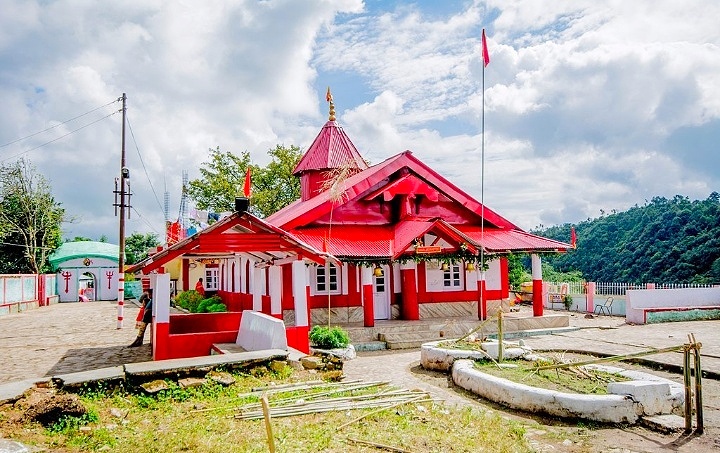
Image Source: Oliver walsher
About Nartiang Temple
The Nartiang Durga Temple, located in the Jaintia Hills of Meghalaya, is one of the most important Shakti Peethas in India. Dedicated to Goddess Durga, it is believed to be the site where Sati’s left thigh fell, making it a sacred pilgrimage destination.
The temple, over 600 years old, was constructed during the rule of the Jaintia kings and continues to be a vibrant center of worship. Its historical, spiritual, and cultural significance makes it a must-visit for devotees and travelers alike.
Historical and Cultural Significance
The temple’s roots lie deep in the Shakti cult of the Jaintia kingdom. It is said that King Jaso Manik of the Jaintia dynasty was a devout worshipper of Goddess Durga and established the temple to enshrine her idol. The site became one of the 51 Shakti Peethas, revered across India and Nepal.
What makes this temple unique is its blend of Hindu rituals and indigenous Jaintia traditions, reflecting the cultural fusion of the region. During Durga Puja, the temple comes alive with grand celebrations, traditional sacrifices, and vibrant festivities that attract thousands of pilgrims.
Temple Architecture
Unlike typical Hindu temples, Nartiang Temple has a unique Khasi-style architecture with sloping roofs and wooden structures adapted to Meghalaya’s climate.
The sanctum houses the idol of Goddess Durga, while the surrounding premises preserve stone monoliths, which are markers of the Jaintia royal dynasty. These monoliths add to the temple’s mystique and make it a historical treasure as well.
Pilgrimage and Visitor Experience
For pilgrims, a visit to the temple is an act of spiritual cleansing and divine blessings. Devotees perform rituals and offer prayers, often accompanied by local customs such as animal sacrifices, which continue as part of age-old traditions.
Visitors are also captivated by the serene environment around the temple, surrounded by lush greenery and hills, creating a perfect balance between spirituality and natural beauty.
How to Reach
By Road: Nartiang Temple is about 65 km from Shillong and 15 km from Jowai, accessible via well-connected roadways. Regular taxis and shared cabs operate between Shillong, Jowai, and Nartiang.
By Air: The nearest airport is Shillong Airport (Umroi), around 75 km away, while Guwahati Airport (160 km) offers better connectivity.
By Rail: The closest railway station is Guwahati Railway Station, from where one can take a taxi or bus to reach Shillong and onward to Nartiang.