
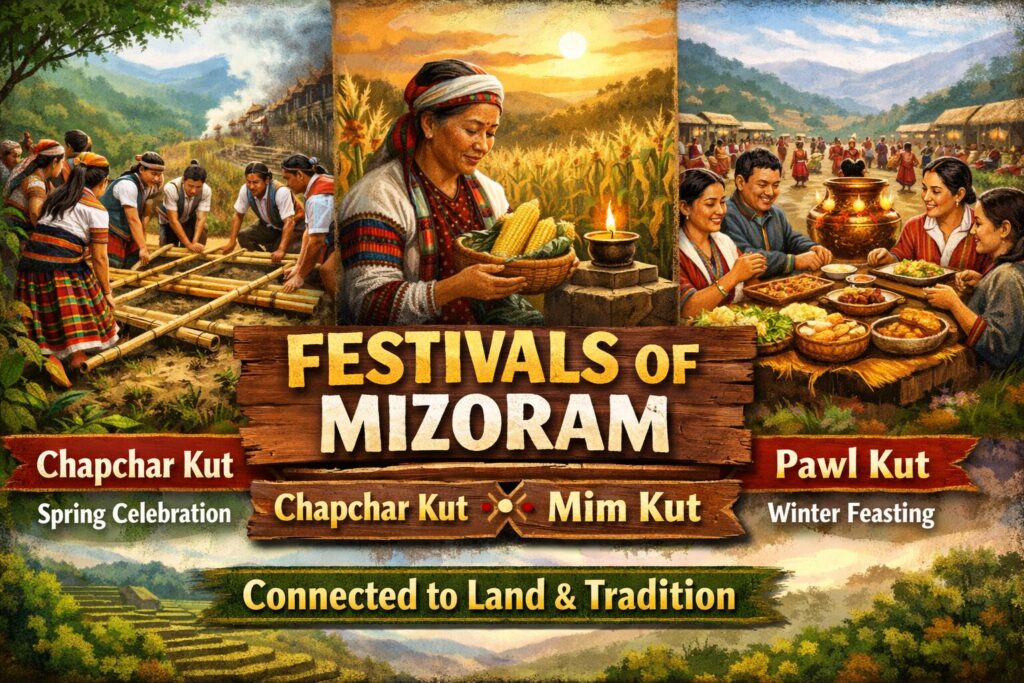
In the lush hills of Mizoram, festivals are not just occasions of joy, they are deeply connected to agriculture, seasons, and community life . The rhythm of celebration here follows the rhythm of the land, especially the traditional practice of jhum cultivation, which shapes both livelihood and culture.
Among the many vibrant traditions of the Mizo people, three festivals stand out for their cultural richness and seasonal significance, Chapchar Kut, Mim Kut, and Pawl Kut.
Chapchar Kut – The Festival of Spring and Renewal
The most spectacular of all is Chapchar Kut, celebrated during the spring season. This festival marks the completion of jhum clearing , a crucial stage in shifting cultivation when forests are cut and left to dry before burning and sowing.
What It Represents
* Transition from hard agricultural labor to a period of rest.
* Celebration of nature’s renewal and upcoming cultivation.
* A time for community bonding and cultural expression.
Traveller’s Experience
Chapchar Kut is one of the best times to visit Mizoram if you want to experience its cultural vibrancy. The atmosphere is lively, with:
* Traditional music echoing through towns and villages.
* Colorful attire showcasing tribal identity.
* Energetic group dances performed in open spaces.
It is not just a festival, it is a collective expression of joy after effort , where the entire community comes together.
Mim Kut – Honouring the Maize Harvest
Celebrated around August to September, Mim Kut is associated with the harvest of maize , one of the important crops in the region.
Cultural Significance
* Traditionally linked with remembering departed souls.
* Offerings of maize and food are made in their memory.
* Reflects a blend of harvest celebration and ancestral respect.
Traveller’s Perspective
Mim Kut offers a more subdued and reflective experience compared to Chapchar Kut. It allows visitors to witness:
* Rituals rooted in tradition and belief
* The emotional and spiritual side of Mizo culture
It is less about spectacle and more about connection to heritage and memory .
Pawl Kut – The Festival of Gratitude
Taking place during December to January, Pawl Kut marks the end of the harvest season .
What It Celebrates
* A successful agricultural cycle.
* Gratitude for abundance and prosperity.
* Sharing of food and community feasts.
Traveller’s Experience
Pawl Kut is a warm and welcoming festival, often centered around:
* Feasting and social gatherings.
* Community celebrations in villages.
* A relaxed, festive winter atmosphere.
For travelers, it is an opportunity to experience the hospitality and togetherness of Mizo society.
Community Based Dance Traditions
One of the most defining aspects of Mizo festivals is that all dances are community based . Unlike performances meant for spectators, these dances are participatory and inclusive.
Key Features of Mizo Dance
* Performed in groups rather than solo acts
* Reflect unity and coordination
* Often accompanied by traditional music and chants
These dances are not just art forms, they are living expressions of community spirit , where everyone becomes part of the celebration.
The Role of Jhum Cultivation in Festivals
All major festivals in Mizoram are closely tied to jhum cultivation cycles,
* Clearing of land leads to Chapchar Kut
* Harvesting maize leads to Mim Kut
* Completion of harvest leads to Pawl Kut
This connection highlights how deeply the people of Mizoram are linked to their environment , celebrating each stage of agricultural life.
Best Time for Travellers to Experience Festivals
* March, Chapchar Kut, most vibrant and popular
* August to September, Mim Kut, cultural and reflective
* December to January, Pawl Kut, festive and warm
Planning your visit around these festivals can transform your trip into a cultural immersion experience .
Travel Experience – What Makes Mizoram Unique
Festivals in Mizoram are not commercial events or tourist shows. They are,
* Authentic
* Community driven
* Rooted in everyday life
As a traveler, you are not just watching, you are witnessing a living tradition that has been preserved through generations.
Conclusion
The festivals of Mizoram, Chapchar Kut, Mim Kut, and Pawl Kut offer a deep insight into the relationship between people, land, and community.
They are not just celebrations, they are stories of survival, gratitude, and unity , expressed through music, dance, and shared experiences.
For any traveler seeking something authentic and meaningful, Mizoram’s festivals provide a journey into a culture where every celebration begins with the land and ends with the community .