Image Source: Airben
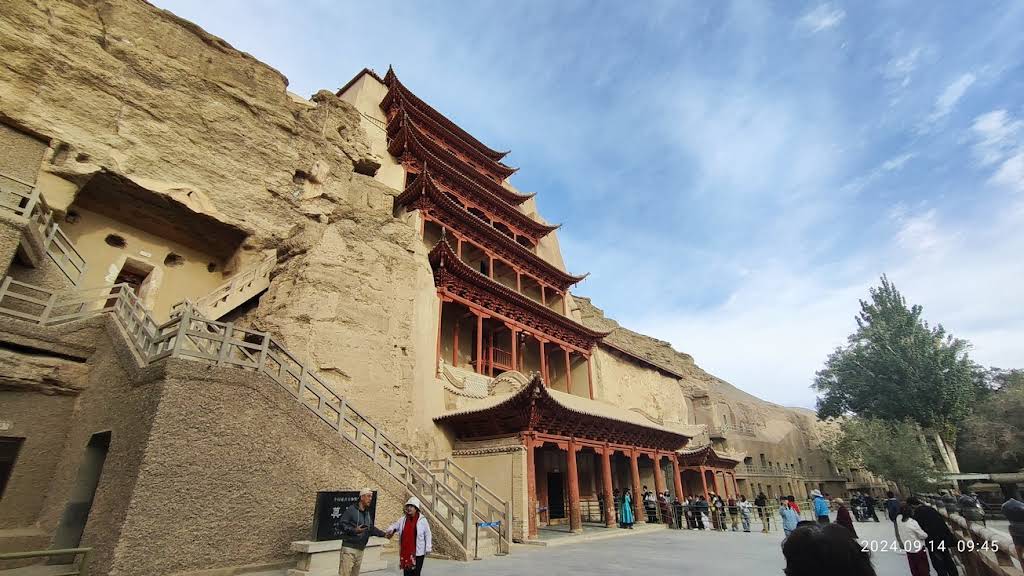
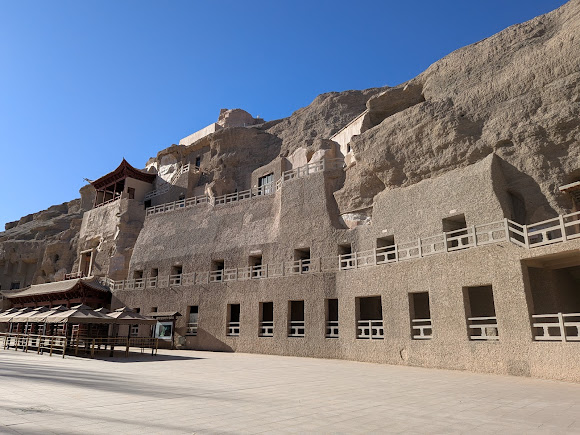
Hidden along the edge of a vast desert landscape in northwestern China, the Mogao Caves stand as one of the greatest repositories of Buddhist art in the world. Carved into the cliffs near the oasis town of Dunhuang, these caves form a monumental complex that reflects over a thousand years of artistic devotion, cultural interaction, and spiritual imagination.
Often referred to as the “Caves of the Thousand Buddhas,” the Mogao Caves are not just religious monuments. They are a living archive of Silk Road civilization, where Indian, Central Asian, and Chinese influences merged into a unique visual and intellectual tradition.
Geographic Setting: At the Edge of the Desert
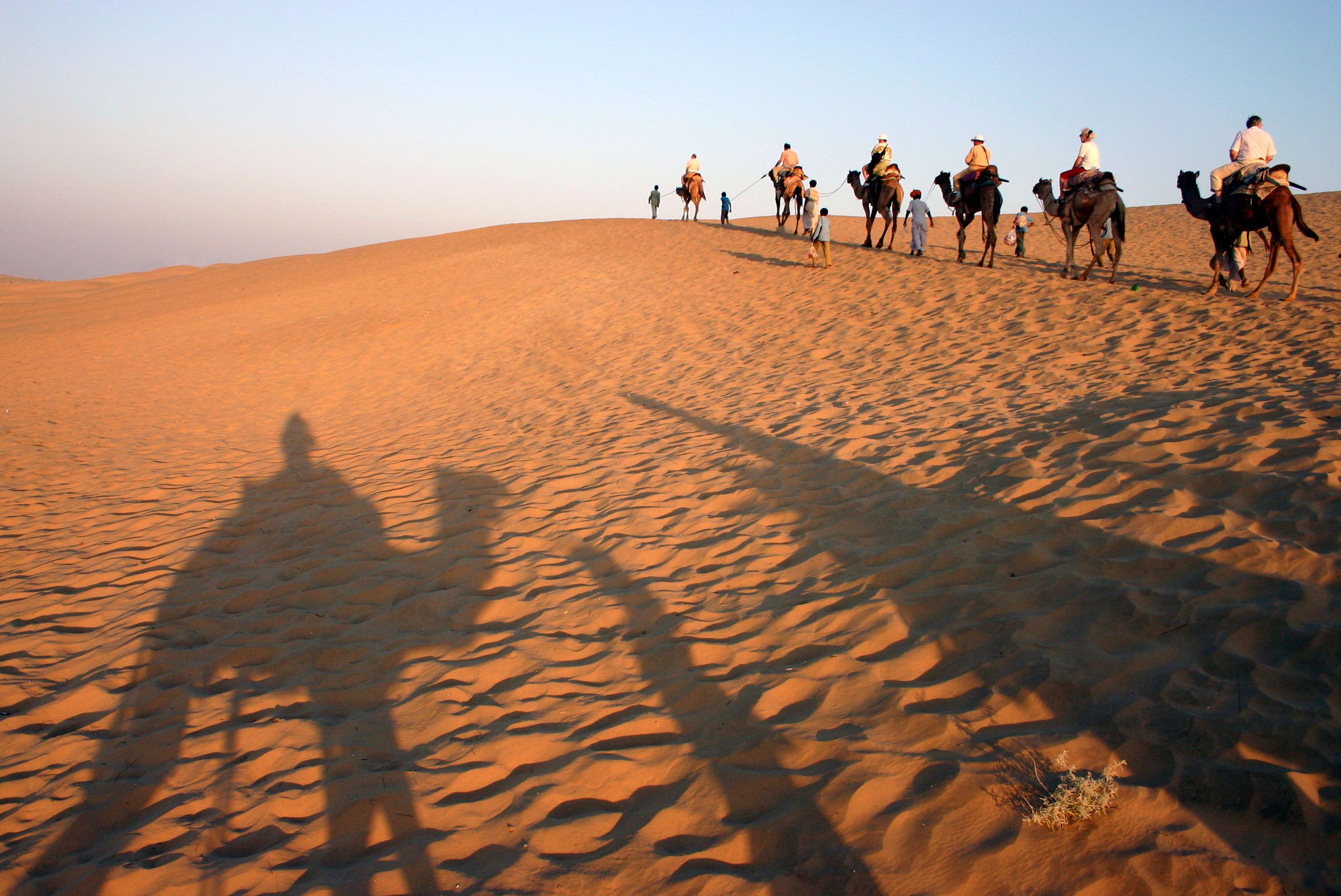
The Mogao Caves are located at a strategic point along the ancient Silk Road, where caravans traveling between East and West passed through Dunhuang before entering the harsh expanses of the Gobi Desert.
This oasis town was more than just a stopover. It was a cultural crossroads. Merchants, monks, pilgrims, and travelers from regions such as India, Persia, and Central Asia converged here, bringing with them goods, ideas, and religious traditions.
The cliffs of Mogao, rising above the Dachuan River, provided an ideal location for carving caves. They were protected yet accessible, and isolated yet connected to the wider world.
Origins: A Vision in the Desert
The story of the Mogao Caves begins in 366 CE, when a Buddhist monk named Le Zun is said to have had a vision of a thousand radiant Buddhas glowing in the cliffs.
Inspired by this vision, he carved the first cave into the rock face, creating a space for meditation and worship. Over time, other monks, patrons, and rulers followed his example, leading to the gradual expansion of the cave complex.
What began as a solitary act of devotion grew into a vast network of more than 700 caves, each reflecting the artistic styles and religious ideas of its time.
Artistic Evolution Across Dynasties
The Mogao Caves span multiple Chinese dynasties, including the Northern Wei, Sui, Tang, Song, and Yuan periods.
Each period contributed distinct artistic elements, resulting in a layered visual history.
Early Period: Indian and Central Asian Influence
In the early caves, strong influences from India and Gandhara can be seen.
There are elongated Buddha figures and drapery styles that resemble Greco Buddhist art. Narrative murals depict Jataka tales, which are stories of the Buddha’s previous lives.
These elements reflect the transmission of Buddhism from India into China along the Silk Road.
Tang Dynasty: The Golden Age
The Tang period from 618 to 907 CE marks the peak of artistic and cultural activity at Mogao.
During this time, murals became more elaborate and colorful. Figures appeared more naturalistic and expressive. Scenes depicted not only religious themes but also daily life, music, and court culture.
The caves from this era showcase a confident and cosmopolitan civilization that was deeply connected to the wider world.
The Cave Architecture and Layout
Each cave in the Mogao Caves serves a specific purpose, and its design reflects evolving religious practices.
Types of Caves
There are meditation caves that are simple spaces for monks. There are assembly halls, which are larger caves with central Buddha statues. There are also memorial caves that were commissioned by patrons to honor the dead.
Inside, the walls and ceilings are covered with murals, while sculptures of Buddhas, bodhisattvas, and guardians occupy central spaces.
Murals: Stories in Color
The murals at Mogao are among the most extensive in the world, covering tens of thousands of square meters.
They depict scenes from Buddhist scriptures, Jataka tales, and celestial beings known as apsaras floating through the sky. They also show caravans and travelers along the Silk Road.
These paintings are not just religious in nature. They are historical records of clothing, architecture, trade, and daily life.
The Library Cave: A Hidden Treasure
One of the most remarkable discoveries at Mogao was the “Library Cave,” also known as Cave 17. It was sealed around the eleventh century and rediscovered in 1900.
Inside were tens of thousands of manuscripts, including Buddhist sutras, administrative documents, maps, contracts, and texts written in multiple languages.
These manuscripts reveal the multicultural nature of Dunhuang, where languages such as Chinese, Tibetan, Sanskrit, and others coexisted.
They also provide valuable insights into the spread of Buddhism, trade networks, and everyday life along the Silk Road.
Mogao and Indo Tibetan Connections
The Mogao Caves are a powerful testament to the deep connections between India, Tibet, and China.
Indian Influence
Buddhism itself originated in India, and many of the early artistic and textual traditions at Mogao can be traced back to Indian sources.
Monks and scholars traveled from India to China, carrying sacred texts, artistic styles, and philosophical ideas. These influences are visible in the iconography and narratives depicted in the caves.
Tibetan Presence
During certain periods, Dunhuang came under the control of Tibet.
This led to the inclusion of Tibetan scripts in manuscripts, the blending of Tibetan and Chinese artistic elements, and the spread of Vajrayana Buddhism.
The caves thus became a meeting point for multiple Buddhist traditions.
Cultural Exchange on the Silk Road
The Mogao Caves embody the essence of the Silk Road, which was not only a network of trade but also a network of ideas.
At Mogao, one can see Persian influences in decorative motifs, Central Asian styles in clothing and facial features, and Indian narratives adapted into Chinese artistic forms.
This fusion created a unique visual language that transcended regional boundaries.
Decline and Rediscovery
With the decline of the Silk Road and changes in political and economic patterns, Dunhuang gradually lost its prominence.
The caves fell into relative obscurity until the early twentieth century, when explorers and scholars rediscovered them.
While this led to global recognition, it also resulted in the removal of many manuscripts and artworks, which are now housed in museums around the world.
Preservation and UNESCO Recognition
Today, the Mogao Caves are recognized as a UNESCO World Heritage Site.
Efforts are ongoing to preserve fragile murals, control visitor impact, and digitize manuscripts and artworks.
Organizations and researchers are working to ensure that this cultural treasure survives for future generations.
Mogao Caves in the Modern World
In contemporary times, the Mogao Caves continue to inspire scholars who study art, history, and religion. They attract travelers exploring Silk Road heritage and artists drawing from their visual richness.
They also serve as a reminder of a time when civilizations were deeply interconnected, long before modern globalization.
Conclusion: A Living Archive of Civilization
The Mogao Caves are more than a collection of ancient caves. They are a living archive of human creativity, faith, and exchange.
From the vision of Le Zun to the vibrant murals of the Tang dynasty, and from Indian spiritual roots to Tibetan and Chinese adaptations, Mogao tells a story that spans continents and centuries.
In their painted walls and silent chambers, we encounter not just the history of Buddhism, but the shared heritage of humanity. It is a reminder that even in the harshest desert, art and spirituality can flourish and leave behind a legacy that endures across time.